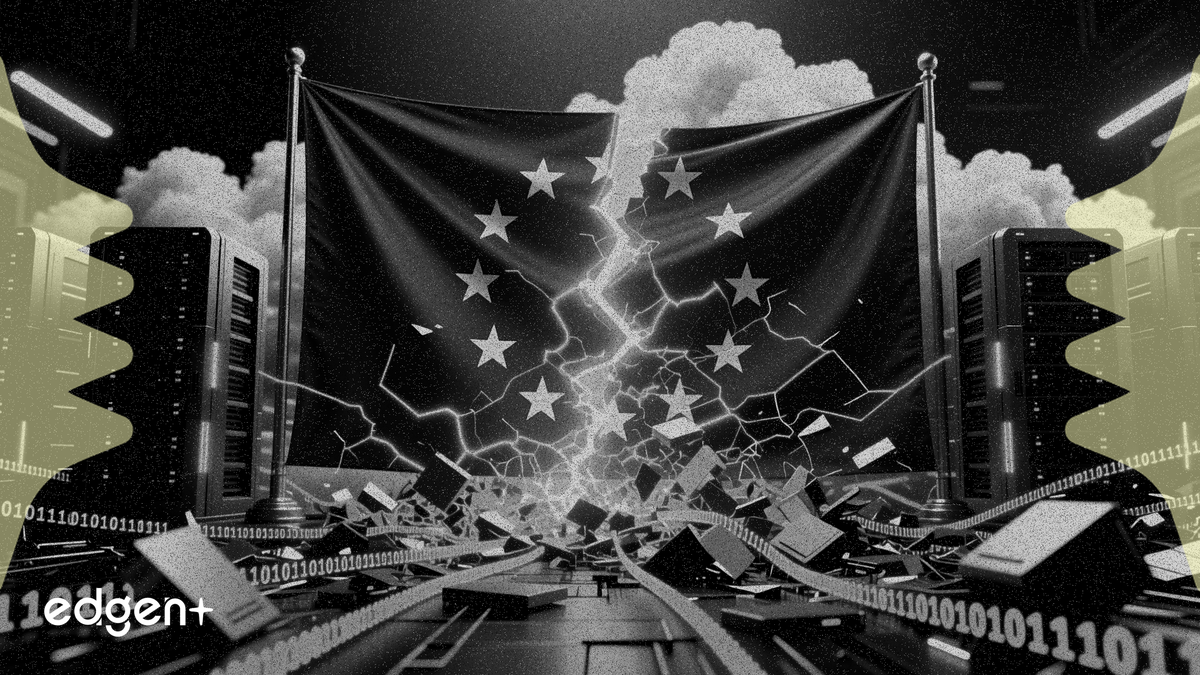
The European Commission is set to propose its "Tech Sovereignty Package" on May 27, potentially reshaping the multi-billion dollar government cloud market.
The European Commission is considering rules that would restrict U.S. cloud platforms from processing sensitive government data, a move aimed at bolstering the bloc's "tech sovereignty," with a formal proposal expected May 27. The potential regulations target the heart of the global cloud market, dominated by U.S. hyperscalers Amazon Web Services, Microsoft Azure, and Google Cloud, creating significant uncertainty for their lucrative European public sector contracts.
The core of the issue lies in the conflict between EU data privacy expectations and U.S. law. As a Computer Weekly investigation highlighted, U.S. laws like the Cloud Act and Foreign Intelligence Surveillance Act (FISA) Section 702 can compel U.S.-headquartered companies to provide data to American law enforcement, even when that data is stored overseas on foreign citizens. This legal jurisdiction creates a fundamental data sovereignty problem for European governments using U.S. cloud infrastructure.
The proposed "Tech Sovereignty Package" directly addresses this conflict. Hyperscalers argue that data is protected by encryption and customer-held keys, but legal instruments can compel "technical assistance" via software updates that could bypass these controls. While providers offer air-gapped and on-premise solutions, the standard, more cost-effective cloud services are not inherently isolated. A Chinese study cited by MSN warned that a full phase-out of Chinese tech, a similar sovereignty-driven move, could cost the EU over $400 billion, suggesting any restriction on U.S. providers would carry substantial economic weight.
For investors, the proposal puts billions in public sector revenue at risk for Amazon (AMZN), Microsoft (MSFT), and Google (GOOGL). In the U.K. alone, 95% of public sector organizations have spending with these hyperscalers, according to analyst firm Tussell. The EU-wide market is even larger. The regulations could force a costly restructuring of services or a significant loss of market share to European competitors, creating a new layer of regulatory risk for the big tech stocks.
The Sovereignty Paradox
The situation highlights a central paradox of modern cloud computing: hyperscaler platforms are built on globally connected infrastructure to achieve economies of scale, yet governments increasingly demand data localization and sovereignty. U.S. cloud providers' standard terms of service often allow for the transit of customer data and metadata to other geographies for support and maintenance, a practice at odds with strict sovereignty rules.
When questioned on their ability to technically prevent a U.S. court order to access foreign data, the major providers largely pointed toward their air-gapped or on-premise offerings, such as Google's Distributed Cloud used by the U.K. Ministry of Defence. However, these are bespoke, more expensive solutions and do not cover the bulk of standard public cloud usage. The providers did not directly address how they would prevent a court-ordered software update from creating a backdoor to access data processed in the clear.
What's Next for US Tech in Europe?
The May 27 proposal will be a critical signal for the future of U.S. technology in the European market. A move to restrict U.S. cloud providers for sensitive data would follow the EU's broader push for digital autonomy, seen in initiatives like the AI Act. While a complete ban is unlikely, the new rules could mandate specific, verifiable "sovereign cloud" configurations that are technically and legally isolated from U.S. jurisdiction.
This could force U.S. providers to create entirely separate European cloud infrastructures with local staff and no technical dependence on U.S.-based operations, a complex and expensive undertaking. The outcome will have major implications for the competitive landscape, potentially opening the door for European cloud providers like OVHcloud and Deutsche Telekom's T-Systems to capture a larger share of the sensitive government data market.
This article is for informational purposes only and does not constitute investment advice.