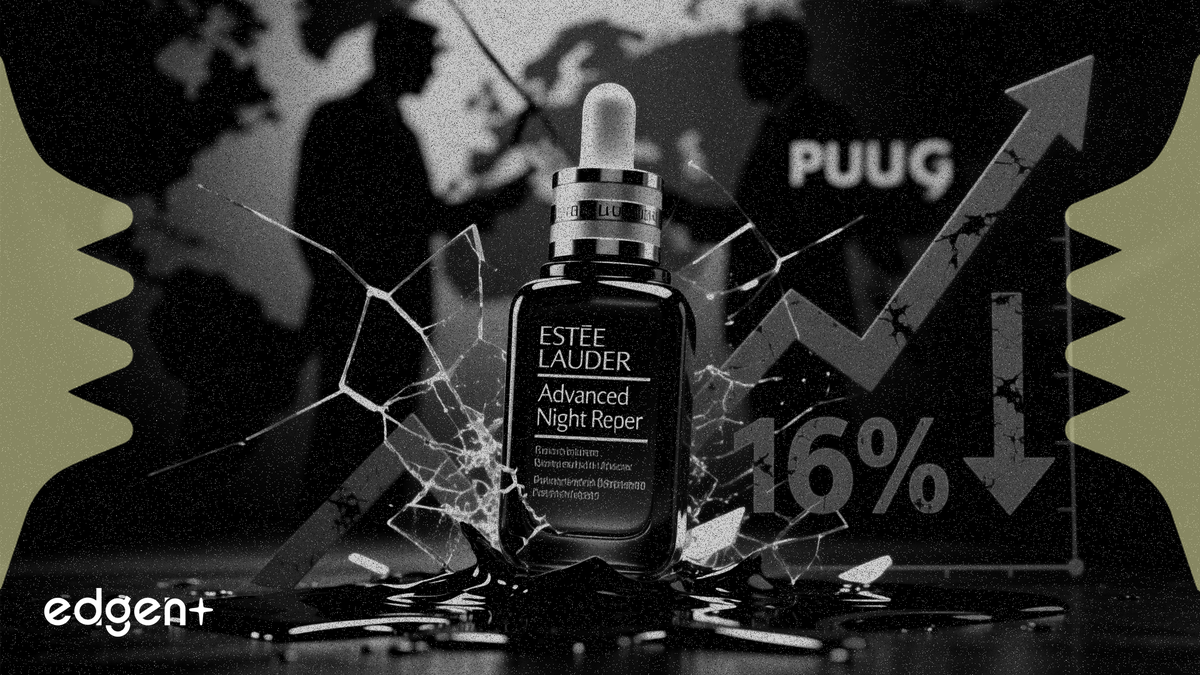
A potential mega-merger in the beauty industry is spooking investors, who see the ambitious deal as a major gamble threatening Estée Lauder’s fragile recovery.
Estée Lauder Cos. shares have slumped 16 percent since the U.S. cosmetics giant confirmed it was in talks to merge with Spanish fragrance and fashion house Puig. The sharp decline reflects investor anxiety that the company’s largest-ever potential acquisition is a poorly timed distraction from a critical turnaround plan already in motion.
"It is the corporate equivalent of applying a full face of makeup without doing the necessary skin-care prep beforehand," Carol Ryan, a columnist at The Wall Street Journal, wrote. "Estée Lauder simply has too much on its hands fixing its existing business to take on its biggest acquisition ever."
The proposed deal would create a beauty behemoth valued at an estimated $50 billion, combining Estée Lauder’s skincare and makeup strengths with Puig’s high-growth luxury fragrance portfolio, which includes brands like Byredo and Jean Paul Gaultier. An analyst report from Jefferies suggested a deal structure of 20 percent cash and 80 percent in shares of the new company. However, the market's reaction has wiped around $5 billion off Estée Lauder's value, complicating the financial terms of any potential agreement.
The move comes at a delicate time for the U.S. company, which is in the second year of its "Beauty Reimagined" transformation plan. The plan, which has involved significant job losses, was just beginning to show results, with the business returning to growth in the second half of 2025 after four straight quarters of declining sales. Investors now fear that the complexity of integrating Puig could derail this progress.
Turnaround in Jeopardy
Estée Lauder's stock has been a poor performer, falling more than 70 percent over the past five years as its operating margin slid from 20 percent in fiscal 2022 to just eight percent in its last fiscal year. The company has struggled with over-reliance on slowing markets in China and travel retail. While a tie-up with Puig offers a better geographic and category mix, particularly in the fast-growing luxury fragrance sector, the timing is viewed as problematic.
The company has been criticized for being slow to adapt to new sales channels like TikTok Shop and is losing ground to influencer-led brands. "It needs more time to fix its distribution," Ryan noted. The company's M&A track record is also under scrutiny, following a recent impairment charge of $773 million on its 2023 acquisition of Tom Ford for $2.8 billion.
Family Fortunes and Control
A key hurdle in the negotiations involves the demands of the Puig family. According to reports, the family is insisting on at least two seats on the board of the new combined entity for Chairman Marc Puig Guasch and Vice Chairman Manuel Puig Rocha. They are also requiring a "dual listing" for the new company's shares on both the New York and Madrid stock exchanges.
This highlights the complex governance dynamics at play. Both are family-controlled entities where founding members wield significant power through special voting rights. The Lauder family controls 84 percent of the voting rights with less than 34 percent of the shares, while the Puig family holds nearly 93 percent of its company's voting rights. While this structure is often seen as promoting long-term brand management, it also means outside shareholders have little power to stop a deal they believe is misguided.
This article is for informational purposes only and does not constitute investment advice.