
Einride is extending its AI-powered autonomous freight platform into defense, adding threat detection and counter-drone monitoring through a partnership with Centinus.
Einride is extending its AI-powered autonomous freight platform into defense, adding threat detection and counter-drone monitoring through a partnership with Centinus.
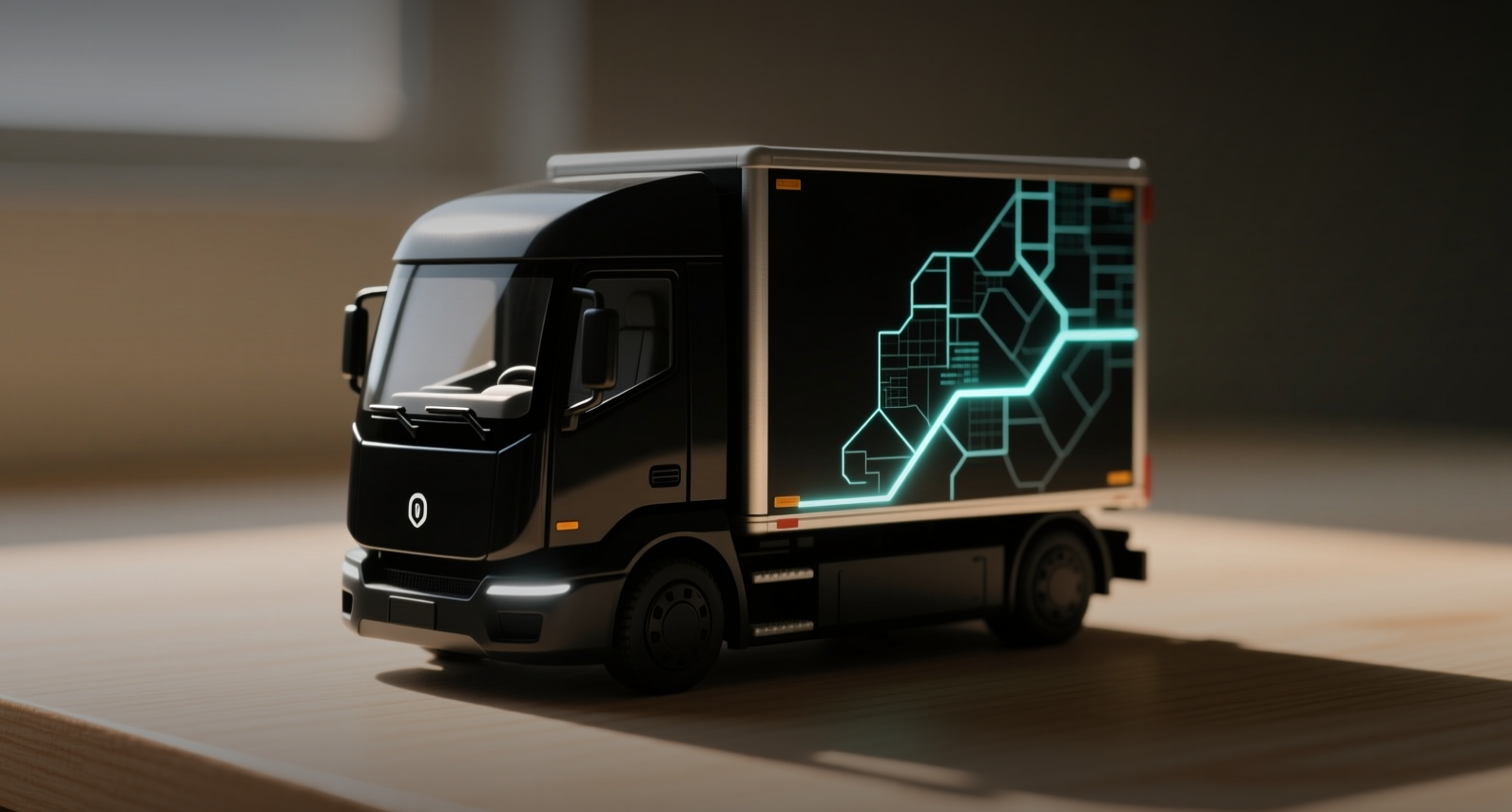
Einride AB (Nasdaq: ENRD) is moving its autonomous freight platform into defense, partnering with Centinus to layer real-time threat detection and counter-drone monitoring onto a market it estimates at $7 billion to $13 billion through 2030 across the U.S., EU and other NATO countries.
"Logistics has always been the decisive edge in warfare, and autonomous logistics changes the calculus entirely," General (Ret.) Keith B. Alexander, former director of the National Security Agency, founding commander of U.S. Cyber Command and an Einride board member, said.
The Stockholm-based company, founded in 2016, already runs a dedicated defense unit after securing pilot contracts with a European NATO-allied defense organization. It also co-leads development of an autonomous tracked vehicle for a Swedish civil and military preparedness initiative. The Centinus tie-up adds force protection to the driving layer, covering routes, staging areas, depots and the airspace above them.
The dual-use push opens a new revenue line for Einride, which serves North America, Europe and the Middle East through Freight-Capacity-as-a-Service and a Software-as-a-Service platform. The company operates one of the world's largest electric heavy-duty fleets.
Protecting the full supply chain
Autonomous trucks remove drivers from contested supply routes, cutting the risk of casualties while keeping munitions, fuel and food moving. Einride's platform combines proprietary autonomous driving technology with AI-powered freight intelligence that plans and optimizes routes.
Centinus provides Physical AI software for protective systems across defense, public safety and critical infrastructure. Its platform integrates data from drones, fixed cameras, RF sensors, EO/IR payloads and command-and-control systems to detect, classify and track potential threats across sensors and time.
"Defense customers will judge autonomous logistics not just on the strength of the driving platform, but on whether the full operation, routes, staging areas, depots, and the airspace above them, are protected end to end," Benjamin Cheatham, chief executive officer at Centinus, said.
A crowded field with a dual-use edge
Einride enters a crowded autonomous trucking field. Aurora Innovation, Kodiak Robotics and Torc Robotics are pursuing driverless freight in the U.S., while Plus and TuSimple have targeted international markets. Einride's edge is its dual-use positioning — the same platform that moves commercial freight can be adapted for military supply chains, and its electric fleet offers a lower fuel signature than diesel convoys.
"The Einride Driver has always been about more than autonomous driving alone; it is operational intelligence for the entire freight movement," Roozbeh Charli, chief executive officer at Einride, said. "By combining Centinus' capabilities with our platform, we're extending that resilience beyond the driving layer itself."
Einride's defense expansion gives investors a second growth engine beyond commercial freight, with a $7 billion to $13 billion addressable market through 2030. The company listed on Nasdaq under the ticker ENRD and is scheduled to report first-half 2026 earnings on Aug. 18. Whether the defense contracts convert into recurring revenue will depend on NATO procurement cycles, which typically run longer than commercial deals.
This article is for informational purposes only and does not constitute investment advice.
