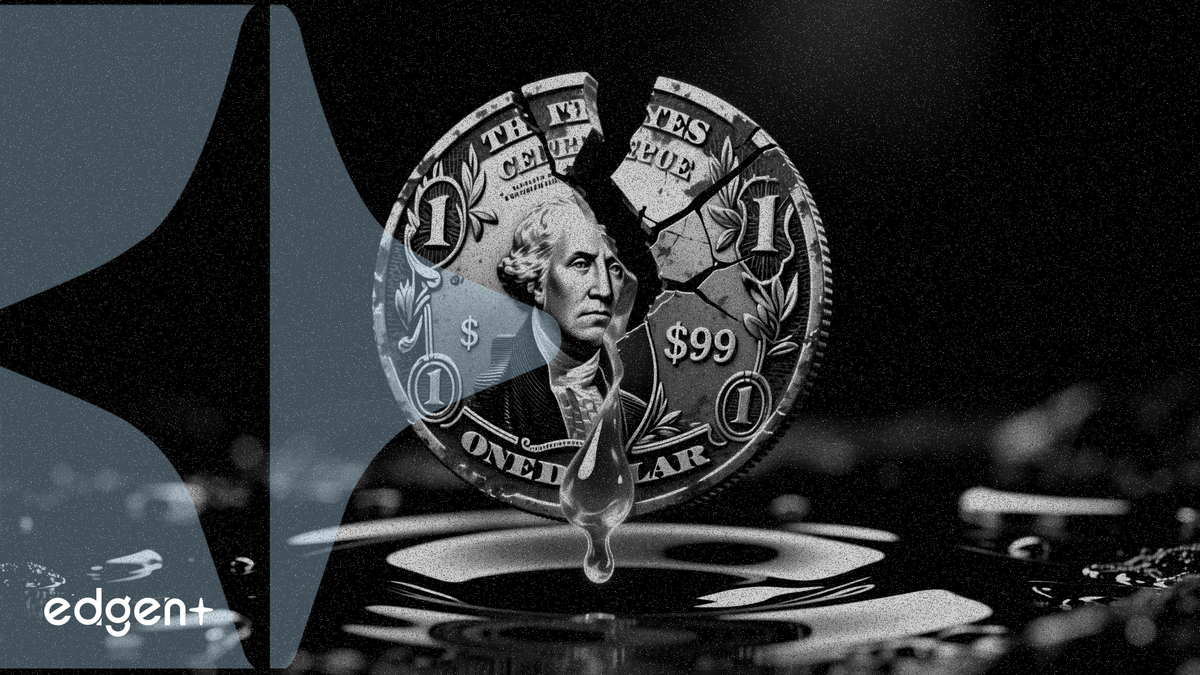
The dollar is defying the peace trade narrative as US-Iran dealbreakers on frozen assets and uranium disposal keep Brent crude above $99 a barrel.
The dollar held its ground against major peers Tuesday as currency markets priced in a lower probability of a swift US-Iran agreement, with disputes over frozen assets and enriched uranium disposal stalling the draft memorandum of understanding. Brent crude climbed 3.3% to $99.4 a barrel, reversing Monday's 7% slide that followed reports the two sides were nearing a deal.
"Optimism is still elevated that an agreement can be made to end the war, but last night's targeted action is clearly a warning shot that the ceasefire is fragile," Deutsche Bank analysts wrote in a note. The US military conducted what it called self-defense strikes on Iranian missile launch sites and boats near the Strait of Hormuz, a reminder of the fragile state of the two-month-old ceasefire.
The dollar index held near recent highs against the euro and sterling, while WTI crude traded at $93 a barrel. US Secretary of State Marco Rubio said Tuesday that talks are being held up by "disagreements over a word, a sentence," echoing comments from US officials that language on Iran's nuclear program and sanctions relief remains unresolved.
The standoff leaves investors weighing two scenarios: a deal that reopens the Strait of Hormuz — which handles about 21% of global oil trade — and releases up to $24 billion in frozen Iranian assets, or a return to hostilities that could push Brent above $100 and strengthen the dollar further as a haven. The next round of Qatari-mediated talks will determine which path markets take.
'No Dust, No Dollars'
The core dispute centers on nearly 1,000 pounds of highly enriched uranium that the White House insists must be disposed of before Iran sees any financial relief. US officials have adopted the refrain "no dust, no dollars" to describe their position. Iran's central bank chief Abdolnaser Hemmati is in Doha negotiating the release of frozen assets, which Tehran estimates at roughly $100 billion globally, with $6 billion under active discussion.
A draft memorandum of understanding obtained by CBS News includes a 60-day ceasefire extension, a commitment from Iran to reopen the Strait of Hormuz within 30 days, and a pledge not to develop nuclear weapons. But Iranian Foreign Ministry spokesman Esmaeil Baqaei said Monday that talks remain focused on ending the war, not nuclear details, which would be negotiated later. Iran has also demanded an end to Israeli operations in Lebanon as part of any agreement, while Israel's military struck more than 100 Hezbollah targets overnight.
Oil's Risk Premium Returns
The intraday rebound in Brent crude reflects the market's reassessment of deal probability. After settling 7% lower Monday on peace optimism, crude reversed course as the US strikes and Rubio's comments reminded traders that diplomatic language remains unresolved. The last time the US and Iran were at a similar stage of talks — during the 2015 JCPOA negotiations — oil prices swung 8% over a two-week period before settling lower.
For currency markets, the dollar's resilience signals that the peace trade — a bet on lower oil, lower inflation, and a weaker dollar — is not yet priced in. Persistent dollar strength and elevated crude prices could delay Federal Reserve easing, a scenario that would pressure risk assets globally. The first Japanese oil tanker to transit the Strait of Hormuz since the war began arrived in Japan this week, but 39 Japan-related vessels remain stranded in the gulf, underscoring the gap between diplomatic progress and operational reality.
This article is for informational purposes only and does not constitute investment advice.