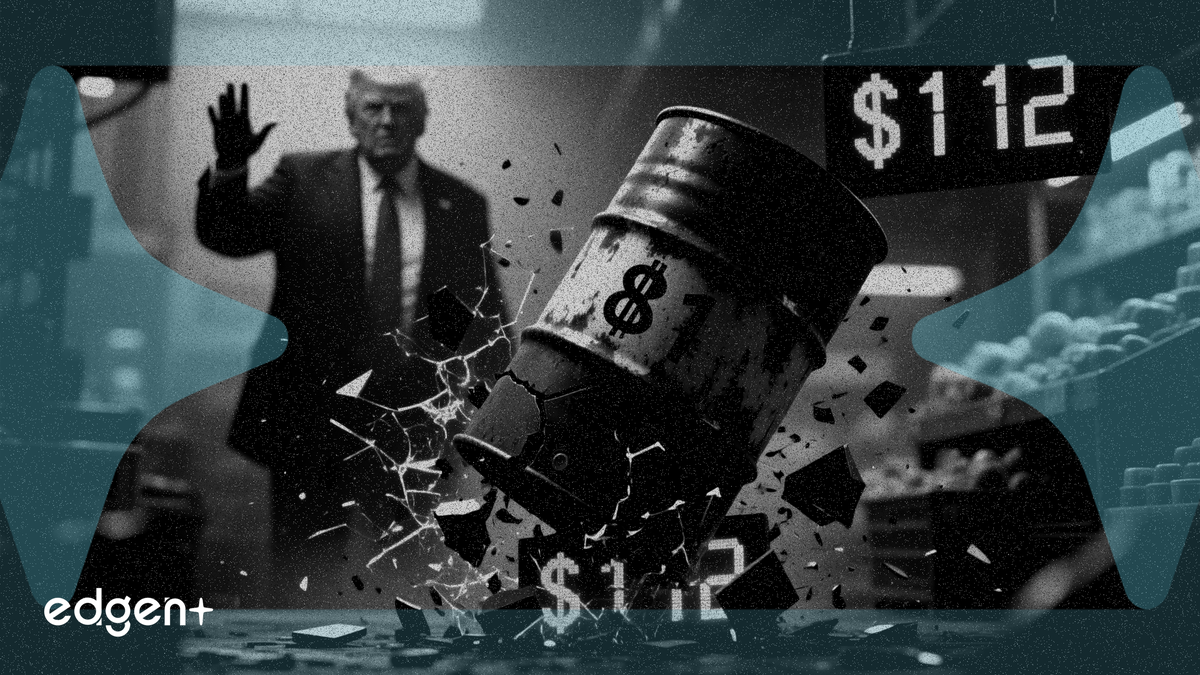
Les prix du pétrole brut sont tombés sous la barre des 112 dollars le baril après que le président Donald Trump a déclaré que les États-Unis pourraient mettre fin à leur guerre avec l'Iran en « deux à trois semaines », offrant ainsi le premier signe d'une désescalade potentielle dans un conflit qui a retiré des millions de barils de pétrole du marché mondial. Cette déclaration, faite à la Maison Blanche le 31 mars, suggérait qu'un accord avec l'Iran pourrait être conclu encore plus tôt.
« Compte tenu de l'optique, de nombreux investisseurs ne voient pas de fin rapide au conflit et les marchés restent anxieux », a déclaré Jane Foley, responsable de la stratégie de change chez Rabobank, dans une note. Elle a ajouté que les réactions du marché « s'atténuent » en raison de « l'écart énorme » entre les assurances de Trump et l'absence de reconnaissance de la part de Téhéran.
Le scepticisme est enraciné dans de graves dislocations du marché. Le Brent, la référence internationale, reste en hausse de plus de 50 % depuis le début du conflit le 28 février, passant d'environ 72 $ le baril à un pic de 118 $ le 19 mars. Le principal moteur a été la fermeture effective du détroit d'Ormuz, le point de passage pétrolier le plus critique au monde, qui a coupé environ 16 millions de barils par jour d'approvisionnement, selon les estimations de l'industrie.
L'enjeu est de savoir si un fragile potentiel de paix peut l'emporter sur les réalités d'une guerre qui s'étend. Alors que l'Arabie saoudite a détourné quelque 4,6 millions de barils par jour vers ses ports de la mer Rouge, les militants houthis soutenus par l'Iran sont désormais entrés dans le conflit, menaçant le détroit vital de Bab-el-Mandeb. Les analystes de Rystad Energy prévoient qu'une fermeture de cette seconde voie navigable pourrait faire bondir le Brent au-delà de 150 $ le baril, un scénario qui déclencherait un choc économique mondial.
La guerre a accentué les inquiétudes sur la vulnérabilité des chaînes d'approvisionnement en combustibles fossiles, recadrant la transition énergétique mondiale comme une question de sécurité nationale. La perturbation a largement dépassé les chocs précédents, suscitant un regain de débat sur la réduction de la dépendance aux hydrocarbures importés. « La transition énergétique n'a jamais eu rien à voir avec le changement climatique... La sécurité a toujours été primordiale », a déclaré Jeff Currie, stratège en chef de Carlyle, lors d'une récente conférence.
Les traders se sont habitués aux déclarations du président qui font bouger le marché, mais le suivi a été incohérent. Si la rhétorique de Trump peut provoquer des fluctuations de prix à court terme, les contraintes physiques sous-jacentes du marché — comme le déficit de 16 millions de barils par jour d'Ormuz — continuent de soutenir les prix. Tant que les pétroliers ne circuleront pas librement dans le détroit, la prime de risque géopolitique devrait rester fermement intégrée au prix du pétrole.
Cet article est à titre informatif uniquement et ne constitue pas un conseil en investissement.