
U.S. credit card delinquencies have climbed to levels not seen since 2008, yet the bigger threat may be a shortage of new credit.
U.S. credit card delinquencies have climbed to levels not seen since 2008, yet the bigger threat may be a shortage of new credit.
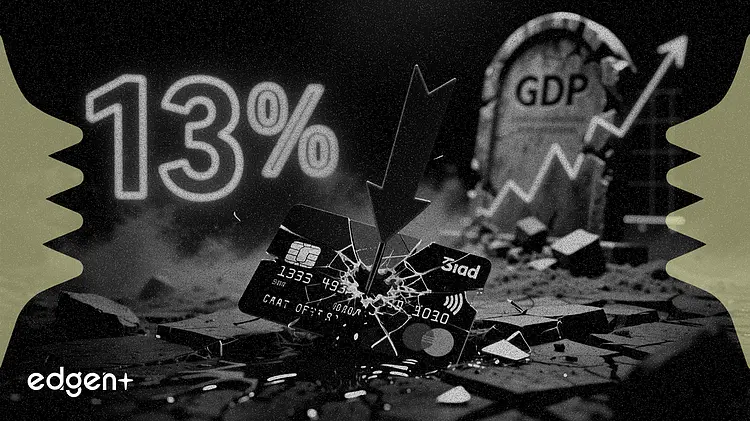
The share of credit card balances 90 days or more past due hit 13% in the first quarter, near the post-2008 peak, according to New York Fed data. But the average household holds about $11,500 in card debt — almost $1,600 less in inflation-adjusted terms than at the 2007 peak, WalletHub data show.
"The high delinquency figure reflects a specific vintage of pandemic-era loans that are aging poorly, not a broad consumer meltdown," said Michael Taiano, senior analyst at Moody's Ratings. "Jobs are stable, but once you lose a job, it can take longer to find a new one, so some consumers that go delinquent aren't curing in the typical way."
The Federal Reserve's measure of consumer debt-service payments as a share of disposable personal income stood at 5.4% in the fourth quarter, well below the 7%-plus level of two decades ago. A separate Fed metric tracking banks' consumer card loans shows under 3% of balances are at least 30 days past due, compared with a peak above 4% in 2007 and nearly 7% in the years that followed. The divergence stems from the New York Fed's inclusion of charged-off balances still sitting on credit reports, meaning the 13% figure captures accumulated bad debt from prior years as much as current stress.
The hangover from pandemic-era lending is now constraining new credit supply. Banks have tightened underwriting standards, and credit-card loan growth has fallen behind nominal GDP growth after outpacing it for much of the post-pandemic period, Fed data show. That creates a dilemma: too little credit could restrain consumer spending at a time when prices are rising faster than wages, particularly for mass-market households.
The Pandemic Vintage That Won't Clear
The New York Fed's 90-day delinquency metric includes balances that banks have already written off but remain on consumer credit reports. Many of those loans originated during the pandemic, when stimulus payments boosted credit scores and enabled a surge in new borrowing. As government support faded and inflation eroded purchasing power, a subset of borrowers who had been marginal even before the pandemic began to default.
The result is a lump of troubled debt that is inflating the headline delinquency rate even as most borrowers remain current. Banks' charge-off rates on credit cards stood at about 3.8% in the first quarter, below the 4.3% average since 1985, according to Fed data. Those losses are also more manageable at today's elevated interest rates, which boost card yields and help offset defaults.
Lending Slowdown Creates a Growth Problem
The bigger concern for banks is the pullback in new credit. After growing sharply relative to GDP in the post-pandemic period, bank credit-card loan growth has recently trailed nominal GDP expansion, Fed figures show. That reflects tighter underwriting criteria that limit who gets a card or a larger credit line.
For lenders, this constrains loan-book expansion at a time when net interest margins face pressure from potential Federal Reserve rate cuts. Each 25-basis-point reduction in the fed funds rate reduces the yield on floating-rate card loans, squeezing the spread banks earn on revolving balances.
For consumers, the tightening comes as the debt-service ratio, while low historically, has been creeping higher. The 5.4% reading in the fourth quarter was up from 5.2% a year earlier and 4.9% in 2022, suggesting the cost of carrying debt is rising even if it remains manageable for most households.
Some borrowers may also be choosing to carry card debt rather than tap home equity, given the cost of refinancing a pandemic-era mortgage at today's rates above 6%. A cash-out refinance of a 3% mortgage would be far more expensive than gradually paying down a card balance, creating an incentive to let card debt linger.
The upshot is an economy with two consumer segments: a majority that can service their debts comfortably and a minority — concentrated among pandemic-era borrowers — that is struggling. The risk for banks and retailers is that the tightening credit channel leaves the second group with fewer options to smooth spending, amplifying the drag on consumption.
This article is for informational purposes only and does not constitute investment advice.
