

Key Takeaways:
- COMEX gold futures rose 1% to $4,526.58/oz on May 28
- Renewed Iran uncertainty and softer dollar drove safe-haven buying
- Gold remains 19% below its Jan. 29 all-time high of $5,595.46
Key Takeaways:
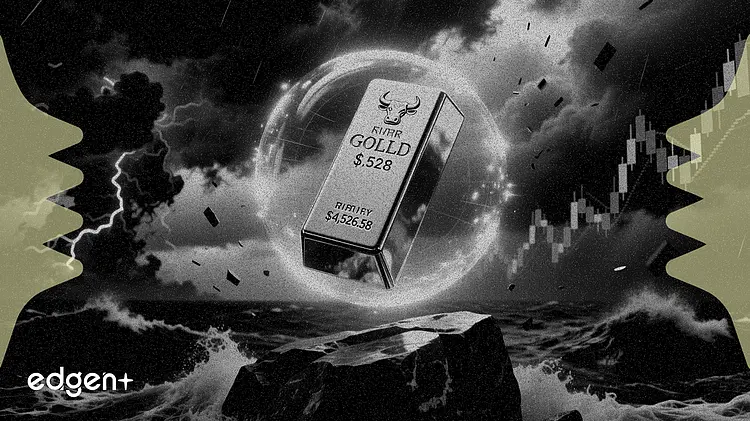
Gold futures climbed back above $4,500 an ounce as renewed geopolitical uncertainty and a softer dollar drew buyers back into the precious metals complex.
COMEX gold futures rose 1% intraday to $4,526.58 per troy ounce on May 28, recovering from a three-session slide that had pushed spot bullion to $4,521.80 in the prior session, according to exchange data. The move marks the first gain above the $4,530 technical pivot that has capped consolidation over the past two weeks.
"The market is repricing the probability of a near-term Iran deal after President Trump instructed negotiators not to rush into an agreement," Itai Smidt, a macro strategist at TradingNews, said. "Until a formal ceasefire is signed, the geopolitical premium in oil keeps the inflation overlay alive, which is the single biggest headwind for gold."
Spot gold traded at $4,521.80 an ounce in Tuesday's U.S. session, down 1.10% from Monday's $4,570.56 close, before the futures-led recovery pushed prices higher Wednesday. The 52-week range spans $3,245.55 to $5,595.46, meaning bullion remains roughly 19% below the Jan. 29 all-time high and about 13% below where it traded when the Iran conflict erupted in late February. The 200-day moving average sits at $4,340, defining the structural floor, while the 50-day moving average at $4,730 marks the ceiling that bulls have been unable to clear for weeks.
The oil-CPI-Fed mechanism is the dominant constraint on gold's upside. Brent crude fell 2.78% to $97.42 a barrel on Tuesday before partially reversing on the Trump headline, while WTI dropped 3.8% to $92.33. Higher energy prices keep core inflation elevated — the April CPI print showed core inflation at its highest in nearly three years — which has pushed Fed rate-cut probabilities lower. Fed funds futures now price a 25% probability of a quarter-point hike by December, up from 21.5% earlier in the month, per CME FedWatch data. Each 25-basis-point rate cut typically generates about 60 tonnes of new gold ETF demand within six months, Goldman Sachs has quantified, meaning the bull case requires oil to fall enough for CPI to moderate.
Central bank demand, the structural pillar under gold, showed signs of moderation in Q1. Officially reported net buying dropped to just 16 tonnes in the first quarter, a sharp step down from the 1,237 tonnes purchased across all of 2025, according to JPMorgan's Gregory Shearer. Including unreported purchases, total central bank buying reached 244 tonnes for Q1, still below the run-rate implied by the 1,000-tonne annual pattern. JPMorgan cut its full-year 2026 forecast to 640 tonnes from 800 tonnes, though the People's Bank of China added 160,000 troy ounces in March — its largest single-month purchase in over a year. At $4,000-$4,500 an ounce, central banks simply need fewer tonnes to reach their target gold share of reserves.
ETF flows have also been subdued. JPMorgan cut its 2026 ETF inflow forecast to roughly 400 tonnes from 580 tonnes, with global ETF holdings up 108 tonnes since the start of the year. SPDR Gold Shares (GLD) saw five-day net inflows of about $523 million, ETFdb data shows, suggesting Western retail interest is returning but remains below the levels needed to drive a sustained breakout.
Institutional price targets remain anchored well above spot. JPMorgan holds a $6,300 year-end target, Wells Fargo Investment Institute sees $6,100-$6,300, UBS sits at $5,900, and Goldman Sachs at $5,400. Commerzbank anchors the bearish end at $4,400. The Reuters poll of 30 analysts produced a median forecast of $4,746 — essentially current spot — reflecting a market that expects sideways action until the Fed rate path becomes clearer.
The U.S. Dollar Index reached one-month highs this week, with EUR/USD at 1.1625 and USD/JPY at 159.32, reinforcing the headwind for dollar-priced bullion. The 10-year Treasury yield eased 7 basis points to 4.47% on de-escalation hopes before recovering toward 4.50% after the Trump comments. Bitcoin also sagged 1.1% to $76,700-$77,200, confirming the dollar-strength signal was broad-based.
The next catalyst for gold is the May 30 U.S. PCE inflation print, which will shape expectations for the June Fed meeting. A softer reading could reopen the rate-cut narrative and push gold toward the $4,670-$4,710 resistance zone. A hot print would reinforce the current consolidation range.
This article is for informational purposes only and does not constitute investment advice.
