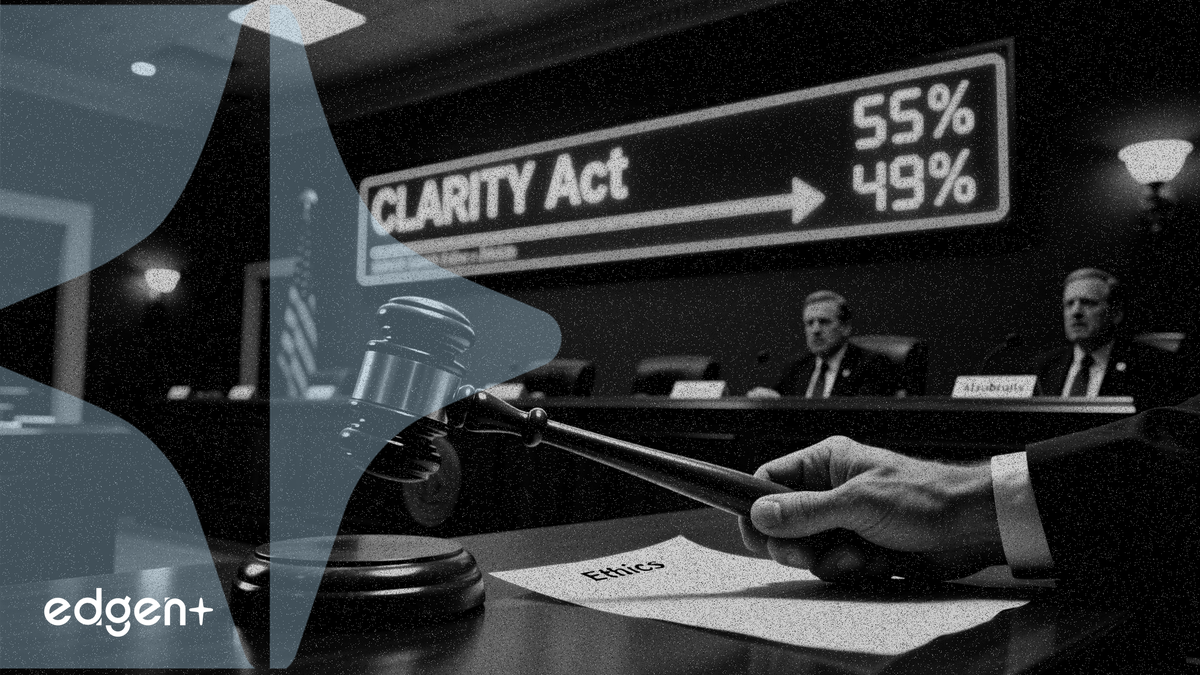
Sen. Angela Alsobrooks said she will not vote for the Digital Asset Market Clarity Act on the Senate floor unless negotiators reach agreement on ethics provisions, illicit finance language and a bipartisan deal in the Agriculture Committee, adding new uncertainty to the crypto market structure bill's path through Congress.
"We're almost there, but not quite there yet," Alsobrooks, a Maryland Democrat and member of the Senate Banking Committee, said on CoinDesk's The Policy Protocol on June 5. She characterized her 15-9 committee vote advancing the bill as support for continued bipartisan negotiations, not unconditional support for final passage.
The senator outlined three outstanding priorities: finalizing ethics provisions acceptable to both parties, completing illicit finance language championed by Sen. Catherine Cortez Masto, and reaching a bipartisan agreement in the Agriculture Committee. Alsobrooks also defended the stablecoin yield compromise that drew criticism from JPMorgan Chase CEO Jamie Dimon, saying negotiators spent roughly nine months crafting language that bars crypto firms from paying yield solely on stablecoin balances and prevents products that mimic bank accounts without bank-like protections.
The CLARITY Act was added to the Senate Legislative Calendar on June 1 under Calendar No. 423, one step closer to a floor vote. But prediction markets have grown more cautious: Polymarket odds of CLARITY Act approval in 2026 fell to 55%, down 10 percentage points from recent levels, while Kalshi traders priced a 27% chance of crypto market structure legislation becoming law by August 2026. Sen. Cynthia Lummis warned that failure to pass this year could push the next opportunity to around 2030, with fewer than eight weeks of Senate floor time available before the summer recess.
Ethics and illicit finance remain sticking points
Alsobrooks suggested Democratic skepticism toward crypto legislation is driven less by the technology than by concerns about corruption and fraud, pointing to questions involving President Trump's business interests in the digital asset space. She said many lawmakers remain focused on preventing scams and strengthening protections for consumers who have already suffered losses.
The Blockchain Association this week published a letter from 160 former law enforcement officials arguing the CLARITY Act provides strong tools to combat illicit finance involving cryptocurrency. The Revolving Door Project countered that the industry group disregarded concerns expressed by the National Sheriffs' Association and other law enforcement groups in early May.
Patrick Witt, the White House's chief adviser on crypto, said during a separate online event that the bill "puts real regulatory constraints on businesses and actors that currently live in a state of uncertainty." Lummis, who heads the Senate Banking Committee's digital assets subcommittee, argued that the current version is "the most highly negotiated bipartisan piece of a regulatory framework for digital assets that's ever been presented to the public."
What comes next
Negotiators must finalize ethics provisions acceptable to both parties before Senate Majority Leader Chuck Schumer can schedule a floor vote. The Agriculture Committee must also reach a bipartisan agreement on its portion of the bill. Alsobrooks said remaining engaged in negotiations is the best way to ensure constituents have a voice in shaping the final rules.
This article is for informational purposes only and does not constitute investment advice.