

A new Citigroup report finds 59% of the S&P 500's current price is a bet on future growth, a level that puts extreme pressure on this earnings season.
A new Citigroup report finds 59% of the S&P 500's current price is a bet on future growth, a level that puts extreme pressure on this earnings season.
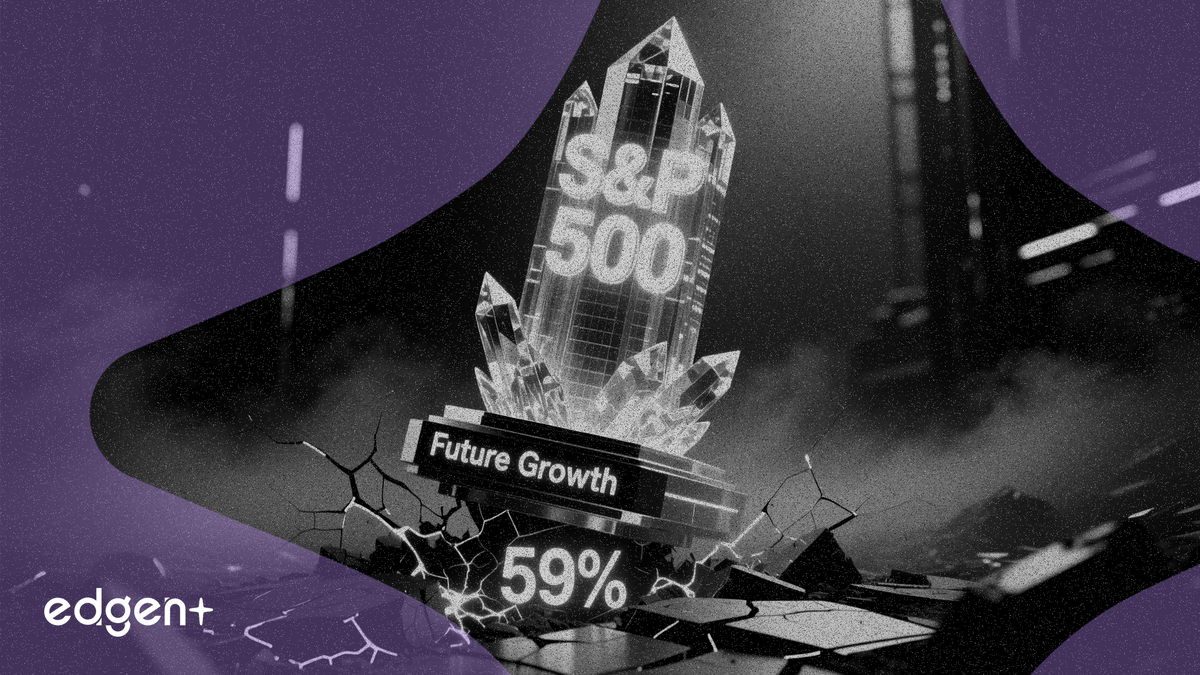
(P1) The S&P 500's sharp rebound from its April lows has pushed valuations into a precarious zone where nearly 59% of the index's value is derived from future growth expectations, according to a new report from Citigroup strategists.
(P2) "The basic fundamentals' burden of proof has risen sharply," Scott Chronert's team at Citigroup said in the note. Their analysis suggests that at current levels, there is almost no margin for error in corporate performance.
(P3) The market is pricing in an 11.7% annualized earnings per share (EPS) growth rate over the next five years, a pace that has historically been almost impossible to sustain. This elevated valuation is not confined to a few mega-cap tech stocks; the report shows the forward price-to-earnings ratio for the 80th percentile of S&P 500 stocks is at its 89th percentile based on the last 30 years of data.
(P4) This structure means corporate forward guidance is now far more critical than backward-looking quarterly results. With so much value pinned on future prospects, any guidance that hints at a slowdown could puncture the growth narrative and risk a broader market correction. The next major test for the market will be the upcoming slate of inflation data and the Federal Reserve's meeting in June.
The notion that high valuations are concentrated in a handful of technology giants is being challenged by a deeper look at the market's structure. Citigroup's analysis of the S&P 500's valuation distribution reveals a widespread expansion. The median stock in the index (50th percentile) trades at a forward P/E of 19.1 times, sitting at its 88th historical percentile. Even the cheapest quintile of stocks (20th percentile) is trading at a valuation level in the 70th percentile of its 30-year history. This indicates that the entire market, not just its leaders, is priced for strong, uninterrupted growth.
The current earnings season is demonstrating in real-time that beating estimates is no longer enough. Investors are laser-focused on the outlook. Shares of specialized talent solutions firm Robert Half (RHI) recently fell 5.1% in a single session after its first-quarter results. While the company's EPS beat analyst forecasts, the market reacted to the year-over-year decline in both revenue and profit, a sign that the underlying business is contracting. This dynamic highlights the market's sensitivity to growth trajectories over simple earnings beats. As major financial bellwethers like Bank of America (BAC) and Citigroup (C) itself report, their forward guidance on loan growth, net interest income, and deal pipelines will be scrutinized far more than their quarterly results.
The market's recent rally, which saw the Nasdaq, S&P 500, and Dow Jones Industrial Average jump 6.8%, 4.5%, and 3.2% respectively in one week, was fueled by signs of easing geopolitical tensions and a corresponding drop in Treasury yields. However, with valuations now stretched to a 95th percentile level based on a present-value framework, the market's foundation appears to rest more on fragile hope than on solid ground.
This article is for informational purposes only and does not constitute investment advice.