


Citigroup's latest analysis highlights a growing split in the AI sector, where open-weight models champion cost efficiency while closed-source leaders maintain a performance edge, creating a high-risk, high-reward investment landscape.
Citigroup's latest analysis highlights a growing split in the AI sector, where open-weight models champion cost efficiency while closed-source leaders maintain a performance edge, creating a high-risk, high-reward investment landscape.
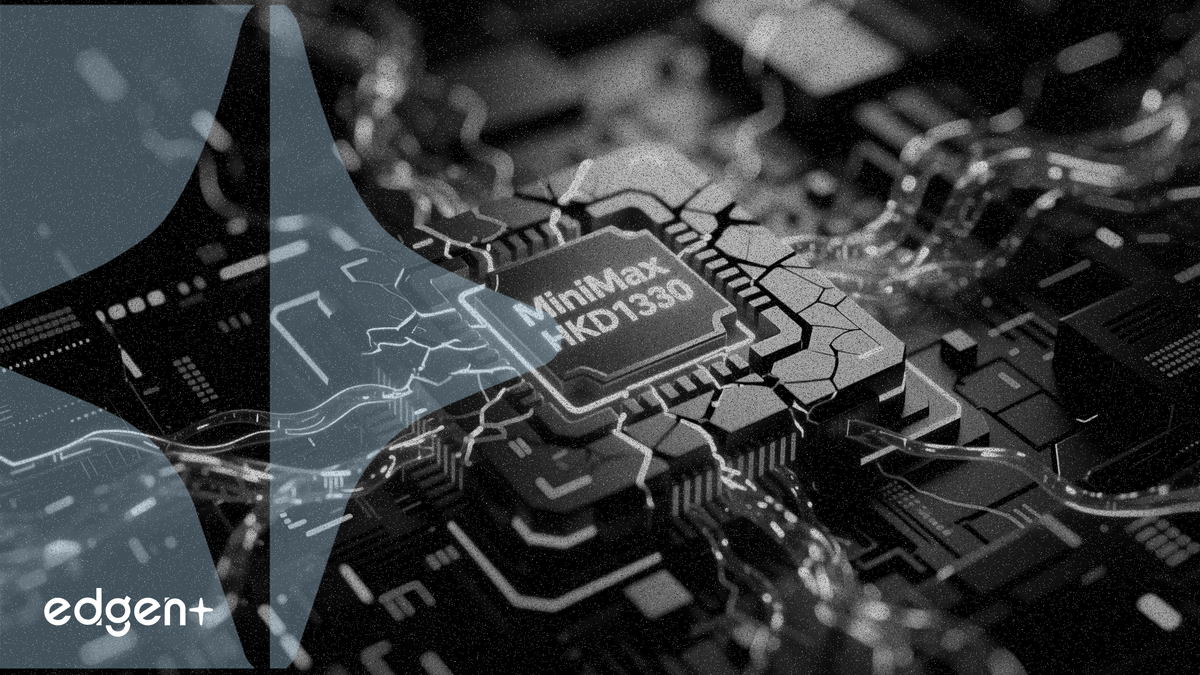
Citigroup says DeepSeek's new V4 model exemplifies a growing polarization in the artificial intelligence market, where cost-efficient open-weight models are rapidly closing the performance gap in key areas, creating a high-risk, high-reward investment landscape for companies like MiniMax. The bank initiated coverage on MiniMax (00100.HK) with a "Buy/High Risk" rating and a HKD1,330 price target.
While DeepSeek's reasoning capabilities still lag closed-source models by three to six months, "closed frontier models maintain a notable competitive advantage in long-term workflows, where reliable performance remains critical," according to the Citi research report. The report notes that DeepSeek’s V4-Pro performs on par with some proprietary models while being priced significantly lower than competitors like GPT-5.5.
Citi's valuation of MiniMax is based on a forecast 30x price-to-sales ratio for 2028, reflecting aggressive revenue growth projections of 128% CAGR from 2025 to 2030. However, the "High Risk" qualifier points to the intense competition and considerable uncertainties in a rapidly evolving market, where models from Kimi and GLM are also driving down costs.
The emergence of highly efficient models like DeepSeek V4 threatens to commoditize parts of the AI market, expanding the total addressable market but also creating significant volatility. For investors, this means that even with a "Buy" rating, the path to profitability for any single AI player is fraught with risk from intense price wars and the relentless pace of technological advancement.
DeepSeek V4's primary innovation is not raw performance but radical cost efficiency. Its architecture combines Compressed Sparse Attention (CSA) and Heavily Compressed Attention (HCA) to manage its one-million-token context window, as detailed in the company's technical report. This design lowers inference costs, making it more practical for developers to build agents that can analyze entire code repositories or lengthy legal documents without incurring massive computational expense.
The release includes two models: the V4-Pro, with 1.6 trillion total parameters, and the V4-Flash, with 284 billion. By making long-context reasoning cheaper, DeepSeek V4 could accelerate enterprise adoption and enable a new class of applications previously deemed too expensive, expanding the design space beyond simple chatbots.
Citi's report highlights the strategic crossroads facing the AI industry. On one side, open-weight models like DeepSeek are narrowing the performance gap in specific applications like coding and agent workflows. On the other, closed-source frontier models from companies like OpenAI and Anthropic maintain a lead in general reasoning and reliability for complex tasks.
This division creates a two-track market. For many applications, the "good enough" performance of cheaper models will win. However, for mission-critical enterprise workflows, the proven reliability and superior performance of closed models justify their premium pricing. DeepSeek acknowledged its reasoning capabilities still trail the market leaders by three to six months, a gap that frontier models will race to maintain.
Citi's "Buy/High Risk" rating for MiniMax encapsulates the investor dilemma in the current AI climate. The HKD1,330 price target is underpinned by a projected compound annual growth rate of 184% between 2025 and 2028. This reflects the enormous potential for companies that can capture a share of the expanding AI market.
However, the "High Risk" label is a crucial warning. It acknowledges the company's short trading history and the "considerable uncertainties" in the AI landscape. The very price wars enabled by models like DeepSeek V4 could compress margins across the industry, making it difficult to achieve the profitability implied by such high valuations. The report suggests that while the entire ecosystem benefits from lower costs, the differentiation barrier for frontier models must rise, and investors should be prepared for significant volatility.
This article is for informational purposes only and does not constitute investment advice.
