
China's new supply chain security law formalizes a multi-year push for self-reliance, creating a new layer of compliance and operational risk for foreign companies.
China's new supply chain security law formalizes a multi-year push for self-reliance, creating a new layer of compliance and operational risk for foreign companies.
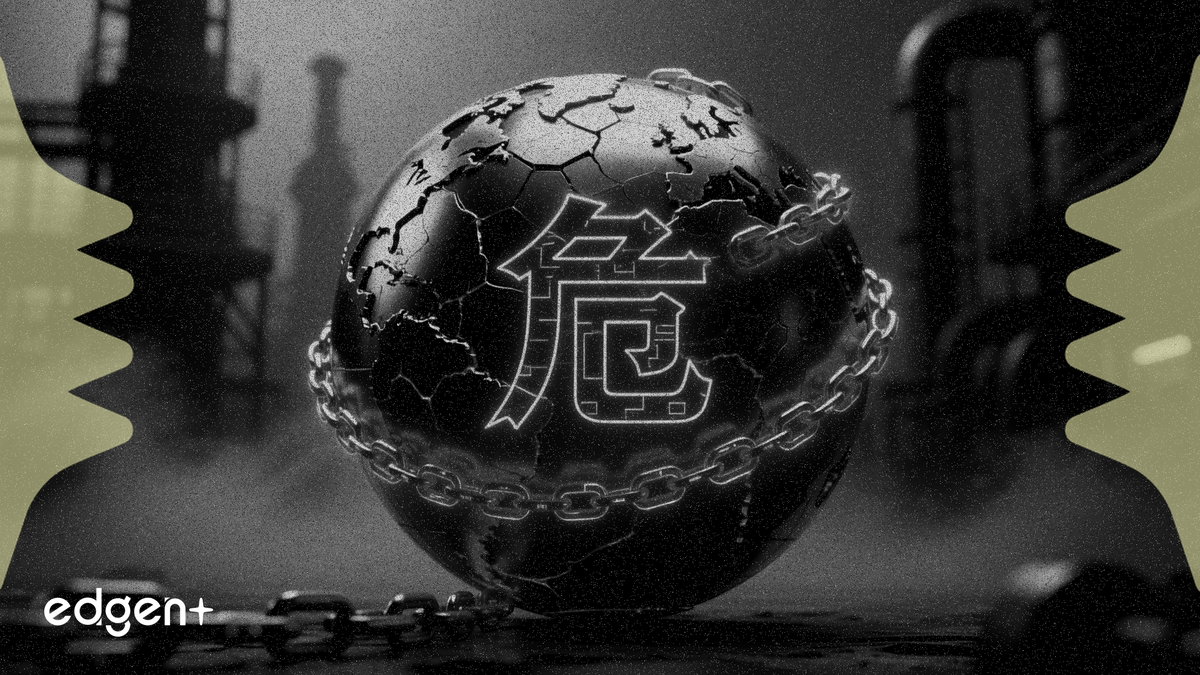
China’s State Council has enacted new provisions to secure its industrial supply chains, a sweeping regulation effective immediately that formalizes the country's long-term strategy for technological self-sufficiency and introduces significant uncertainty for global firms operating within its borders.
The move reflects a resonance between the global tech revolution and China's industrial upgrading strategy, said Tian Lihui, head of the Institute of Financial Development at Nankai University. "Corporate earnings are painting a clear structural picture of this transformation -- a shift from traditional factor-driven growth to a new paradigm led by technological innovation and global competitiveness," he said.
The new rules establish a mechanism for monitoring risks in "key areas," creating lists of critical raw materials, technologies, and equipment. They grant Beijing powers to take emergency control, including dispatching and seizing resources, and to retaliate against foreign entities deemed to be threatening its supply chain security. This codifies a strategy of economic resilience that has seen China’s research and development spending reach 3.93 trillion yuan in 2025, second only to the United States.
At stake is the stability of global supply chains that have been built around China for decades. The regulation gives Beijing broad authority to investigate and penalize foreign organizations that interrupt "normal transactions" or take "discriminatory measures." For international corporations, this creates a new, unpredictable variable that could accelerate the trend of diversifying supply chains away from China, a strategy often referred to as "China+1."
The regulation is designed to safeguard the immense progress China has made in strategic high-tech industries. Firms listed on Shanghai's STAR Market are reporting stellar 2025 results, showing the country's innovation drive is yielding substantial returns. Leading chipmaker SMIC, for example, posted a record 67.32 billion yuan (about $9.77 billion) in revenue, up 16.5 percent, while AI chip designer Cambricon Technologies reported its first-ever annual profit of nearly 2.06 billion yuan.
This success extends to other critical sectors. Battery giant CATL saw its net profit jump 42 percent as it solidified its dominance in the global power battery market. The government's work report has identified sectors like integrated circuits, aerospace, and biomedicine as emerging pillars, with official estimates suggesting their output could grow from nearly 6 trillion yuan in 2025 to over 10 trillion yuan by 2030. The new law provides a powerful, if undefined, tool to protect these national champions from external pressures.
For foreign companies, the law introduces a new dimension of compliance and operational risk. The provisions are broad, allowing for countermeasures such as investment and trade restrictions against firms or individuals from countries that have imposed their own limits on China. This comes as companies are already re-evaluating their supply chains for other reasons. INTCO Medical, for instance, recently launched new synthetic glove lines like Syntex™ to mitigate volatility in natural rubber supply and navigate the EU's new anti-deforestation regulations.
The Chinese regulation adds a geopolitical layer to these commercial calculations. A foreign company complying with sanctions or trade restrictions in its home country could potentially be found in violation of China's new supply chain provisions, creating a difficult legal and operational dilemma. The rules empower Chinese authorities to prohibit domestic organizations from transacting with targeted foreign entities, effectively cutting them out of the market. This formalizes a risk that many companies have been quietly preparing for since the U.S.-China trade war began, further solidifying supply chain resilience as a critical priority for global boards.
This article is for informational purposes only and does not constitute investment advice.