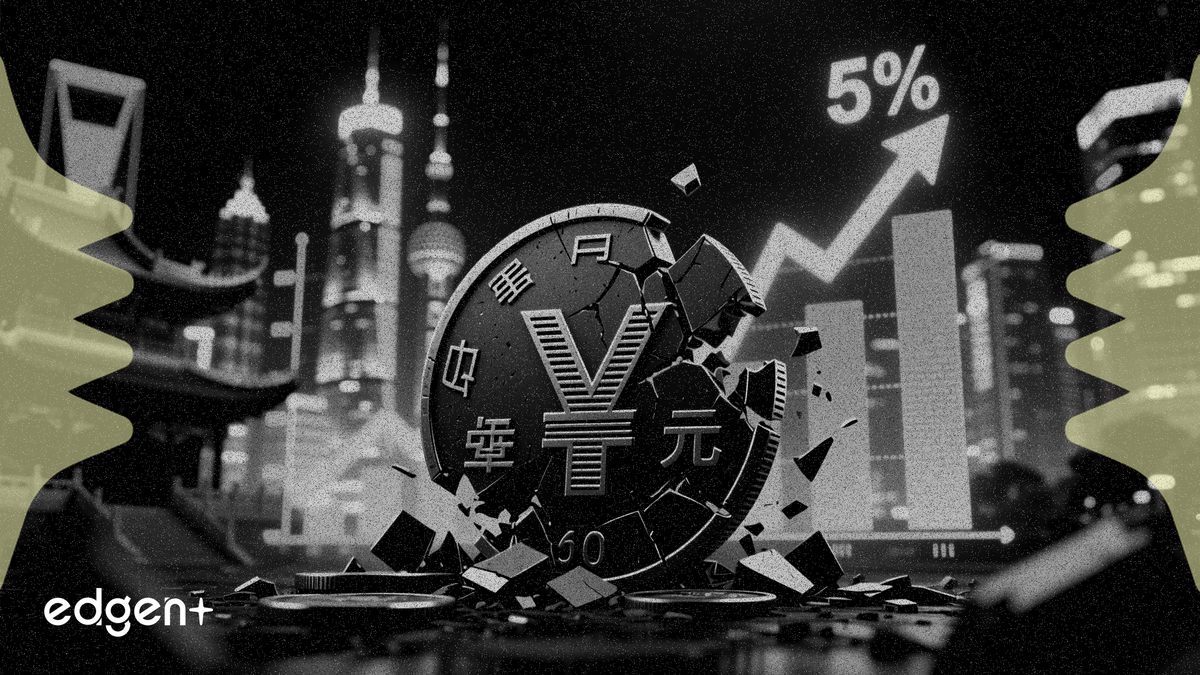
Stronger-than-expected first-quarter growth driven by exports and industrial policy faces headwinds from sluggish domestic spending and rising geopolitical risks in the Middle East.
(P1) Lede: China’s economy expanded at a faster-than-expected 5 percent in the first quarter of 2026, but a sharp slowdown in consumer spending and the looming impact of the Iran conflict on global trade are creating an uneven recovery that will test policymakers.
(P2) Authority: "The manufacturing side of the economy remains resilient and is still a key near-term growth anchor," said Zhou Hao, an analyst at Guotai Haitong Securities, in a note. "Looking ahead, China's macro agenda is likely to centre on two intertwined priorities: reflation and boosting domestic demand."
(P3) Details: The 5.0 percent year-on-year growth reported by the National Bureau of Statistics on Thursday beat a 4.8 percent forecast from a Reuters poll and accelerated from 4.5 percent in the fourth quarter. However, retail sales rose just 1.7 percent in March, a significant cooling from the 2.8 percent gain in the first two months. In contrast, industrial output climbed 5.7 percent in March, and exports for the first quarter were up a strong 14.7 percent from a year earlier.
(P4) Nut Graf: The data highlights a critical imbalance for policymakers in Beijing: an export- and production-led recovery that is struggling to translate into household spending. With the Iran conflict threatening to increase energy costs and dampen global demand, authorities face mounting pressure to stimulate consumption to ensure the full-year growth target of around 4.5 to 5 percent is met.
Reflation Signs Emerge Amid Production Glut
A key development is the sign of emerging reflation after a long period of price weakness. The GDP deflator, a broad measure of inflation, is poised to turn positive after being negative for eleven consecutive quarters, according to analysis of the data. This shift, partly driven by rising global energy prices, could help reverse the low-inflation expectations that have suppressed corporate and consumer activity.
However, this nascent recovery in prices is running into a supply-side glut. Overall industrial capacity utilization fell to 73.6 percent in the first quarter, a low previously seen during the 2024 lockdowns. This suggests that while industrial production volumes are high, factories are running with significant slack, which could continue to pressure corporate profit margins even as input costs rise.
Investment Leans on Security and Tech
Fixed-asset investment provided a steady, if unspectacular, contribution to growth, rising 1.7 percent in the first quarter. The underlying details show a clear policy direction focused on security and technological self-sufficiency. Manufacturing investment growth accelerated to 4.9 percent in March, with notable strength in sectors like general and electronic equipment.
This reflects Beijing's push to coordinate development with security, advancing green transition initiatives and major projects under the new five-year plan. In contrast, broad infrastructure investment growth has moderated from its early-year surge, and real estate development investment remains a significant drag, falling 11.2 percent in the first three months of the year, though the pace of decline has narrowed slightly.
The divergent trends between strong production and weak consumption put the People's Bank of China in a difficult position. While Beijing has pledged fiscal support, including a budget deficit of around 4 percent of GDP, the central bank's ability to ease monetary policy is constrained by the imported inflationary pressures from rising energy prices. The Politburo's upcoming meeting this month will be closely watched for any new, targeted measures to support consumers without derailing the fragile recovery.
This article is for informational purposes only and does not constitute investment advice.