
Key Takeaways:
- China's industrial output grew 5.4% in Jan-May, slowing from 5.6% in Jan-Apr
- The deceleration marks the first decline in the cumulative growth rate this year
- Weaker factory activity raises pressure on Beijing to deliver more stimulus
Key Takeaways:
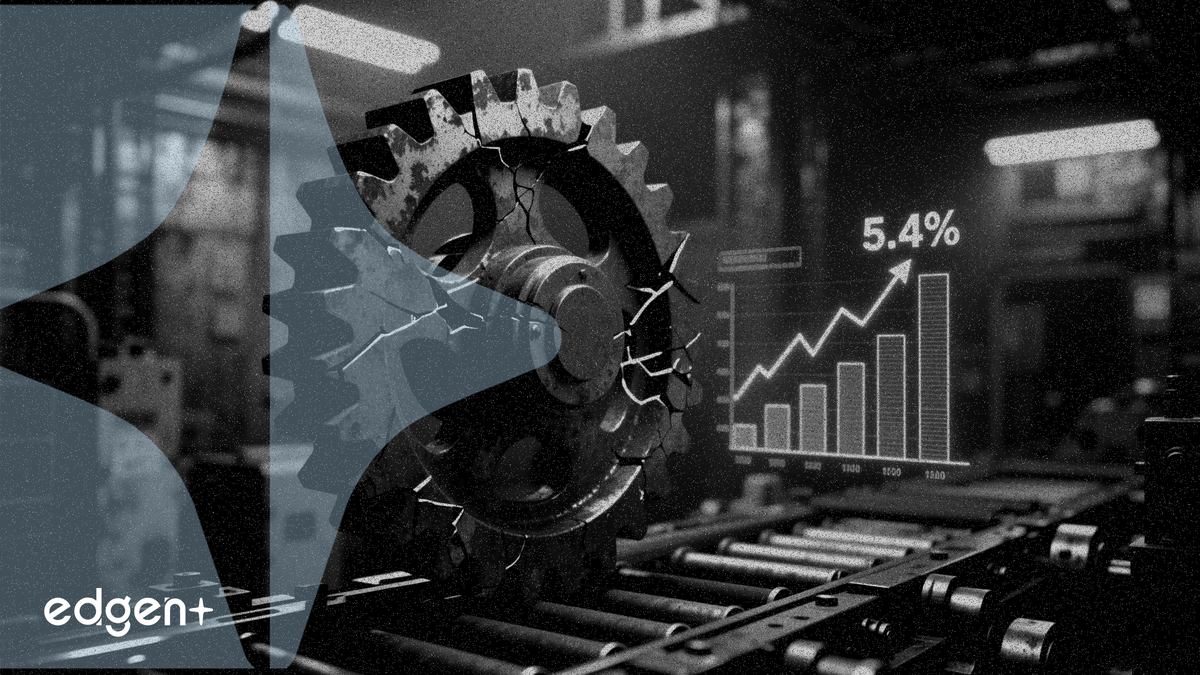
China's factory output growth slowed in the first five months of 2026, showing weakening momentum in the world's second-largest economy.
China's industrial output grew 5.4% in the January-to-May period from a year earlier, decelerating from 5.6% in the first four months, the National Bureau of Statistics said. The reading marks the first decline in the cumulative growth rate this year after holding steady through April.
The 5.4% pace remains above Beijing's annual GDP growth target of around 5%, but the narrowing margin suggests manufacturing activity is losing steam. Industrial output accounts for roughly one-third of China's economy and is a key indicator of overall economic health. The deceleration of 0.2 percentage points, while modest, reverses the stabilization trend seen in the first four months and raises questions about whether the recovery can sustain its momentum.
The slowdown follows a stretch of weak economic data that has intensified calls for additional stimulus. China's consumer price index has hovered near zero in recent months, while credit expansion has remained subdued despite the People's Bank of China's accommodative stance. The central bank has cut benchmark lending rates and reduced banks' reserve requirements over the past year to support the recovery, yet the transmission into real economic activity has been uneven. Aggregate social financing, a broad measure of credit, has grown at a slower pace, reflecting tepid borrowing demand from both households and businesses.
For global investors, weaker Chinese factory output poses risks for commodity markets. China accounts for more than half of global consumption of copper and iron ore, and a sustained deceleration in industrial activity could weigh on prices of base metals. The offshore yuan has faced depreciation pressure as the growth outlook dims, while emerging-market equities with China exposure have come under selling pressure.
The data also adds pressure on Beijing to deliver more aggressive stimulus measures. Economists expect the PBoC to consider further cuts to the 1-year loan prime rate or a reduction in the reserve requirement ratio in the coming months. Fiscal policy may also play a larger role, with potential increases in infrastructure spending or additional support for the property sector, which remains a drag on industrial demand.
The next key data point will be the Caixin manufacturing PMI for June, due July 1, which will offer a timelier snapshot of factory conditions across China's export-oriented private sector. A reading below 50 would signal contraction and likely accelerate policy action from Beijing.
This article is for informational purposes only and does not constitute investment advice.
