
A 51.3% jump in power consumption for EV charging in March confirms the sector's massive growth trajectory, outpacing China's wider economic activity.
A 51.3% jump in power consumption for EV charging in March confirms the sector's massive growth trajectory, outpacing China's wider economic activity.
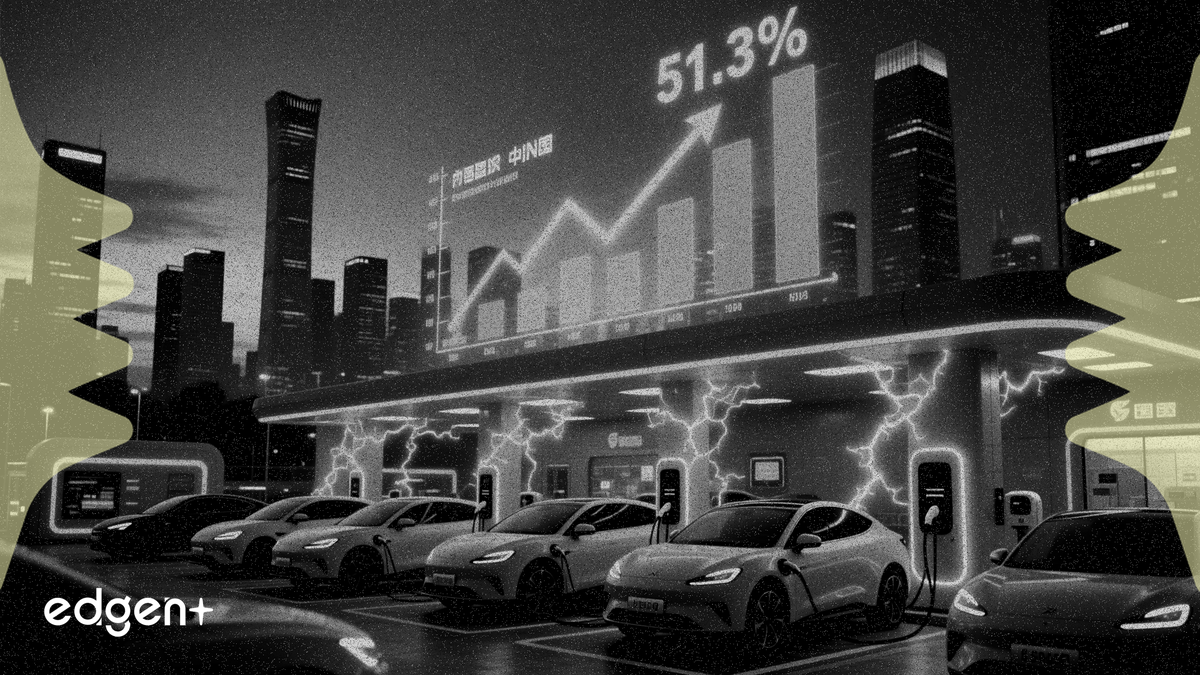
A 51.3% surge in electricity demand for electric vehicle charging in March signals China's EV market is expanding far faster than the broader economy, which saw total power consumption grow just 3.5%.
The data, released by China's National Energy Administration (NEA), provides a direct measure of the energy footprint of the world's largest new energy vehicle (NEV) market.
In absolute terms, electricity consumption for charging and battery swap services reached 13 billion kilowatt-hours (kWh). The tertiary sector, which includes these services, grew 7.7% overall. A parallel boom in the digital economy saw internet data services' power use climb 40.1% to 8 billion kWh.
This rapid, targeted energy growth reinforces the investment thesis for China's EV supply chain, from battery makers like CATL and Ganfeng Lithium to charging infrastructure providers, suggesting sustained demand despite a competitive domestic auto market.
The 40.1% increase in power for internet data services points to the massive capital expenditure from Chinese tech giants like Alibaba, Tencent, and Baidu. These companies are in an arms race to build out infrastructure for artificial intelligence, which requires vast amounts of computing power and energy. This trend directly benefits data center operators and suppliers of high-performance computing hardware.
The dual growth engines of EVs and data centers create a significant challenge and opportunity for China's power grid. It necessitates major investment in grid stabilization, energy storage solutions, and clean energy generation to meet the demand. This benefits companies in the utilities and grid technology space, as well as renewable energy firms like LONGi Green Energy Technology. The NEA's data highlights a structural shift in China's energy consumption patterns.
This article is for informational purposes only and does not constitute investment advice.