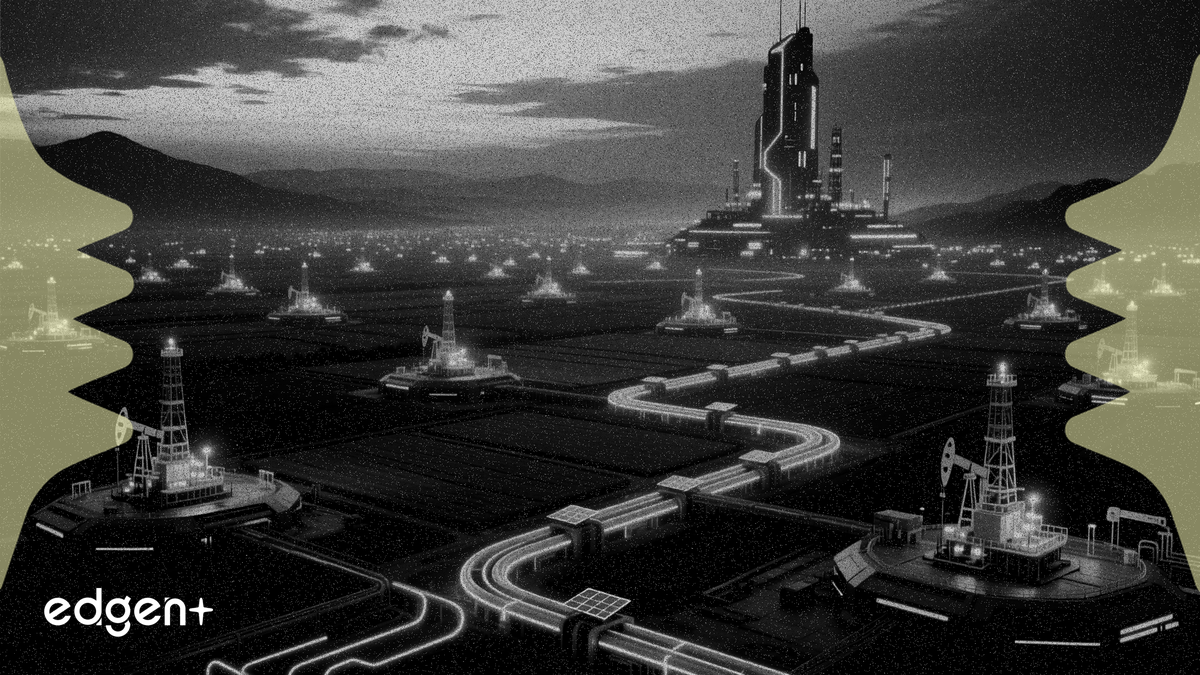
China's push for greater energy self-sufficiency took a significant step forward with the discovery of 225 large and medium-sized oil and gas fields, the result of a nearly RMB 450 billion investment during its 14th Five-Year Plan. The announcement signals Beijing's strategic priority to secure its domestic energy supply chain and lessen its dependence on a volatile global market.
"Through the construction of these new energy bases... we can elevate the overall level of green and low-carbon development," Wei Qijia, a researcher at the State Information Center under the National Development and Reform Commission, said regarding the broader energy plan. "This plays an important driving role in energy conservation, carbon reduction and the realization of the 'dual-carbon' goals."
The discoveries, concentrated in the Tarim, Ordos, and Bohai Bay basins, include 13 oilfields at the hundred-million-tonne level and 26 gas fields at the 100-billion-cubic-meter level. These finds are part of a larger national blueprint that, under the upcoming 15th Five-Year Plan (2026-30), aims to build out major energy projects, including new energy bases in desert regions and expanding the nation's "West-to-East Power Transmission" capacity to over 420 million kW.
At stake is China's long-term economic stability and geopolitical maneuverability. As the world's largest energy importer, its reliance on foreign oil and gas makes it vulnerable to price shocks and supply disruptions, particularly through strategic chokepoints like the Strait of Malacca. By developing its own reserves, Beijing aims to insulate its economy from such pressures and fortify its national security.
A Pillar of Economic Strategy
The new discoveries are a cornerstone of the 109 major engineering projects outlined in the 15th Five-Year Plan, designed to advance Chinese modernization and solidify the "pillar" of the nation's economy. While China has also pursued energy security externally through initiatives like the Belt and Road Initiative (BRI), that strategy has faced complexities, including project cancellations and concerns over debt sustainability in partner countries.
In contrast, the domestic exploration success provides a more direct and controlled path to energy security. The investment of nearly RMB 450 billion underscores a decisive pivot towards internal resource development as a primary policy tool. This move could, over the long term, recalibrate global energy flows, potentially reducing demand pressure on international benchmarks like Brent and WTI crude.
Reshaping the Geopolitical Map
While these new fields will take time to come fully online, their eventual output could reshape the global energy landscape. A less import-dependent China would have significant implications for major oil and gas exporters in the Middle East, Russia, and Africa, who count on Chinese demand. It also diminishes the strategic leverage held by nations that control maritime energy routes.
This inward turn does not mean China is decoupling from the world, but rather that it is securing its own foundation before engaging externally. The country's continued, albeit uneven, investment in BRI infrastructure in places like Bangladesh shows a dual-track approach: securing overland and maritime routes while simultaneously working to reduce the need for them. Ultimately, this massive domestic energy find is a fundamental play for resilience in an increasingly uncertain world.
This article is for informational purposes only and does not constitute investment advice.