
China's completed home sales policy reform will reduce local government land sale revenue by 30 percent, Goldman Sachs projects, worsening fiscal strain and making it harder for cash-strapped developers to buy land.
China's completed home sales policy reform will reduce local government land sale revenue by 30 percent, Goldman Sachs projects, worsening fiscal strain and making it harder for cash-strapped developers to buy land.
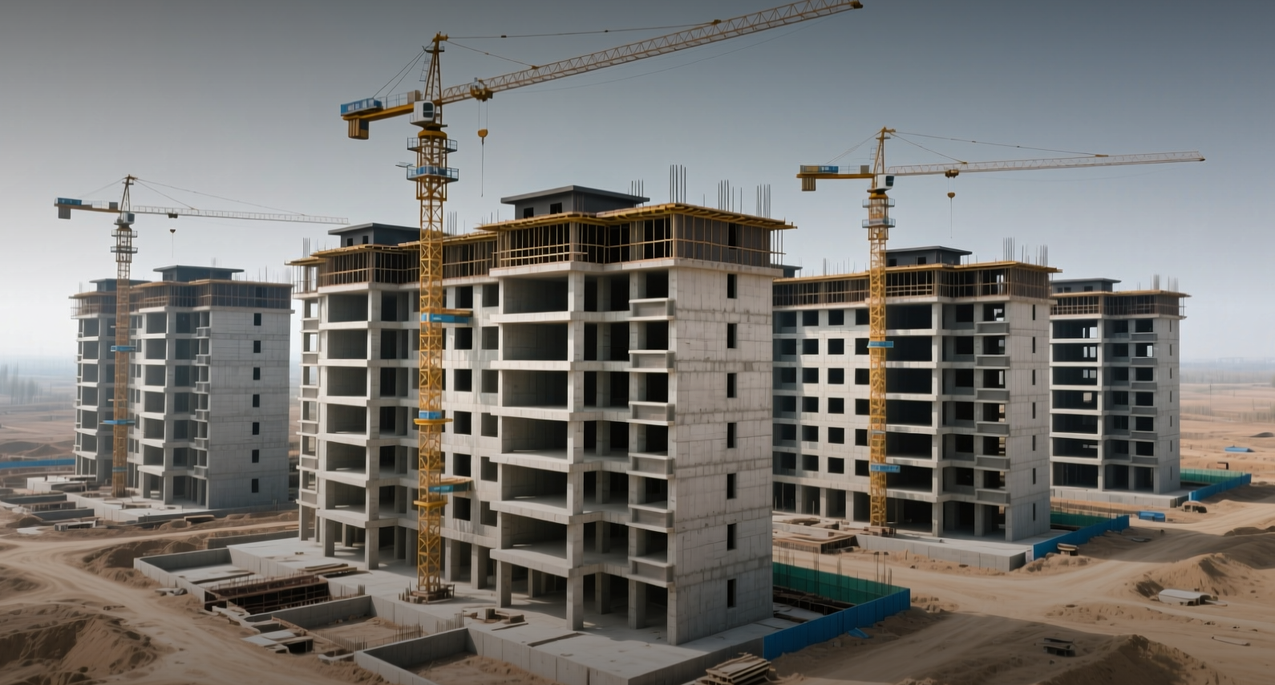
China's completed-home sales reform will cut local government land revenue by 30 percent, Goldman Sachs said, revising up its prior 20 percent forecast and deepening the fiscal squeeze on developers already struggling to buy land. The bank expects the decline to persist into next year and beyond, with land sale revenue ultimately falling as much as 90 percent from the mid-2021 peak.
The policy shift — which guides developers away from the pre-sale model toward selling only completed homes — fundamentally alters the cash-flow cycle of China's property sector. Under the pre-sale framework, developers collected homebuyer payments during construction and recycled those funds into new land purchases. Under the completed-home model, payments arrive only after construction finishes, stretching the funding gap across a multi-year build cycle and forcing developers to carry substantially larger financing burdens.
That structural change hits local governments directly. Land sales have been a primary revenue source for Chinese municipalities, funding infrastructure and public services. A 30 percent decline in land sale revenue — and potentially 90 percent from the 2021 peak — constrains fiscal capacity precisely when local governments face mounting debt-service obligations and slowing economic growth.
The market reaction was immediate. HK-listed Chinese property developers fell broadly on Sept. 7, with China Jinmao dropping 5.04 percent, Sunac China 4.69 percent, Longfor Group 4.35 percent, Sino-Ocean Group 4.26 percent and China Vanke 4 percent. China Resources Land shed 2.16 percent, China Overseas Land & Investment 2.89 percent, and C&D International Group 3.7 percent. Short-selling ratios ran elevated across the sector, with Longfor at 26.4 percent of turnover and China Resources Land at 21.9 percent.
South Korea's Post-Allotment Precedent
The completed-home sales model mirrors a reform South Korea attempted more than two decades ago. Seoul's "post-allotment" system, which delayed sales until construction reached 60 to 80 percent completion, forced developers to carry far larger financing burdens. A 2017 study by Korea Ratings Corp. found that postponing sales to 80 percent construction progress increased project financing needs by 1.6 to 4.3 times and financial expenses by 1.7 to 2.9 times across nine sampled projects. Under a 60 percent loan-to-value constraint, eight of nine projects required additional equity injections of 1.9 to 6.3 times original plans.
South Korea ultimately retreated from full implementation, maintaining a dual-track system where public housing follows post-allotment while private developers are incentivized rather than mandated. The reform's impact on market structure was nonetheless significant: after the 2022 project financing crisis, the top 10 developers' apartment allotment share jumped from 23.8 percent in 2022 to 34.5 percent by 2024, with Seoul's top 10 reaching 61 percent.
Fiscal Feedback Loop
For China, the reform's fiscal impact compounds the developer liquidity problem. As land sale revenue falls, local governments have less capacity to offer land at discounted prices or provide incentives to attract developers. This creates a negative feedback loop: weaker land sales reduce fiscal capacity, which reduces the incentives available to developers, which further depresses land demand.
Goldman's revised 30 percent projection — up from 20 percent — reflects the accelerating pace of the policy rollout. The bank's estimate that land revenue could fall 90 percent from the mid-2021 peak shows the structural, not cyclical, nature of this shift. Unlike previous property downturns driven by credit tightening or demand shocks, the completed-home sales model permanently alters the timing of cash flows through the sector.
For investors, the implications extend beyond property stocks. Local government fiscal strain affects infrastructure spending, public sector wages, and the broader credit environment. The South Korean experience suggests the transition may accelerate consolidation among larger, better-capitalized developers while squeezing smaller players out of the market — a pattern that could reshape China's property sector over the next several years.
This article is for informational purposes only and does not constitute investment advice.
