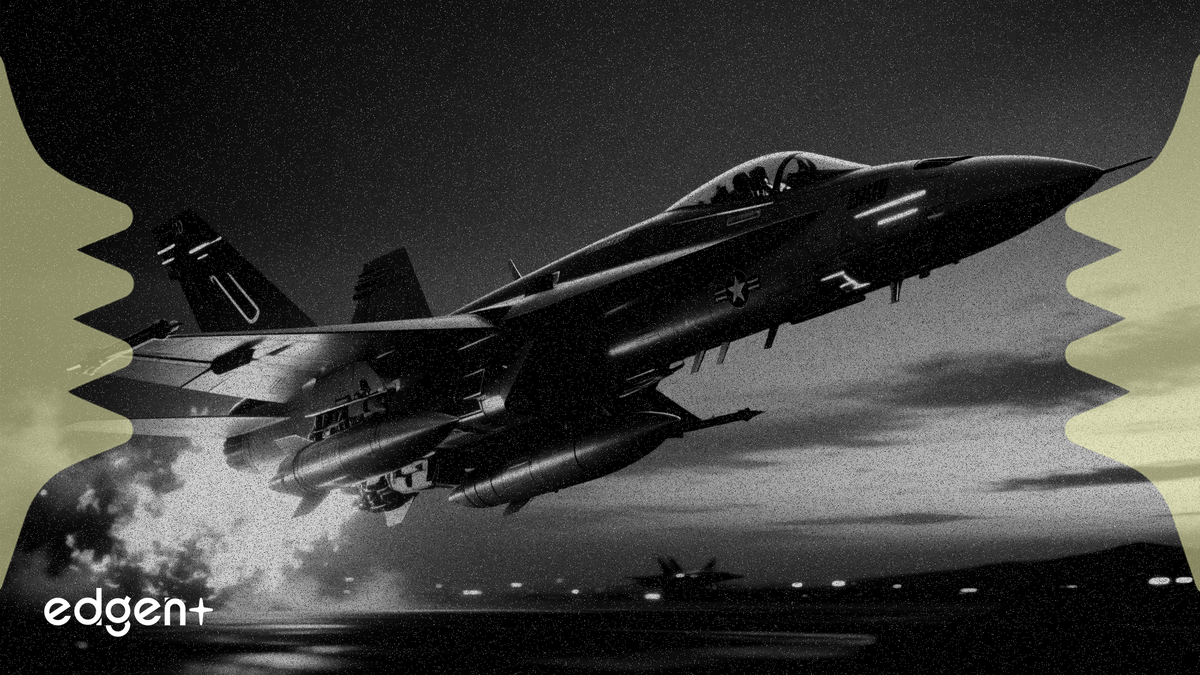
(Washington) – Castelion, a California-based defense startup, has secured a $105 million contract from the U.S. Navy to adapt its Blackbeard hypersonic missile for the F/A-18 Super Hornet, a move that accelerates the deployment of carrier-based hypersonic strike capabilities. The award, confirmed on April 24, 2026, pushes the weapon system from development toward operational readiness, with fielding expected as early as next year.
"The most sacred targets in our engineering process are schedule and affordability. That forces more creative solutions," Sean Pitt, Castelion's co-founder and chief operating officer, told Reuters. Pitt highlighted the company's use of automotive-grade components to speed up development and control costs, a critical factor in producing hypersonic weapons at scale.
The contract covers the complete hardware and software integration of the Blackbeard missile onto the F/A-18, as well as comprehensive flight testing and airworthiness certification required for deployment on an aircraft carrier. This represents the final major step before the Navy decides on volume procurement for its carrier air wings. Pentagon budget documents indicate the Navy's intent to buy 4,500 air-launched hypersonic missiles over the next five years at an average cost of $384,000 per unit, a price point that makes large-scale acquisition feasible.
This development is significant as it provides a mobile, carrier-based hypersonic capability that can reach targets inaccessible to land-based systems, directly addressing the strategic challenge posed by China. A weapon like Blackbeard, which travels at over five times the speed of sound, complicates enemy defensive calculations and strengthens U.S. deterrence. The last major investment in carrier-based strike capability of this nature was the introduction of the Tomahawk cruise missile in the 1980s, which fundamentally changed naval warfare.
Project Ranger and Production Scale-Up
To meet the anticipated demand, Castelion is privately funding the $250 million Project Ranger, a manufacturing campus in New Mexico. This facility is designed to produce thousands of Blackbeard missiles annually, with full operational capacity expected by the end of next year. The company's proactive investment in production infrastructure, even before securing a large-scale production contract, shows a high degree of confidence in the program and aligns with the Pentagon's push for more agile and rapid defense acquisition.
The move to equip F/A-18s with a hypersonic weapon reflects a broader U.S. strategy to counter near-peer adversaries by increasing the lethality and range of existing assets. As the U.S. expends munitions to support allies, the need for affordable, next-generation weapons that can be produced quickly becomes more acute. Castelion's approach of leveraging commercial technology to achieve military ends at a lower cost could serve as a model for future defense procurement.
This article is for informational purposes only and does not constitute investment advice.