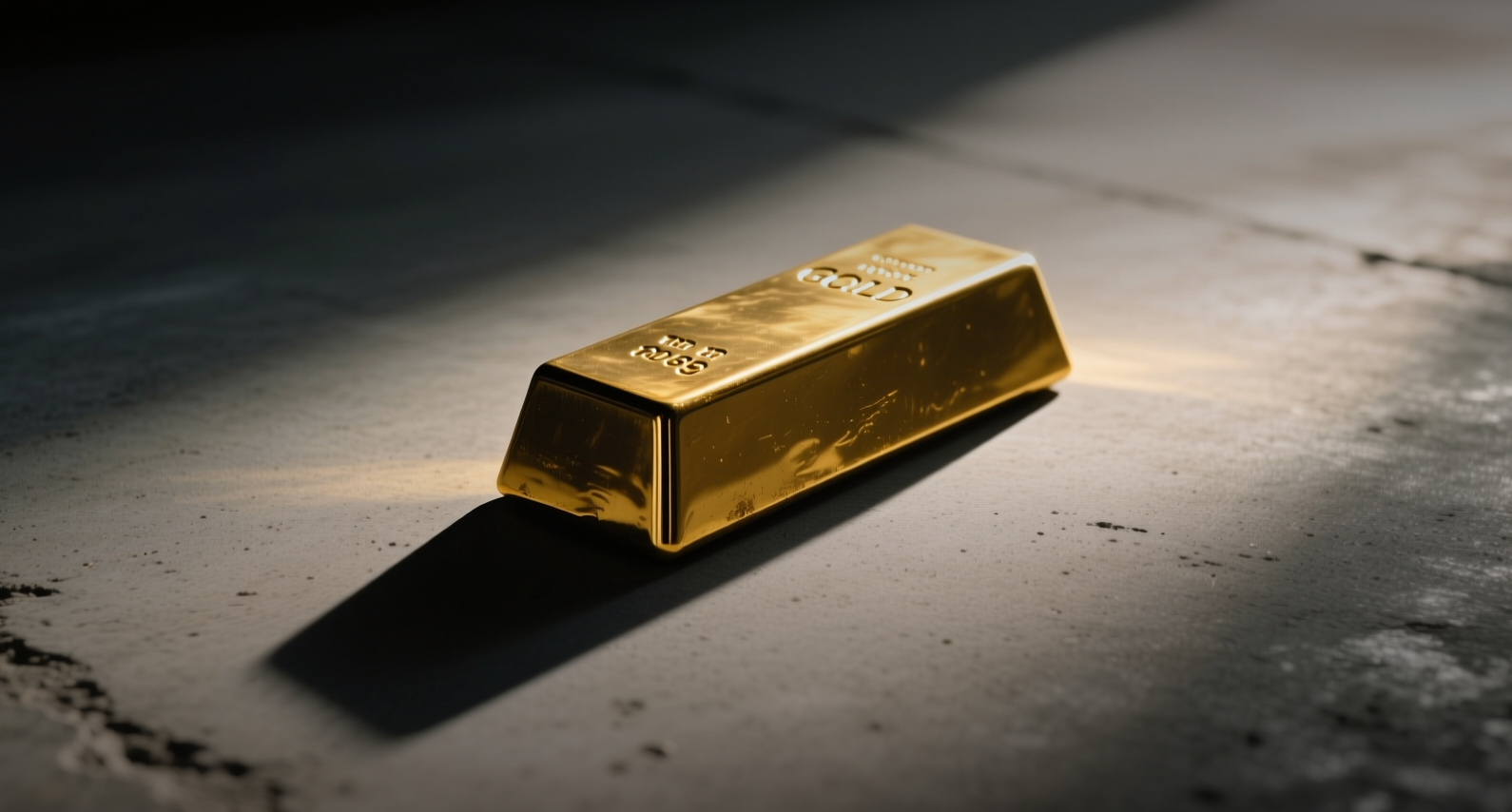
The Canadian Dollar's decades-long correlation with crude oil is breaking down as gold emerges as the dominant commodity driver for the currency, marking a structural realignment in one of the world's most closely watched commodity-currency relationships.
The Canadian Dollar's 90-day rolling correlation with WTI crude oil has fallen to 0.12, the lowest level since 2013, according to FX analytics data. Over the same period, the CAD-gold correlation has climbed to 0.58, a record high, as gold trades above $4,100 per ounce on COMEX and silver has pushed past $70.
"The traditional oil-CAD relationship has been weakening since late 2024, and we are now seeing a structural realignment toward gold as Canada's resource mix shifts," said Omar Tariq, commodities analyst at Edgen. "Canada is no longer just an oil story — its growing gold production and the metal's safe-haven demand are reshaping how the currency trades."
Canada's gold output has risen 12 percent year-over-year to 230 tonnes in 2025, according to Natural Resources Canada data, while crude production growth has moderated to 3 percent amid pipeline constraints and regulatory uncertainty. The divergence is reflected in the TSX, where the materials sector — which includes gold miners — has gained 18 percent this year, outpacing the energy sector's 6 percent advance.
The shift carries implications for currency traders and commodity investors alike. A weaker CAD-oil link means the loonie is less likely to serve as a natural hedge for crude positions, while the stronger gold correlation could amplify the currency's sensitivity to shifts in precious metals prices. The Bank of Canada's policy path adds another layer: the central bank held its key rate at 3.25 percent in June, and a hawkish Federal Reserve has underpinned the U.S. dollar, keeping USD-CAD near 1.38.
Gold's pull on the loonie
Gold's ascent to above $4,100 per ounce — up 32 percent year-to-date — has been driven by central bank purchases, geopolitical uncertainty, and the dollar debasement trade, according to World Gold Council data. Silver has followed, breaking past $70 for the first time since 2011, while palladium has recovered to $1,350 per ounce.
For Canada, the third-largest gold producer globally after China and Australia, the rally translates directly into export revenue. Gold exports reached C$28 billion in 2025, up from C$19 billion in 2023, according to Statistics Canada. That growing share of export receipts is embedding gold deeper into the currency's valuation mechanics.
"The correlation shift is self-reinforcing," Tariq said. "As more Canadian gold flows into global markets, the CAD becomes more responsive to gold prices. This is not a temporary divergence — it reflects a fundamental change in Canada's commodity export composition."
What comes next
The next catalyst for the CAD-gold relationship will be the Bank of Canada's July 16 rate decision. A cut would widen the rate differential with the Fed and pressure the loonie, potentially accelerating gold demand as a hedge. On the supply side, Alamos Gold's 18 percent share decline after cutting its second-quarter production forecast highlights the risks of execution in the sector.
For traders, the structural shift means traditional oil-CAD hedging strategies may need recalibration. The Canadian Dollar's sensitivity to gold price fluctuations is now comparable to the Australian Dollar's relationship with iron ore, according to correlation analysis.
This article is for informational purposes only and does not constitute investment advice.