
Canada is creating its first sovereign wealth fund, a C$25 billion war chest designed to secure its economic sovereignty amid rising trade tensions with the United States.
Canada is creating its first sovereign wealth fund, a C$25 billion war chest designed to secure its economic sovereignty amid rising trade tensions with the United States.
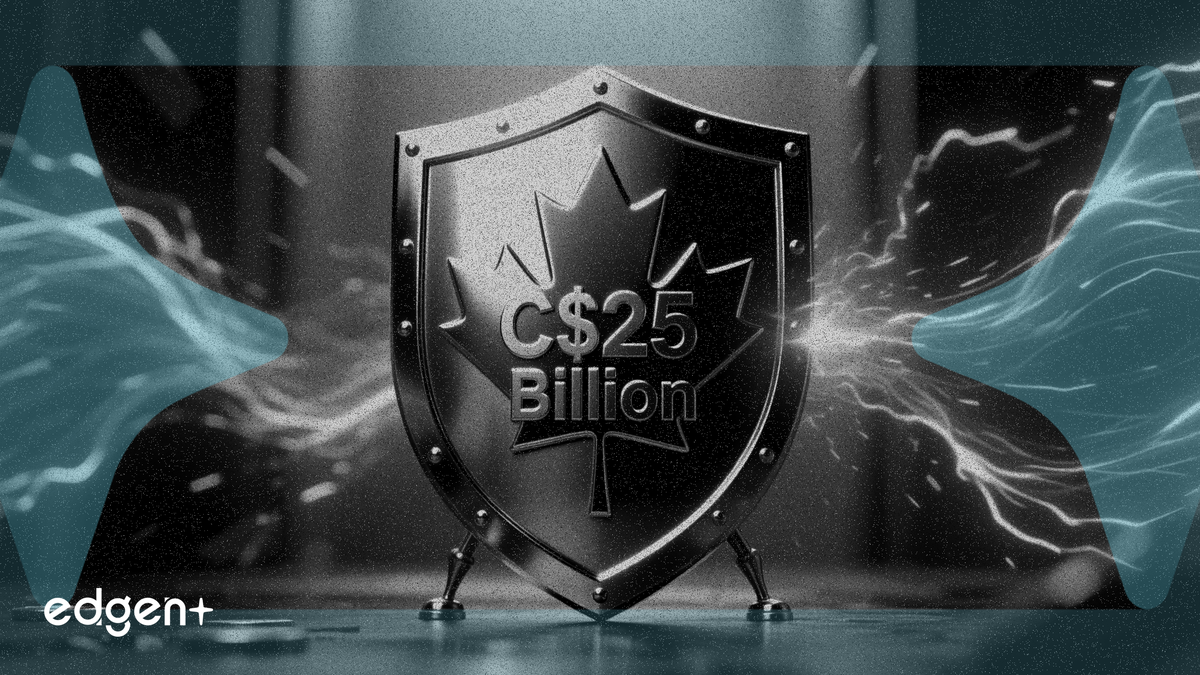
Canada is creating its first sovereign wealth fund, a C$25 billion war chest designed to secure its economic sovereignty amid rising trade tensions with the United States.
The Canadian government will launch its first sovereign-wealth fund, the C$25 billion Canada Strong Fund, to co-invest in domestic energy, infrastructure, and resource projects as a direct response to ongoing United States trade pressures.
"The U.S. has changed—that’s their right. We are responding—that’s our imperative,” Prime Minister Mark Carney said at the announcement in Ottawa, framing the fund as a tool for economic self-reliance.
The move comes as Canada remains the only G7 nation without a tariff relief deal with the White House, stalling trade negotiations. The new fund will take equity stakes, a departure from the loan-based model of the existing Canada Infrastructure Bank, which has deployed over C$18 billion across 108 projects.
The fund aims to insulate critical Canadian industries from foreign political shifts by fostering domestic ownership, but its success hinges on its ability to attract private capital and operate independently. However, some economists are skeptical, with Derek Holt of Bank of Nova Scotia noting Canada's current-account deficit of roughly 1 percent of GDP raises questions about whether the fund will expand the capital pool or merely redirect existing savings.
The Canada Strong Fund represents a significant shift in the country's industrial policy, moving from a model of grants and loans to one focused on direct equity ownership. The stated goal is to ensure that Canadians retain a greater share of the wealth generated from the nation's vast strategic assets, including critical minerals, energy, and agricultural resources. By taking ownership stakes, the fund is designed to generate commercial returns for the public, moving beyond the benefits of tax revenue and employment alone.
This strategy attempts to solve a persistent value-capture problem for Canada, where foreign capital has often played a dominant role in financing large-scale resource and infrastructure development. While this has enabled project execution, it has also meant a significant portion of the long-term financial upside flows out of the country. The new fund, seeded with an initial C$25 billion federal contribution, is intended to act as a powerful domestic co-investor alongside private capital.
A critical element of the proposal is the fund's governance. Officials stated it will be established as an independent Crown corporation, operating at arm’s length from direct political influence to select projects based on commercial merit. This structure is essential to avoid the risk of the fund becoming a vehicle for politically motivated projects that may not be commercially viable. The government plans several months of consultations to finalize the fund's mandate and governance framework.
Comparisons have been drawn to established sovereign wealth funds like those in Norway and Singapore. However, unlike Norway’s fund built on massive oil and gas surpluses, Canada’s is being launched via a direct federal contribution while the country runs a current-account deficit. This makes the fund’s ability to operate with commercial discipline and recycle investment gains back into new projects paramount to achieving a compounding growth effect over the long term.
One of the more novel aspects of the plan is the potential for a retail investment product, which would allow individual Canadians to invest directly in the fund. While details remain subject to consultation, this component aims to democratize participation in the nation's industrial growth. Investors, however, should be cautious, as such projects carry inherent risks, including long timelines and commodity price exposure, and the design of any risk-sharing mechanisms has not yet been disclosed.
This article is for informational purposes only and does not constitute investment advice.