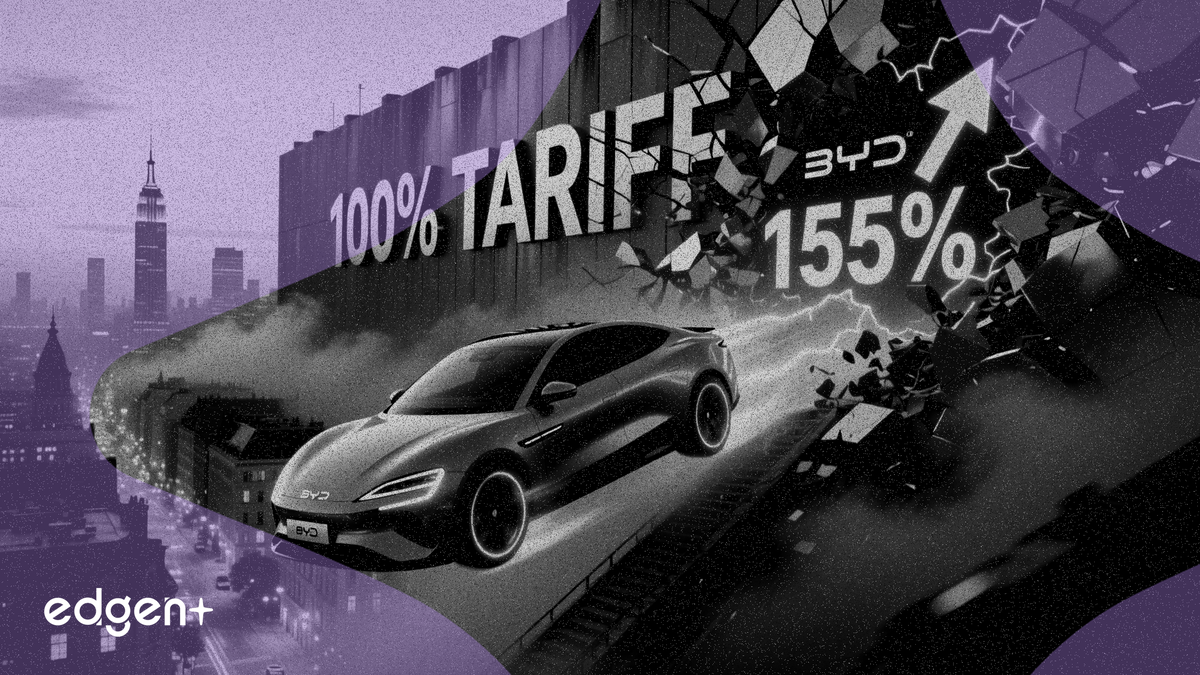
(P1) Chinese automaker BYD is rapidly expanding its global footprint with a 155% surge in first-quarter European sales, even as it contends with significant battery supply shortages at home and escalating trade barriers, including a new 100% U.S. tariff on Chinese-made vehicles. The intense price war in China’s domestic market, where over 100 brands compete, is pushing companies like BYD to aggressively target overseas growth, exporting what Mercedes-Benz CEO Ola Källenius calls its “hyper competition” dynamics to the rest of the world.
(P2) "China is a situation, right now, of hyper competition," Källenius told Barron's. "There are 100 players in the game. What will the market ultimately support? We shall see. But that is a very tough game at the moment.”
(P3) The export push is yielding significant results for BYD, which sent 42% of its April volume abroad. In Hungary, the company sold 790 fully electric vehicles between January and April, overtaking Tesla to claim a 17.1% market share, according to BYD Hungary. The success comes as Western automakers struggle in China; Mercedes-Benz saw its Chinese sales fall 27% in the first quarter. In response to the export wave, the U.S. has enacted a 100% tariff on all Chinese car imports, a more severe measure than Europe's anti-subsidy duties which apply only to fully electric cars.
(P4) The rapid expansion and push into new technology is straining BYD’s vertically integrated model, creating a significant bottleneck for its second-generation Blade Battery. This threatens to slow its delivery of high-demand flash-charge vehicles and potentially cede ground to rivals like Tesla and traditional automakers, impacting its global market share ambitions which are critical for sustaining its valuation amid fierce domestic competition.
Battery Shortage Bites
BYD’s growth is creating new challenges, with company chairman Wang Chuanfu acknowledging that battery supply constraints have become a “major challenge.” Unfulfilled orders for vehicles equipped with its new flash-charging technology may exceed 140,000 units, according to industry estimates. The technology, which allows a vehicle to charge from 10% to 70% in about five minutes, is a key feature in new models and a cornerstone of its premium market strategy.
The shortage highlights the intense pressure on the EV supply chain. BYD shipped 20.98 GWh of batteries in April, but demand from its own expanding lineup is outpacing production. While dealing with the bottleneck, the company is also accelerating its global expansion, holding discussions with European automakers to use underutilized factory capacity on the continent. This strategy could help BYD localize production and mitigate the impact of tariffs, but only if it can produce enough batteries to power its growth.
This article is for informational purposes only and does not constitute investment advice.