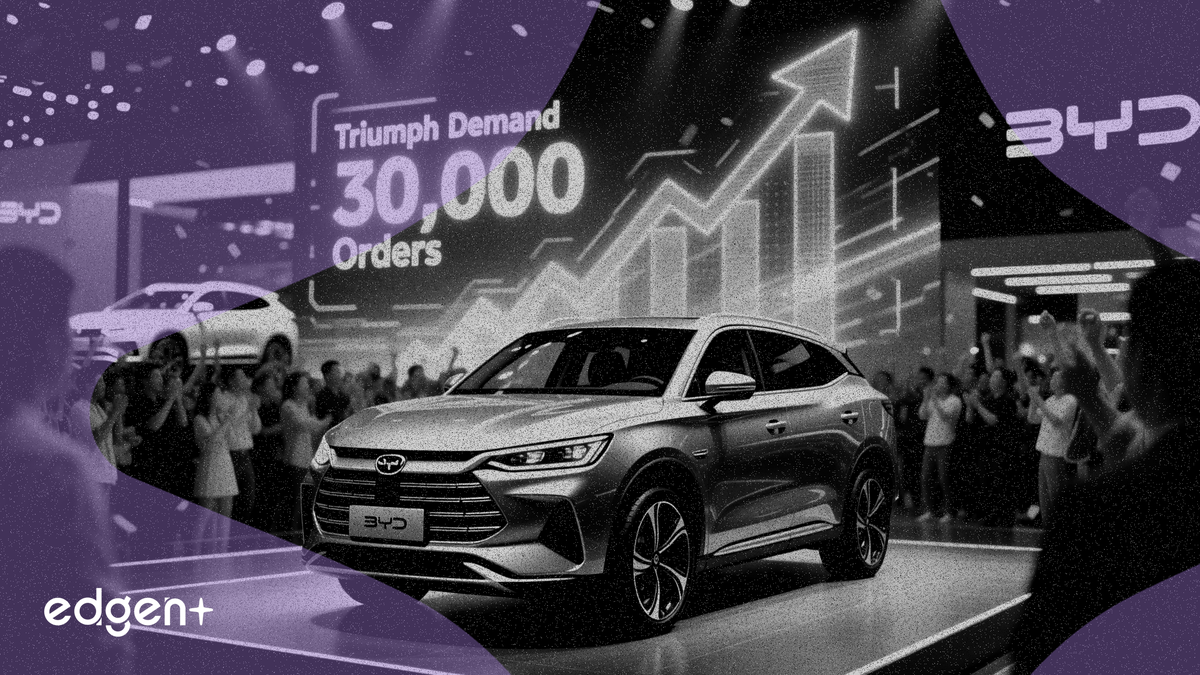
(P1) BYD Co.'s new seven-seater SUV secured 30,000 orders within a day of its launch at the Beijing Auto Show, signaling the immense scale and competitive intensity of China's electric vehicle market that now threatens to outpace Western rivals.
(P2) "At the show, BYD’s 'Datang' and 'Sealion 08', Geely’s 'Zeekr 8X', Leapmotor’s 'A10', and NIO’s 'ES9' received the strongest market response," CLSA analysts said in a research report, noting the show's scale had doubled from the previous year.
(P3) The "Datang" drew significant attention for its fast-charging capability and design. The broader auto show featured 1,451 vehicles and 181 world premieres across 380,000 square meters of exhibition space. In contrast, new models from emerging players like Li Auto, XPeng, and Xiaomi received a less positive reception due to a lack of surprises, according to the report.
(P4) The event underscores China's strategic advantage in the global EV race, built upon its dominance of the battery supply chain. This allows domestic champions like BYD, which saw its stock rise 4.8% to HKD106.1 on the news, to innovate and scale rapidly, leaving many global automakers to play catch-up with China-specific models while Tesla was notably absent from the show for the third consecutive year.
Battery Makers Take Center Stage
The real story behind China's EV leadership was also on display, with battery manufacturers like CATL, CALB, and EVE Energy occupying massive booths rivaling the automakers themselves. CATL showcased its Shenxing ultra-fast charging battery, capable of charging from 10% to 98% in just six minutes. This close integration and rapid innovation in battery technology provides Chinese automakers a critical advantage in both cost and performance, a moat that Western companies find difficult to cross.
Western Brands on the Back Foot
While legacy automakers like Volkswagen, Audi, and BMW were present, their strategy has clearly shifted to producing China-specific EVs to compete. Volkswagen, for example, repurposed its Jetta brand into an affordable electric SUV concept aimed directly at the fiercely competitive local market. Ford and GM's Buick also had a presence, but the overall sense was one of response rather than leadership. The absence of competitors like Tesla, Jaguar, and Land Rover further highlights the difficulties foreign brands face in this market. The intense domestic competition is expected to forge battle-hardened global players who will eventually challenge incumbents in their home markets.
This article is for informational purposes only and does not constitute investment advice.