


Le géant chinois des véhicules électriques BYD vise une place sur la grille de la Formule 1, une décision qui pourrait le placer face à des rivaux automobiles comme Mercedes et bouleverser la structure de propriété du sport.
Le géant chinois des véhicules électriques BYD vise une place sur la grille de la Formule 1, une décision qui pourrait le placer face à des rivaux automobiles comme Mercedes et bouleverser la structure de propriété du sport.
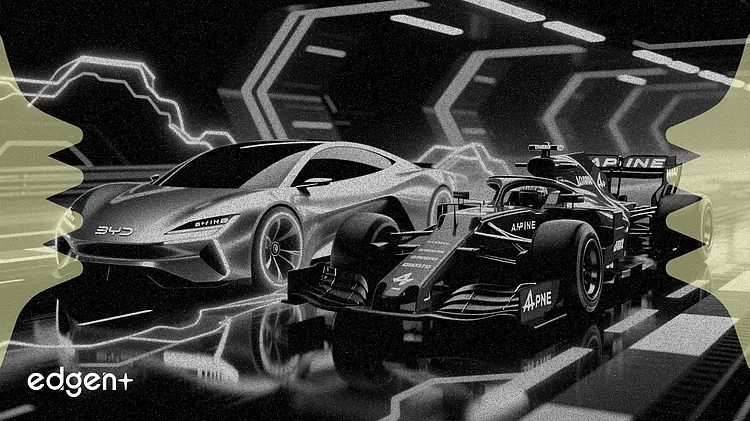
Le géant chinois des véhicules électriques BYD vise une place sur la grille de la Formule 1, une décision qui pourrait le placer face à des rivaux automobiles comme Mercedes et bouleverser la structure de propriété du sport.
BYD, le plus grand fabricant mondial de véhicules électriques, a confirmé être en négociations substantielles pour entrer en Formule 1, une démarche à enjeux élevés qui pourrait le voir acquérir une participation rapportée de 24 % dans l'écurie Alpine et défier les géants de l'automobile établis sur la scène mondiale.
"Bien que la société ait officiellement déclaré qu'il n'y avait 'aucune nouvelle à divulguer pour le moment', la vice-présidente exécutive du groupe BYD, Li Ke, a reconnu lors du Salon de l'auto de Pékin 2026 que l'entreprise avait rencontré le PDG de la F1, Stefano Domenicali, et que les deux parties 'restent en contact étroit'", a déclaré un représentant de la société.
La participation de 24 % dans Alpine, actuellement détenue par un consortium comprenant Otro Capital et RedBird Capital, est devenue un point focal alors que les valorisations des écuries de F1 s'envolent. À titre de comparaison, la valorisation d'Aston Martin est passée à environ 3,2 milliards de dollars depuis son acquisition pour 117 millions de dollars en 2018, tandis que Dorilton Capital a vu un rendement de près de 10 fois sur son achat de Williams pour 200 millions de dollars en 2020, selon les chiffres rapportés par The Athletic.
Pour BYD, une entrée en F1 offre une puissante plateforme de marketing mondial pour renforcer le prestige de sa marque et un laboratoire de R&D à grande vitesse pour ses technologies de batteries et hybrides. Cependant, cette initiative intervient alors que le sport est aux prises avec la question controversée de la propriété multi-écuries, un débat qui pourrait compliquer toute transaction potentielle.
La perspective de l'entrée d'un nouveau constructeur dans le sport met en lumière un débat croissant autour des structures de propriété des écuries. Le PDG de McLaren Racing, Zak Brown, a activement fait campagne contre les alliances et la copropriété, écrivant récemment à la FIA pour faire part de ses préoccupations. Les principaux exemples sont la propriété par Red Bull GmbH de l'écurie championne Red Bull Racing et de sa structure sœur, Racing Bulls, ainsi que l'intérêt potentiel de Mercedes pour la même participation dans Alpine que BYD convoiterait.
Mercedes doit devenir le fournisseur de moteurs d'Alpine en 2026, et son implication en tant qu'actionnaire pourrait soulever des questions sur l'indépendance technique et la compétition sur piste. Ce problème des configurations "équipe A/B", où les petites écuries peuvent bénéficier des ressources et de la technologie des plus grandes, est considéré par des détracteurs comme Brown comme une menace pour l'équité du sport, d'autant plus que toutes les écuries sont désormais financièrement viables sous le plafond budgétaire de 2021.
Bien que BYD possède la puissance financière pour entrer en F1, construire une écurie compétitive à partir de zéro, ou même en tant que partenaire minoritaire, présente d'immenses défis sous la nouvelle réglementation de 2026. L'histoire du sport regorge d'exemples de projets ambitieux qui n'ont pas abouti, un point souligné par l'intérêt rapporté de l'ancien directeur de l'écurie Red Bull, Christian Horner, pour la même participation dans Alpine.
Un investissement de BYD serait un pari sur sa capacité à traduire sa domination sur le marché des véhicules électriques de masse dans le monde spécialisé du sport automobile d'élite. Il devra naviguer non seulement dans les complexités techniques, mais aussi dans le paysage politique du paddock de la F1. Le rendement potentiel est une place parmi les constructeurs automobiles les plus prestigieux au monde, mais cela nécessite un investissement substantiel à long terme pour éviter de devenir un autre récit édifiant.
Cet article est à titre informatif uniquement et ne constitue pas un conseil en investissement.
