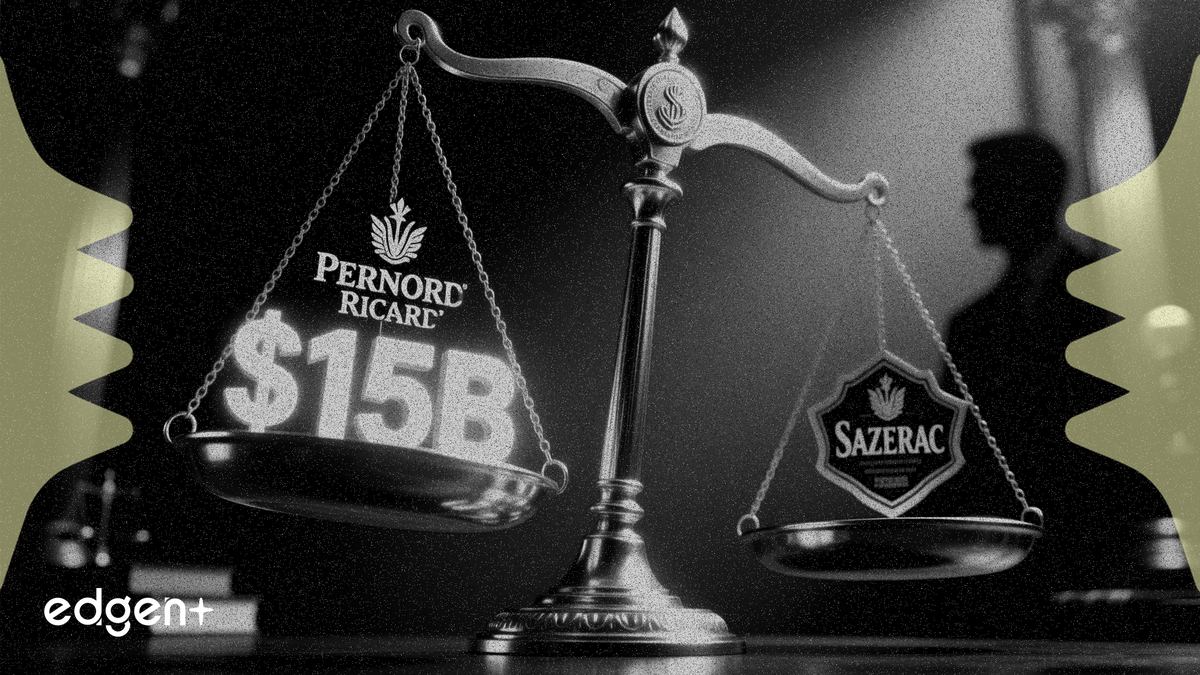
The family controlling Jack Daniel's maker Brown-Forman Corp. is said to favor a sale to French distiller Pernod Ricard SA, according to a person familiar with the matter, potentially sidelining a competing $15 billion offer from U.S.-based Sazerac Co. The preference introduces a new dynamic into what could be one of the largest spirits industry deals in years.
"A potential tie-up between Brown-Forman and an established international player like Pernod Ricard could create significant global synergies," said James Edwardes Jones, an equity analyst at RBC Insight. "However, the spirits category is beset by challenges, from declining consumption to supply chain disruptions."
Sazerac's $15 billion cash-and-stock offer represented a roughly 39 percent premium to Brown-Forman's undisturbed share price before deal talks were first reported in late March. Shares of Brown-Forman, which are controlled by the founding Brown family, closed at $29 on Friday. Pernod Ricard, which owns brands including Absolut vodka and Jameson Irish whiskey, saw its shares rise over 1 percent Friday, giving it a market capitalization of $20 billion.
Any large-scale merger would reshape a global alcohol industry already grappling with shifting consumer tastes, including a move toward low- and no-alcohol beverages. Both Pernod Ricard and Sazerac are looking to consolidate their market positions. Pernod Ricard recently warned that it expects its net sales for the year to fall by 3 to 4 percent, citing weakness in its travel retail business due to the conflict in Iran.
Competing Bids
Sazerac, the owner of Buffalo Trace bourbon, has been aggressive in its pursuit, hiring investment bank Centerview Partners and law firm Woolery & Co to advise on its efforts. The company was reportedly preparing an all-cash offer to increase the appeal of its bid, as sellers often prefer the certainty of cash. Brown-Forman had previously confirmed it was in discussions with Pernod Ricard last month.
Industry Headwinds
The backdrop for this potential deal is an industry under pressure. Companies are facing a combination of tariffs, logistical challenges, and a broad decline in alcohol consumption in key markets. A merger would allow for greater scale and distribution, potentially offsetting some of these headwinds. The outcome of the competing bids will likely create a more formidable competitor in the global spirits market, impacting other major players like Diageo and Constellation Brands.
This article is for informational purposes only and does not constitute investment advice.