Geopolitical risk premiums are back on the table after a top US official’s comments on Iran put markets on high alert for potential energy supply disruptions.
Back
Geopolitical risk premiums are back on the table after a top US official’s comments on Iran put markets on high alert for potential energy supply disruptions.

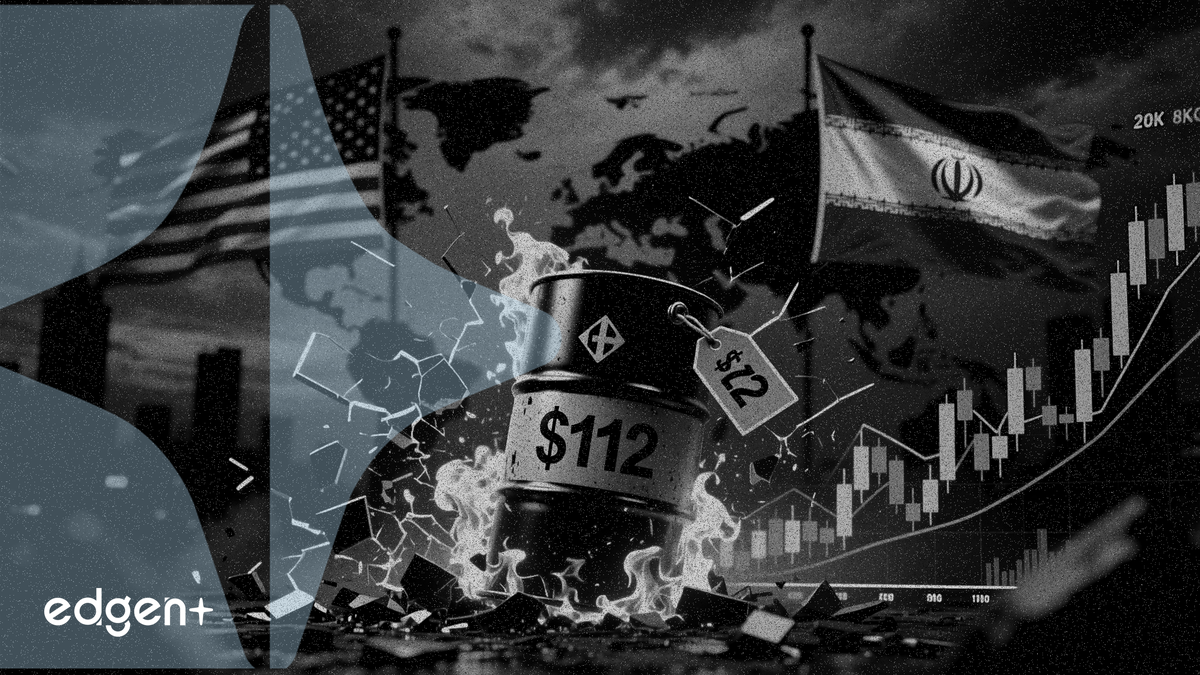
Oil prices surged after U.S. Secretary of Defense Hagseth warned that the “next few days will be decisive” regarding Iran, intensifying market fears of a widening conflict that could disrupt global energy flows. Brent crude futures climbed above $112 per barrel, rebounding sharply from recent lows and underscoring the market’s sensitivity to escalating tensions in the Middle East.
“If it does escalate, then we're likely to look at significantly higher oil prices and much lower stock markets,” Fawad Razaqzada, a market analyst at FOREX.com, said. He noted that crude’s ability to hold above the key psychological $100 level reflects sustained upward pressure as the conflict, now in its 29th day, shows signs of spilling across the region.
The rally was supported by a series of escalations that suggest supply risks are broadening beyond key maritime chokepoints. Iranian missile strikes hit the Khalifa Economic Zone Abu Dhabi (KEZAD), while Houthi forces launched a missile toward Israel. Incidents at ports in Oman and intensified strikes in Lebanon have reinforced fears that energy and logistics infrastructure across the Gulf are now at risk, with U.S. West Texas Intermediate crude hovering near $100.
The standoff over the Strait of Hormuz, a conduit for over 20 percent of the world’s oil supply, remains central to market stability. The market is shifting from pricing a quick resolution to managing the probability of a longer, structurally embedded conflict. “The ten-day extension is time bought, not risk reduced, and markets are pricing that distinction,” said Stephen Innes, managing partner at SPI Asset Management.
The impact of sustained high oil prices extends far beyond the Middle East, creating complex policy dilemmas for net importers. In Indonesia, for example, the government faces a critical challenge to balance fiscal stability with protecting household purchasing power. Despite diversifying its oil imports, with only 20 percent sourced from the Middle East, the country remains exposed to price shocks. If the Indonesian Crude Price (ICP) averages above $82 per barrel, the fiscal deficit could breach the mandated 3 percent of GDP threshold, forcing politically sensitive cuts to fuel subsidies.
This situation is more acute than the 2022 price spike during the Russia-Ukraine war. Then, soaring prices for other commodities like coal and palm oil created a revenue windfall that offset higher energy subsidy costs. Now, with a slowing global economy, that windfall is unlikely to materialize, leaving the budget more exposed. Furthermore, household savings among lower- and middle-income groups have fallen to the lowest level in a decade, making consumers more vulnerable to inflation and likely to cut back on discretionary spending if fuel prices rise.
Markets are growing increasingly skeptical of diplomatic overtures that lack concrete action. An extension offered by Donald Trump for Iran to allow tanker passage through Hormuz provided only fleeting relief. Prices quickly resumed their upward trend as traders discounted the statement without corresponding de-escalation from Tehran.
“Any further statements by Trump about a deal are white noise to the markets,” said Jim Bianco, president of Bianco Research. “Only if the IRANIANS say the talks are going well will it impact markets.” This sentiment reflects a broader market shift where traders are focused on tangible events—such as attacks on infrastructure and military movements—rather than political rhetoric. The resilience of oil above $100 a barrel signals that a significant geopolitical risk premium is now firmly embedded in the price.
This article is for informational purposes only and does not constitute investment advice.