
International oil prices hit their highest levels since the Iran war, with Brent crude futures surging past $123 a barrel after reports that the US is preparing a potential military plan targeting Iran.
International oil prices hit their highest levels since the Iran war, with Brent crude futures surging past $123 a barrel after reports that the US is preparing a potential military plan targeting Iran.
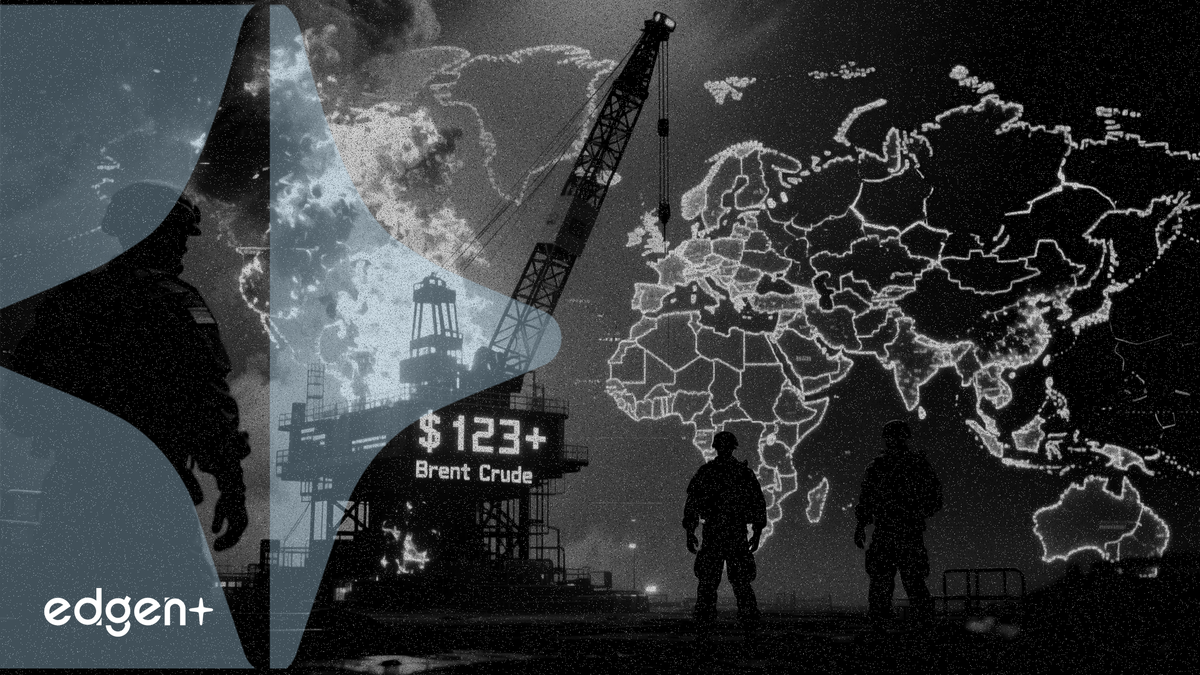
Global oil prices surged to their highest levels since the Iran war, with Brent crude futures climbing more than 4 percent after reports that US Central Command is preparing to submit a military action plan against Iran to the President. The move threatens to dramatically escalate regional tensions, fueling fears of a significant and prolonged disruption to global energy supplies.
"The prolonged closure of the Strait of Hormuz has removed roughly 12 percent of global oil supply from the market, a bigger disruption than the Yom Kippur war, the Iran-Iraq conflict, the invasion of Kuwait or even the fallout from Ukraine," said Maurizio Carulli, global energy analyst at Quilter Cheviot. "Until tanker traffic through the Strait of Hormuz is safe again, OPEC’s ability to stabilise prices is sharply constrained."
Brent crude futures for June delivery jumped 4.08 percent to $122.84 per barrel, while US benchmark West Texas Intermediate (WTI) crude gained 2.04 percent to $109.06 per barrel. The spike adds to a volatile period for energy markets, following the United Arab Emirates' recent decision to formally exit OPEC, a move that introduces a new layer of uncertainty regarding future supply coordination among major producers.
The sudden price shock complicates the global fight against inflation, boxing in central banks that are already struggling to balance price stability with slowing economic growth. The US Federal Reserve recently held its policy rate in the 3.5 to 3.75 percent range, with Chair Jerome Powell acknowledging that rising energy costs linked to the conflict were pushing inflation higher, even as policymakers remain flexible.
The latest price surge is rooted in the precarious security situation in the Middle East. A fragile ceasefire between the US and Iran hangs in the balance, with Washington and Tehran unable to agree on terms to reopen the critical Strait of Hormuz. Iran has demanded a full withdrawal of the US naval blockade in exchange for restoring maritime traffic, a proposal the US has so far rejected while insisting on a permanent settlement regarding Iran's nuclear program.
According to the International Energy Agency, the blockade has effectively removed about 12 percent of the world's oil supply from the market. This acute supply-side risk is now compounded by the UAE's departure from OPEC. While Abu Dhabi has pledged a "gradual and measured" increase in production from its underutilized capacity, the breakdown in cartel cohesion during a major geopolitical crisis has left markets on edge.
The escalation in energy prices presents a difficult challenge for the world's major central banks. In the United States, the conflict has already pushed headline PCE inflation to 3.5 percent, well above the Fed's 2 percent target. While Powell has stressed that monetary policy is not on a "pre-set course," the central bank's ability to "wait and see" is being tested by the renewed inflationary impulse.
The situation is similar in Europe, where the European Central Bank is also expected to hold rates steady. Eurozone inflation rose to 2.6 percent in March, and policymakers are wary of tightening policy too aggressively amid weakening business activity and falling consumer confidence. The surge in oil prices, with some analysts now warning of a potential spike toward $150 a barrel, creates a significant headwind for global economic growth and increases the risk of a broader market downturn.
This article is for informational purposes only and does not constitute investment advice.
