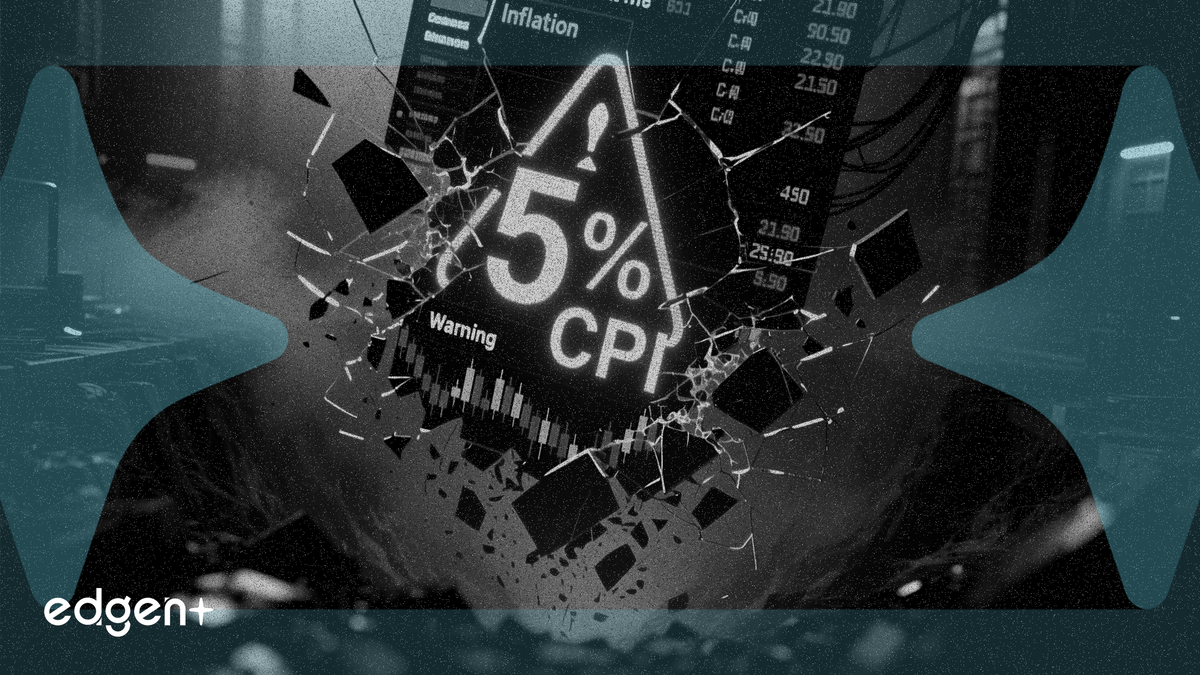
Un stratège de Bank of America Corp. tire la sonnette d'alarme sur la résurgence de l'inflation, avertissant que l'indice des prix à la consommation pourrait franchir le seuil des 5% avant les élections de mi-mandat de novembre, un mouvement qui a historiquement été un sombre présage pour les actions.
"À moins que le rythme mensuel de 0,4% des six derniers mois ne ralentisse brutalement, l'IPC franchira la 'ligne Maginot' des 5% avant le vote", a écrit Michael Hartnett, stratège d'investissement en chef chez Bank of America, dans un rapport récent. Le stratège a noté que les actifs à risque commencent à fluctuer lorsque l'inflation dépasse 4%.
Cet avertissement intervient alors que des données récentes montrent que l'inflation reste obstinément élevée. L'indice des prix à la consommation a grimpé à 3,8% en avril, son plus haut niveau depuis mai 2023, tandis que l'inflation de gros a atteint 6% sur une base annuelle, la progression la plus rapide depuis fin 2022. Ces chiffres ont poussé le rendement du Trésor à 10 ans au-dessus de 4,5%, accentuant la pression sur les actions.
Basé sur un siècle de données de marché, une fois que l'inflation franchit le seuil des 4%, le S&P 500 a affiché une baisse moyenne de 4% sur les trois mois suivants et une perte de 7% sur six mois, selon le rapport de Hartnett. Ce précédent historique suggère qu'une période de volatilité et de rendements négatifs pourrait se profiler si les pressions sur les prix continuent de s'accentuer.
Le guide de BofA face à l'inflation
Face à la hausse des prix, les stratèges de Bank of America conseillent aux clients de se préparer à la fois à des scénarios de "boom inflationniste et de buste stagflationniste". Dans une note, Jared Woodard, stratège investissement et ETF, a mis en avant plusieurs secteurs censés bénéficier de l'environnement actuel.
La firme recommande les actifs réels, en particulier les actions minières et métallurgiques, ainsi que les sociétés de transport d'énergie par pipelines. Les ETF mis en avant incluent l'iShares U.S. Basic Materials ETF (IYM), en hausse de plus de 20% depuis le début de l'année, et le Tortoise North American Pipeline ETF (TPYP), en hausse de près de 23%. Bank of America est également optimiste sur l'uranium, prévoyant que les prix pourraient défier des sommets historiques en 2027, et pointe vers le Global X Uranium ETF (URA) comme moyen de jouer ce thème.
Au-delà des matières premières, les stratèges ont vanté les actions de valeur à petite capitalisation américaines et internationales comme l'une des transactions les moins chères disponibles. Ils ont cité l'Avantis International Small Cap Value ETF (AVDV) et l'iShares US Small Cap Value Factor ETF (SVAL) comme des opportunités potentielles.
Le cas à contre-courant de Bank of America elle-même
Ironie du sort, alors que les stratèges de Bank of America mettent en garde contre les risques macroéconomiques, l'action de la banque elle-même est présentée par les analystes comme une opportunité sous-évaluée. Bank of America (BAC) est la troisième plus grande participation du portefeuille Berkshire Hathaway de Warren Buffett et se négocie actuellement à seulement 11 fois les bénéfices prévisionnels, avec un ratio cours/bénéfice/croissance (PEG) de 0,92, suggérant qu'elle est sous-évaluée.
La force de la banque est ancrée dans sa franchise de dépôts, qui a augmenté de 3% au premier trimestre, marquant 11 trimestres consécutifs de croissance. Cette base de dépôts fidèle permet à la banque de maintenir des coûts d'intérêt plus bas et de générer un revenu net d'intérêts (NII) plus élevé, qui a bondi de 9% sur un an au premier trimestre.
Cette performance a conduit les analystes de Wall Street à classer l'action comme un "achat fort", 85% d'entre eux maintenant une recommandation d'achat. L'objectif de cours médian de 61,50 $ implique un rendement potentiel de 22% sur les 12 prochains mois, positionnant la banque pour de bons résultats, sauf en cas de grave ralentissement économique.
Cet article est uniquement destiné à des fins d'information et ne constitue pas un conseil en investissement.