

Five defense contractors are racing to build the first operational autonomous fighter jet, with Boeing's Ghost Bat holding a lead after 100-plus test flights.
Five defense contractors are racing to build the first operational autonomous fighter jet, with Boeing's Ghost Bat holding a lead after 100-plus test flights.
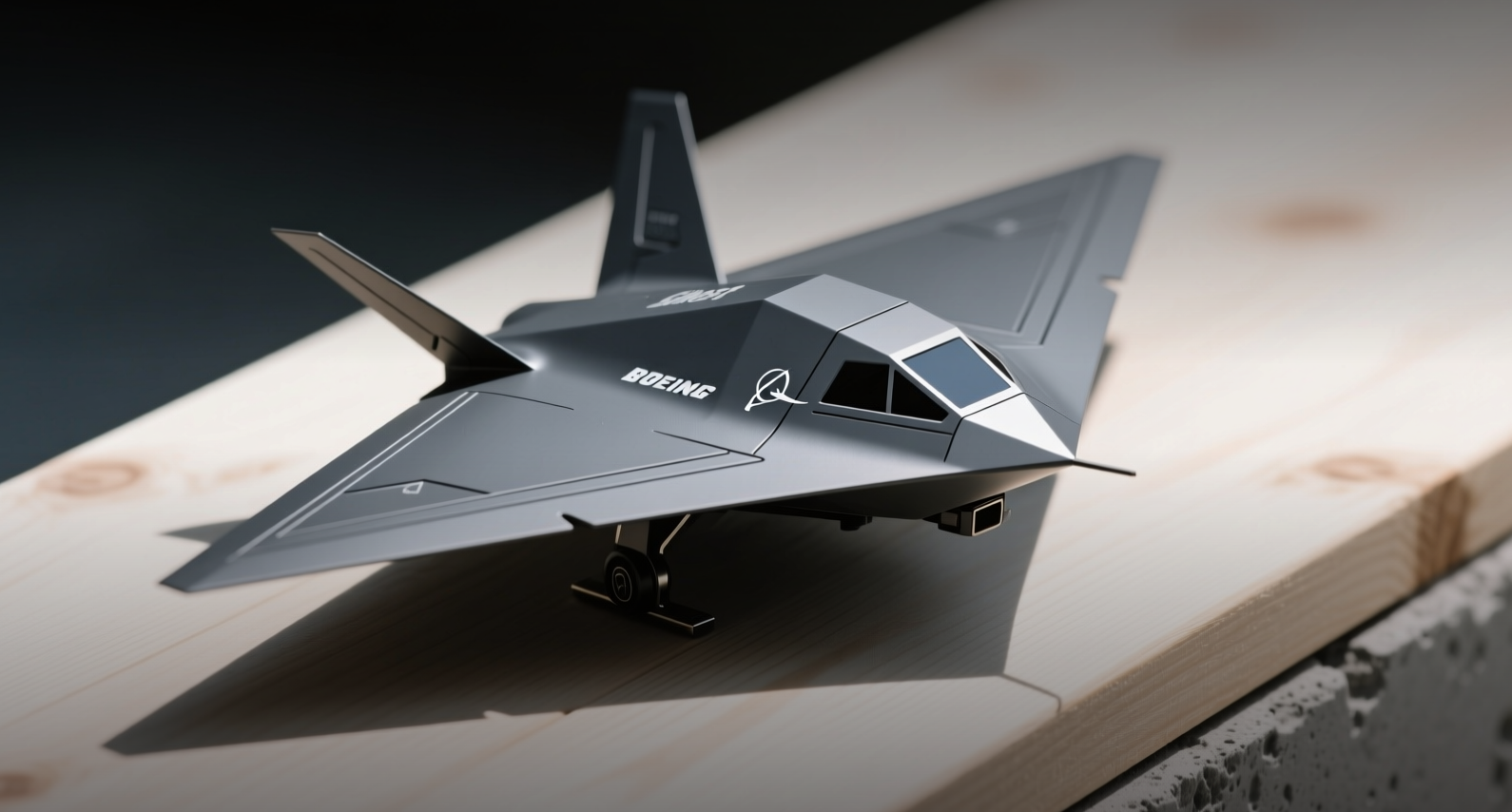
Five defense contractors are racing to build the first operational autonomous fighter jet, with Boeing's Ghost Bat holding a lead after 100-plus test flights.
Boeing's MQ-28 Ghost Bat has emerged as the front-runner in the race to build autonomous fighter aircraft, having completed more than 100 test flights and a live-fire exercise before any rival has flown a full-scale prototype.
"We've got the most mature collaborative combat aircraft," Bernd Peters, Boeing's vice president of development and strategy, said at the Farnborough Airshow. "It's real hardware you see in front of you."
Boeing plans to induct production of the first Ghost Bat this year for the Royal Australian Air Force under a A$754 million ($528 million) contract, with an initial rate of two aircraft per month. The Blk. 2 version entering production will be followed by a Blk. 3 around 2029 featuring a larger wing, higher takeoff weight and the ability to carry two AIM-120 Amraam missiles or four Small Diameter Bombs. The U.S. Air Force expects its Collaborative Combat Aircraft to cost a third or less of an F-35, which runs $80 million or more.
The market for autonomous combat aircraft could eventually reach hundreds of units per year, according to Richard Aboulafia, managing director of AeroDynamic Advisory, though widespread adoption may not come until the mid-2030s. The U.S. Air Force last month awarded production contracts to General Atomics and Anduril Industries for its first CCA fleet, while Shield AI and Lockheed Martin are expected to compete for a higher-end Increment 2 phase.
Boeing is pursuing a distributed manufacturing strategy, with program director Glen Ferguson saying the company prefers "many small factories building them, localized for countries to meet their own local needs" rather than a single mega-factory. The company has added Leonardo as a program partner to supply infrared search-and-track systems, Hensoldt to its German supplier team, and Eaton for weapons launchers. Boeing is also working with MBDA to support a Meteor missile test shot.
Shield AI is taking a different approach with its X-BAT, a vertical takeoff and landing drone designed to operate without runways. The company recently integrated the Axisymmetric Vectoring Exhaust Nozzle — a thrust-vectoring system originally tested on the F-16 in the 1990s — with a General Electric F110-GE-129 engine, the same powerplant used in later F-16 and F-15 variants. The X-BAT can carry up to 2,000 pounds of ordnance internally and has a combat radius of 1,000 miles, according to the company.
"In two years, we have surpassed what a lot of other companies have been working on for many years," Jason Levin, a senior vice president at Anduril, told Reuters. "Rather than just making small incremental steps, we like to make large steps."
The competitive field spans three continents. Lockheed Martin's Skunk Works is developing the Vectis, a high-end stealth UCAV expected to compete for CCA Increment 2. Northrop Grumman and Europe's Airbus are also developing designs, while General Atomics and Anduril have already secured production contracts for the first U.S. Air Force fleet.
Boeing shares trade at 22x forward earnings, with the defense unit contributing roughly $35 billion in annual revenue. A successful Ghost Bat program could open a new revenue stream worth billions as allied nations from Australia to Germany seek sovereign drone capabilities. Shield AI remains private, but its progress with the X-BAT positions it as a potential acquisition target or IPO candidate as the autonomous fighter market takes shape.
This article is for informational purposes only and does not constitute investment advice.
