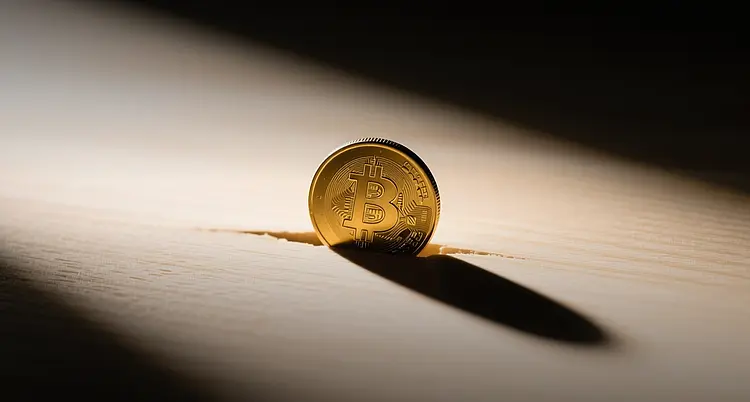
Bitcoin has fallen 50% from its October all-time high, but an in-line CPI print and constructive on-chain signals suggest the worst of the selloff may have passed.
Bitcoin traded near $63,000 on June 11 after May CPI landed at 4.2% year-on-year, exactly in line with consensus, triggering a muted dip-and-recovery to $62,800.
"The in-line print is the equivalent of the middle scenario playing out — no fresh catalyst to push Bitcoin lower, but no clear reason to rally sharply either," Alex Kuptsikevich, chief market analyst at FxPro, said.
Bitcoin has fallen roughly 50% from its October 2025 all-time high of $126,080, touching a low of around $61,500 on June 6. Core CPI came in at 2.9% year-on-year, below the 0.3% monthly estimate, signaling that underlying price pressures are more contained than the headline 4.2% suggests. The total crypto market capitalization has shed approximately $2 trillion from its peak, with Ethereum falling to near $1,500 and Solana dropping more than 70% from its high.
The FOMC decision on June 17 is now the decisive event for Bitcoin direction. The dot plot will confirm whether the Federal Reserve uses the cover provided by the softer core CPI reading to hold rates steady. BNP Paribas still projects three rate hikes from December 2026.
Four Forces Converged to Drive the 50% Decline
The June 2026 crypto crash did not have a single cause. Four separate pressures hit an already over-leveraged market simultaneously. April CPI came in at 3.8% year-on-year — the hottest since May 2023 — removing any near-term prospect of rate cuts. US-Iran military tensions escalated in late May, sending oil prices sharply higher and feeding directly into inflation expectations. US spot Bitcoin ETFs recorded 13 consecutive days of net outflows from May 15 to June 3, the longest streak since their January 2024 launch, draining approximately $4.4 billion. BlackRock's IBIT alone shed around $3.3 billion. Strategy (formerly MicroStrategy) sold 32 Bitcoin in late May — its first known disposal in years — before reversing course and buying 1,550 coins at $65,332 per coin on June 8.
On-Chain Metrics Flash Cycle-Bottom Signals
Several on-chain metrics are at levels historically associated with cycle bottoms. The Fear and Greed Index sits at approximately 12 to 15 out of 100, a reading comparable to the December 2018 bottom, the March 2020 COVID crash, and the June 2022 Terra-LUNA collapse. The MVRV Z-Score is near 0.41, indicating the market is trading close to its long-term cost basis. Bitcoin's 200-week moving average at approximately $61,300 was tested twice in early June and held both times. The daily RSI recovered from a reading of 16, which has historically preceded short-term relief bounces of 5 percent to 12 percent within 48 to 72 hours.
But these signals are not guarantees. As analyst Benjamin Cowen noted: "Unfortunately, last cycle it did not hold. We did in fact go below it. I cannot say with a clear conscience that we won't go below it." The next major support level if Bitcoin breaks below $61,300 is approximately $54,000, where the 300-week moving average and Bitcoin's realized price converge.
Derivatives data points to continued bearish positioning. Bitcoin futures open interest rose to 728,000 Bitcoin even as the price fell, indicating fresh short positioning. Perpetual funding rates and cumulative volume delta are negative across Bitcoin, Ethereum, Solana, and XRP. Bitcoin's 30-day implied volatility index rose to 51.21 percent from 45.8 percent on June 8, reflecting renewed uncertainty. On Deribit, short-term puts on both Bitcoin and Ether continue to command a notable premium over calls, signaling that downside hedging demand remains elevated.
The in-line CPI print avoided the worst-case scenario, but the structural forces that drove the crash — hawkish Fed policy, geopolitical tensions, ETF outflows, and sentiment shock — have not fully resolved. The FOMC dot plot on June 17 will determine whether Bitcoin's stabilization at current levels marks a genuine floor or merely a pause before the next leg lower.
This article is for informational purposes only and does not constitute investment advice.