Treasury Secretary Scott Bessent's "economic D-Day" against Iran broadens secondary sanctions to countries still trading with Tehran, sending the dollar higher while oil prices slip.
Treasury Secretary Scott Bessent unveiled a wave of secondary sanctions Monday targeting countries that still trade with Iran, threatening to cut off dollar access for entities that help Tehran move oil, gold and crypto.
"Our objective is to sever every economic lifeline that sustains this tyrannical regime until Tehran stands alone," Bessent said at a Treasury Department press conference, adding that any entity facilitating money laundering for Iran would be removed from the dollar system.
The measures, dubbed "Operation Economic Outcast," hit more than 60 entities, individuals and vessels across shipping, oil, digital assets, gold and aviation. The WSJ Dollar Index rose 0.13% to 95.45 while the 10-year Treasury yield held near 4.70%, close to highs not seen since the financial crisis. Oil prices slipped ahead of the announcement.
The success hinges on whether Iran's biggest trading partners — China, which buys about 90% of Iran's oil, plus India and Russia — treat the threats as credible. Iran's security chief Mohsen Rezaei vowed a "seismic" response, warning that "not a single drop of oil" would leave the Persian Gulf if the economic war continues.
Bessent said President Donald Trump was making phone calls to world leaders with "specific requests" to cease trading with the Iranian regime, and that each country would get its own timeline for cutting ties. The United Arab Emirates, a close U.S. ally, announced it was ending all trade relations with Iran ahead of the announcement. Bessent said he expects a "major announcement" about a specific financial institution by the end of the week.
The dollar's reaction was muted, however. The DXY index rose 0.2% to 99.00, still near a three-month low of 98.557 hit Thursday after the Treasury announced increased buybacks of long-dated securities. The yen traded at 159.10 per dollar, near a 40-year low of 163.98 reached last month, as Morgan Stanley analysts said the currency has "plenty of scope to fall" unless the U.S. fundamental backdrop changes.
Sanctions' Bite Depends on China, India and Russia
The U.S. has imposed direct sanctions on Iran for decades, but Tehran has repeatedly evaded them by standing up new front companies. Bessent's latest push targets "secondary" countries whose trade still benefits Iran. Experts question whether the threats carry weight with Iran's most powerful partners.
"If you're a country like Russia or China, you see Iran as ally, and you're not just going to suddenly stop trading with them — that damages Moscow's credibility in eyes of their friends around the world," said Andrew Gawthrope, a university lecturer at the University of Leiden specializing in U.S. foreign policy. "There's just not much U.S. can do to these countries to make them go along with this."
Alan Eyre, a former American diplomat who helped negotiate Iran's nuclear program until 2015, said the U.S. has already targeted "the low-hanging fruit, the mid-hanging fruit, the high-hanging fruit, the tree," and that "there are no new sanctions that are effective."
War Costs Mount for U.S., Iran
The war, launched by the U.S. and Israel in February, has cost the U.S. $37.5 billion, Defense Secretary Pete Hegseth said last month, though estimates put the all-in economic impact at as much as $150 billion. Moody's Analytics Chief Economist Mark Zandi estimated the war has cost the average U.S. household more than $1,200 in higher energy and grocery costs alone.
For Iran, the economic picture is far worse. Inflation is running at almost 90%, and the rial has plunged past 2 million to the dollar, according to online currency exchange trackers. Iran's central bank chief Abdolnaser Hemmati said Tehran had been stockpiling foreign currency since the war began to guarantee supplies of essential goods and medicine.
Iran's Supreme Leader Ayatollah Ali Khamenei was killed at the start of the war, and his son Mojtaba Khamenei has since elevated a group of hard-liners from the security establishment. Iran's police chief Ahmadreza Radan warned that the U.S. was "seeking to create unrest" through economic pressure, after violent demonstrations left thousands dead in January.
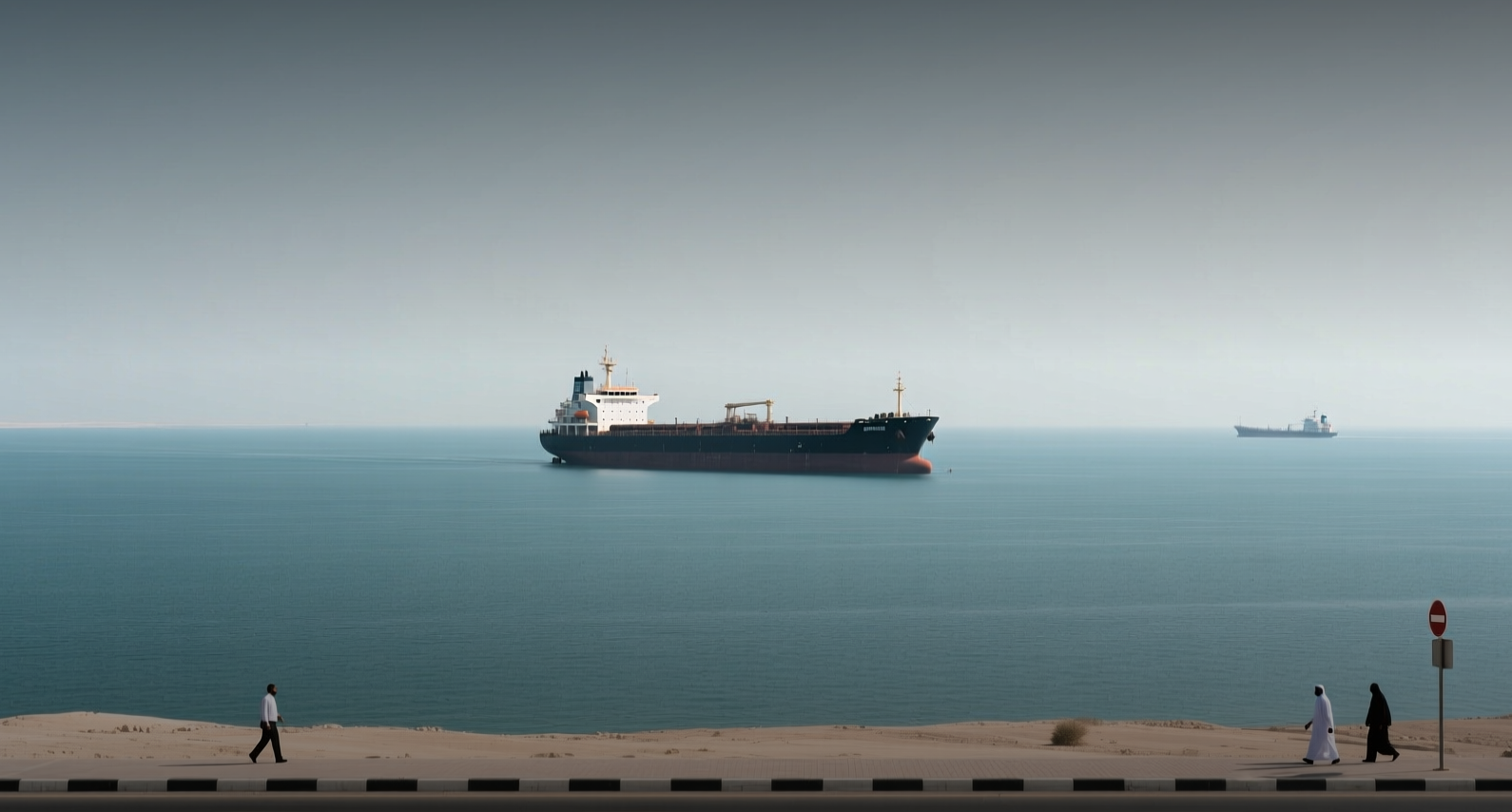
The Strait of Hormuz handles about 21% of global oil trade, and Iran has threatened to fine or confiscate 45 tankers violating its transit rules. Rezaei warned Gulf states that any country joining the U.S. restrictions would be considered an enemy and a target.
This article is for informational purposes only and does not constitute investment advice.