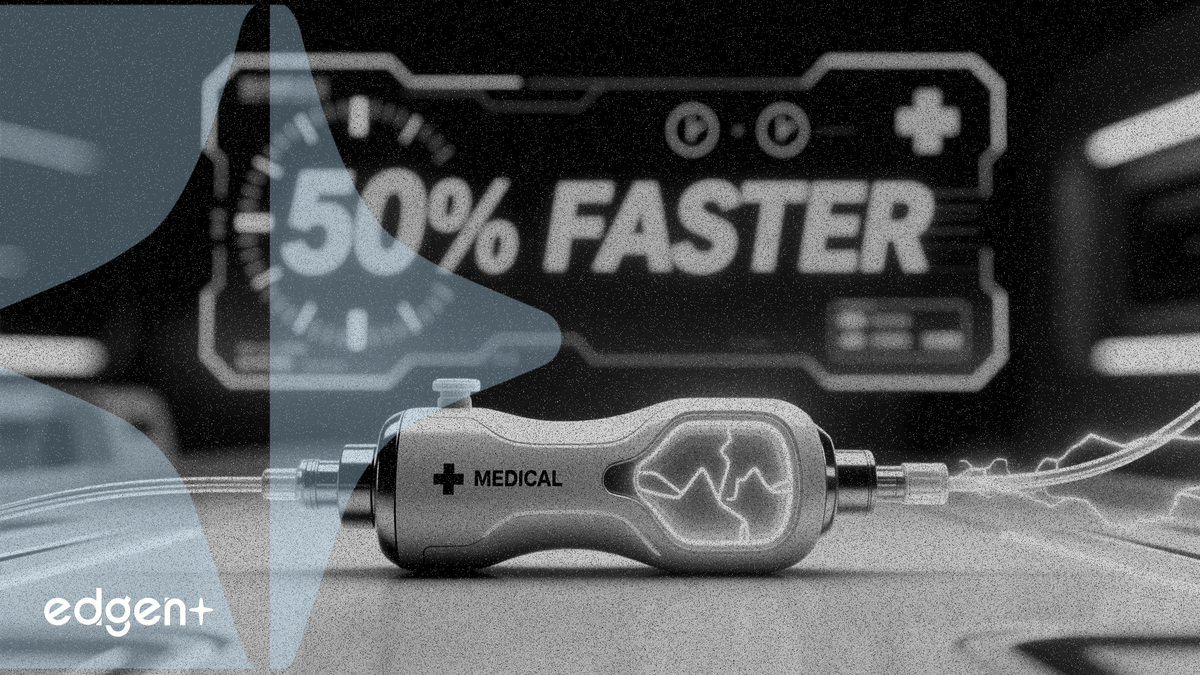
Becton, Dickinson and Co. (NYSE : BDX) a lancé mardi un nouveau système de ligne centrale conçu pour réduire le temps d'insertion de 50 %, une avancée majeure pour une procédure pratiquée des millions de fois par an aux États-Unis. Le système d'insertion BD® CentroVena One™ est le premier dispositif tout-en-un pour la pose de cathéters veineux centraux (CVC), visant à améliorer la sécurité des patients et le flux de travail clinique.
« Le CentroVena One™ représente l'avancée la plus significative dans l'insertion de lignes centrales depuis que la technique a été introduite pour la première fois il y a près de sept décennies », a déclaré Ron Silverman, vice-président exécutif et médecin-chef chez BD. « En réduisant les étapes de la procédure, en aidant à protéger contre les complications évitables et en simplifiant l'une des procédures les plus stressantes que les cliniciens effectuent, nous soutenons des soins plus sûrs et plus rapides pour les patients quand chaque seconde compte. »
Le nouveau système, qui a reçu l'autorisation 510(k) de la Food and Drug Administration (FDA) des États-Unis, regroupe l'aiguille d'introduction, la seringue, le fil-guide et le cathéter en une seule unité. Cette conception intégrée réduit les étapes de la procédure de 30 % par rapport à la méthode traditionnelle, qui implique de multiples échanges de composants. L'affirmation de réduction de temps est basée sur une étude de simulation comparative impliquant 49 participants.
Ce lancement marque l'entrée de BD sur le marché des CVC de soins aigus, le positionnant face à d'autres grandes entreprises de dispositifs médicaux comme Baxter (BAX) et Alcon (ALC). Pour les investisseurs, cette innovation pourrait être un moteur de croissance important pour BD, dont l'action se négocie près de son plus bas niveau sur 52 semaines. Le dispositif répond aux complications courantes et coûteuses de la pose traditionnelle de CVC, notamment les infections sanguines, les lésions artérielles et le pneumothorax, qui peuvent affecter les dépenses hospitalières et les tendances de remboursement.
Simplifier une procédure à haute pression
La pose traditionnelle d'une ligne centrale est un processus complexe qui comporte des risques de contamination et des retards dans le flux de travail. Le système CentroVena One™ est conçu pour atténuer ces problèmes en minimisant les points de contact et en rationalisant le processus. Les caractéristiques clés comprennent un fil-guide pré-chargé résistant aux torsions et un cathéter avec une pointe auto-dilatante, ce qui élimine une étape de dilatation séparée.
UNC Health Blue Ridge a été l'un des premiers systèmes de santé à utiliser le dispositif dans le cadre d'une évaluation clinique. « Ce qui ressort de notre première expérience avec le CentroVena One™, c'est sa conception intentionnelle autour des défis cliniques du monde réel - rationalisant la pose du cathéter tout en réduisant les risques d'erreur, les ruptures de champ stérile et la charge de travail globale », a déclaré Anthony Frank, médecin-chef chez UNC Health Blue Ridge.
Le système intègre également des éléments de sécurité tels qu'un clip de drapé intégré pour prévenir l'embolie gazeuse par fil-guide et une sécurité passive de l'aiguille pour réduire les blessures par piqûre d'aiguille. Son acceptation dans le programme STeP (Safer Technologies Program) de la FDA souligne son potentiel à améliorer considérablement la sécurité d'une procédure médicale courante.
Cet article est uniquement à titre informatif et ne constitue pas un conseil en investissement.