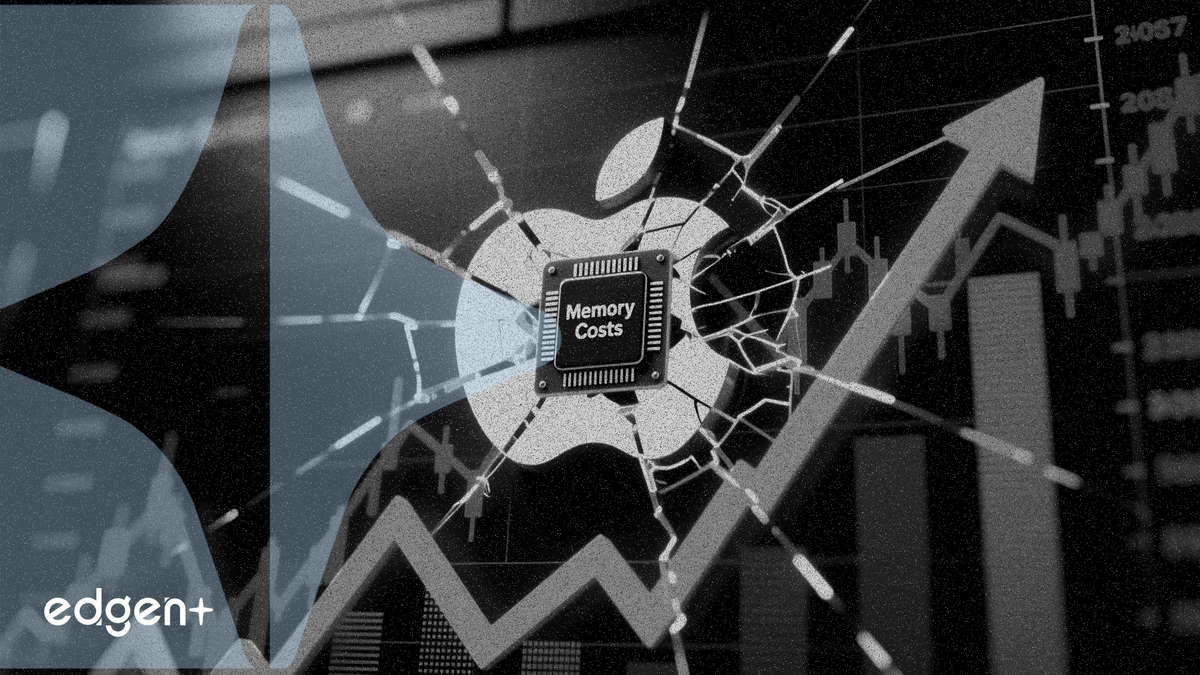
Apple Inc. (AAPL) posted $111.2 billion in fiscal second-quarter revenue, beating estimates, but warned of a significant increase in memory costs for the upcoming quarter.
"We expect significantly higher memory costs," Chief Executive Officer Tim Cook said on the earnings call, adding that the company will "look at a range of options" to address the issue.
The technology giant surpassed analyst expectations for both revenue and profit in the quarter ending in March. However, iPhone sales of $57 billion came in just shy of the $57.2 billion consensus estimate, marking the second miss in three quarters for the company's flagship product.
The warning on profitability overshadowed an otherwise strong report, as a global memory shortage driven by artificial intelligence server demand threatens to squeeze Apple's closely watched gross margins.
Despite the cost pressures, Apple issued a bullish forecast for the June quarter, projecting revenue growth between 14 percent and 17 percent. The midpoint of that range surpasses the average analyst estimate of 9.5 percent growth. The company's board also authorized an additional $100 billion in stock repurchases and raised its dividend by 4 percent to 27 cents per share.
The memory supply crunch stems from chipmakers prioritizing high-bandwidth memory (HBM) for AI servers, creating a supply constraint for the DRAM and NAND memory used in consumer devices like iPhones and Macs. Cook stated that while the impact was minimal in previous quarters, it will become a more significant factor going forward.
Strong performance in other segments offset the minor iPhone revenue miss. The Services division grew 16 percent to $31 billion, while Mac and iPad sales also topped forecasts. Revenue from Greater China, a region under intense investor scrutiny, climbed 28 percent to $20.5 billion.
The guidance suggests Apple's Services and hardware ecosystem can navigate near-term headwinds, but rising component costs remain a key risk to future profitability. Investors will monitor the Q3 report in July for the full impact on gross margins, which hit 49.3% this quarter.
This article is for informational purposes only and does not constitute investment advice.