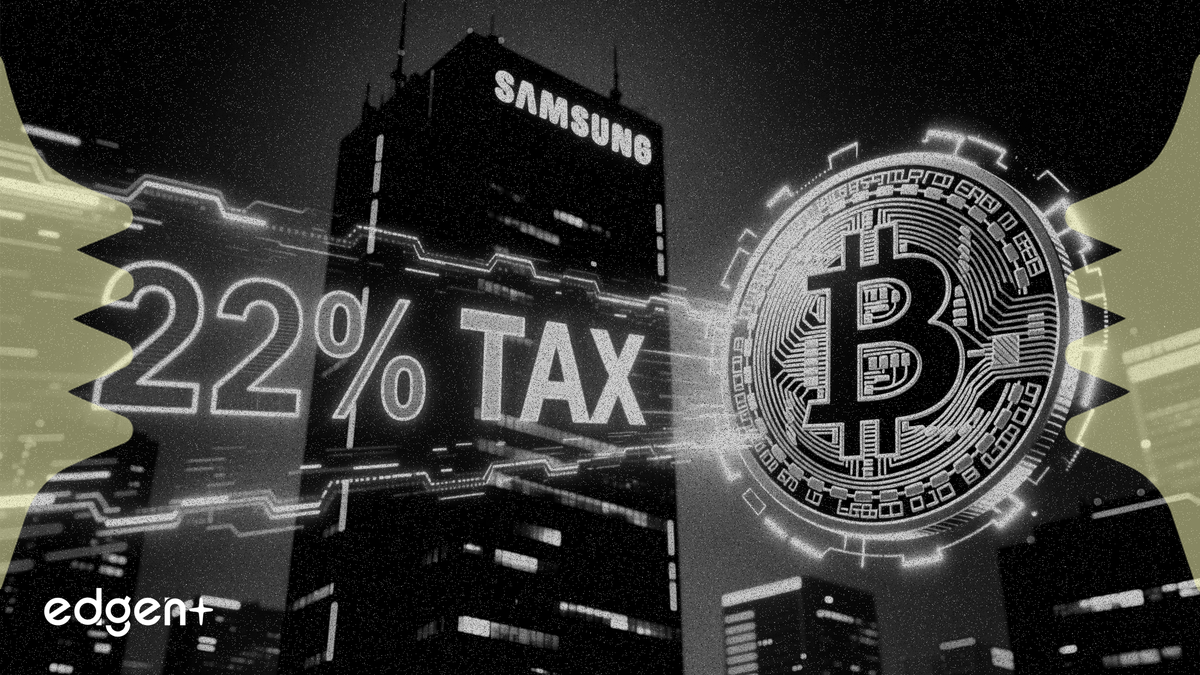
(P1) A Bitwise advisor predicts a significant capital rotation from South Korean technology stocks like Samsung and SK Hynix into Bitcoin as investors look to sidestep a new 22 percent capital gains tax.
(P2) "A wave of capital will receive a wave of capital as Korean investors rotate out of tech stocks," Jeff Park, an advisor at Bitwise, said in a note. He highlighted that retail investors hold heavily concentrated positions in the top KOSPI stocks.
(P3) The prediction comes as South Korea's Finance Ministry confirms the 22 percent tax on gains from financial investments will take effect on January 1, 2027. The forecast runs counter to recent market trends, which saw South Korean crypto holdings fall over 50 percent to $41.4 billion in the 13 months to February 2026 as capital poured into the booming domestic stock market, according to Bank of Korea data.
(P4) The potential shift puts two major investment trends on a collision course. A rotation into Bitcoin could provide significant buying pressure for the digital asset from a key retail market, while potentially unwinding the powerful "Seoul-icon Valley" AI trade that has propelled valuations for memory-chip leaders Samsung and SK Hynix.
South Korean retail investors have been a driving force behind the KOSPI's recent strength, with a particular focus on companies central to the global AI supply chain. Samsung and SK Hynix are dominant players in the high-bandwidth memory (HBM) market, a critical component for AI accelerators. This AI-driven demand has contributed to the stock market's outperformance and attracted capital away from other asset classes.
However, the new tax regime threatens to alter that dynamic. The tax, coupled with stricter anti-money laundering rules for crypto transactions, is creating uncertainty. Data from the Bank of Korea shows the country's crypto market has already undergone a dramatic contraction. Daily trading volumes across the five largest exchanges fell from $11.6 billion in December 2024 to just $3 billion by February 2026.
Park's forecast suggests that as the 2027 tax implementation date nears, investors may begin to re-evaluate their allocations. If the tax makes holding profitable tech positions less attractive, the relative appeal of Bitcoin—despite its own regulatory hurdles—could increase, potentially reversing the recent flow of funds back into the digital asset market.
This article is for informational purposes only and does not constitute investment advice.