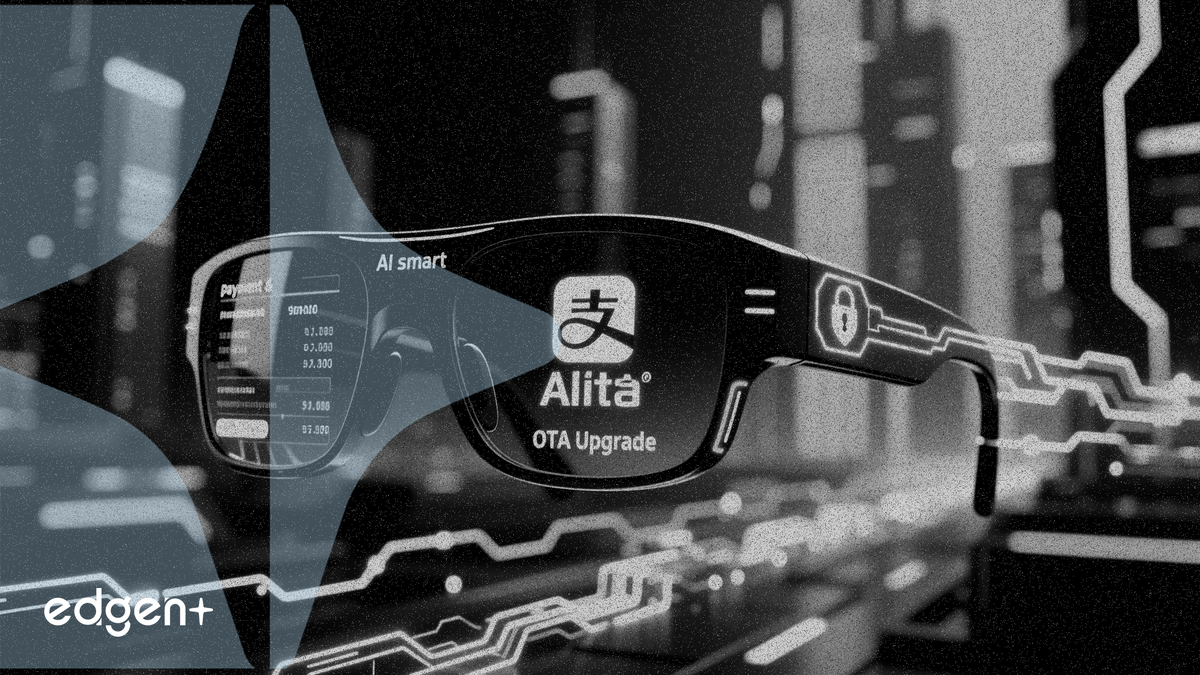
(Bloomberg) -- Alibaba Group Holding Ltd. is embedding its vast e-commerce and payment platforms directly into its wearable technology, rolling out the first over-the-air (OTA) upgrade for its Qianwen AI Glasses that integrates the devices with Taobao and Alipay. This move aims to transform the glasses from a novelty gadget into a functional, everyday tool for Chinese consumers.
"This integration marks a significant step in making AI wearables a practical part of daily life," an Alibaba spokesperson said in the announcement. "Users can now handle essential tasks hands-free, from paying for parking to ordering food, directly through their line of sight."
The software update, which began rolling out on April 2 to both the Qianwen AI Glasses G1 and Quark AI Glasses G1, introduces a suite of "AI task handling" capabilities. These include topping up a mobile phone, renting a QR code-based shared bike, paying for parking, and ordering from food delivery services. The integration with Taobao's "Instant Commerce" and Alipay's payment network is the key technical enabler for these new real-world functions.
This software push strengthens Alibaba's position in the nascent AI-powered wearables market, creating a closed-loop ecosystem that competitors lack. By connecting the hardware directly to its 1 billion+ user base on Taobao and Alipay, Alibaba (9988.HK) can drive adoption and gather valuable user interaction data. The company also announced that a new, more advanced model, the Qianwen AI Glasses S1, will be released later this month, signaling an accelerated hardware roadmap.
The update from Alibaba represents a strategic effort to differentiate its wearable products in a market that is still searching for a killer app. While competitors may focus on technical specifications, Alibaba is using its core strength: a deeply integrated ecosystem of commerce and local services that touches nearly every aspect of daily life in China.
The new "AI task handling" functions are practical, designed to reduce friction for common activities. For example, a user could theoretically glance at a parking meter, have the glasses recognize the payment QR code, and confirm the transaction via Alipay without ever pulling out their smartphone. This hands-free convenience is a central selling point for the emerging category of AI-native devices.
The move also provides Alibaba with a powerful new data stream. Understanding how users interact with their environment and commerce platforms through a visual interface could inform future product development across its business units, from cloud computing to logistics.
Looking ahead, the upcoming launch of the Qianwen AI Glasses S1 suggests Alibaba is committed to a rapid iteration cycle. While details on the S1 are scarce, it is expected to feature improved hardware and more sophisticated AI capabilities. The success of these devices will depend not just on their technical prowess, but on how seamlessly they can integrate into the daily routines of the millions of consumers within Alibaba's ecosystem.
This article is for informational purposes only and does not constitute investment advice.