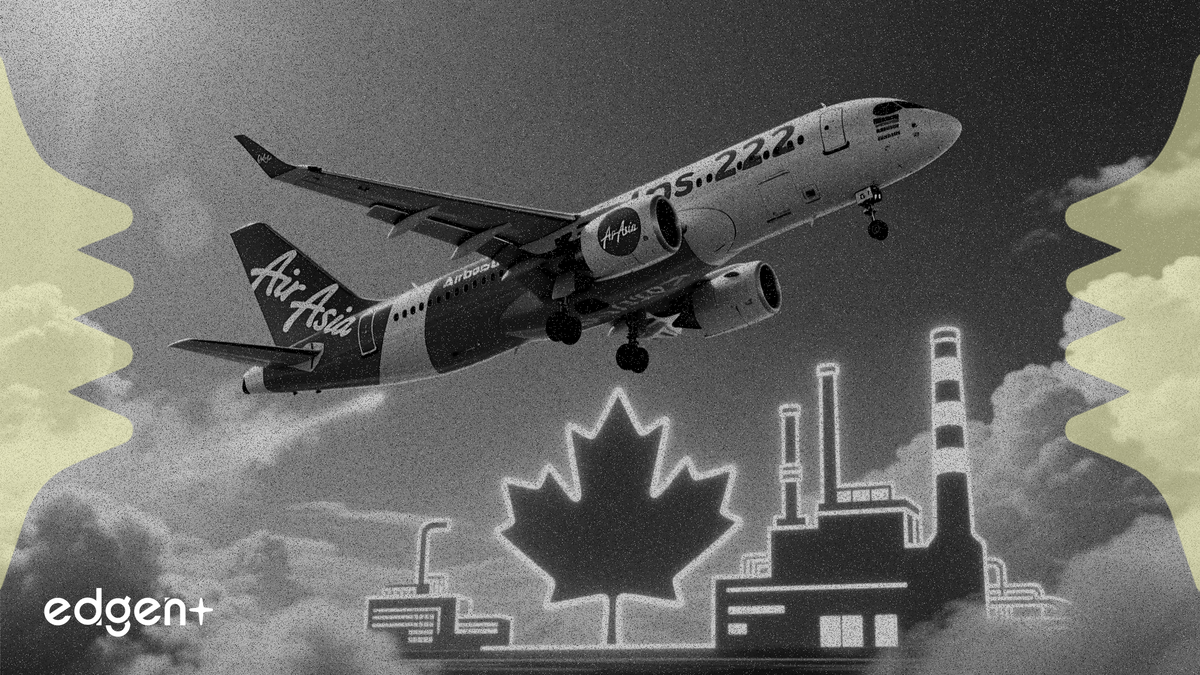
AirAsia a accepté d'acheter 150 jets Airbus A220, la plus importante commande unique de l'histoire du programme d'avions, apportant un soutien essentiel à cet avion de ligne non encore rentable et sécurisant des milliers d'emplois dans l'aérospatiale canadienne.
« L'accord entre Airbus et AirAsia constitue la plus importante commande d'avions canadiens de l'histoire », a déclaré le Premier ministre canadien Mark Carney dans un communiqué. « Pour des milliers d'ingénieurs, d'électriciens, de soudeurs d'acier et de spécialistes de l'informatique, cela signifiera un travail passionnant et bien rémunéré pour construire un avion remarquable. »
Cet accord historique, annoncé mercredi à l'usine d'assemblage d'Airbus à Mirabel, au Québec, concerne le modèle A220-300. Les appareils seront équipés de moteurs Pratt & Whitney GTF™, et l'achat inclut un contrat de maintenance des moteurs de 12 ans avec la filiale de RTX. Les livraisons devraient débuter en 2028.
Pour Airbus, cette commande de plusieurs milliards de dollars offre une bouée de sauvetage cruciale à un programme qui n'a pas encore dégagé de bénéfices depuis son rachat à Bombardier en 2018. Pour AirAsia, l'A220 économe en carburant offre un outil stratégique pour lutter contre la hausse des coûts du kérosène et desservir de manière économique des liaisons moins denses en Asie du Sud-Est, actuellement non viables pour sa flotte plus importante de la famille A320.
Un chemin vers la rentabilité
Le programme A220 a été un défi commercial pour Airbus. L'entreprise construit actuellement sept à d'avions huit par mois sur ses sites de Mirabel et de Mobile, en Alabama — ce qui est bien inférieur au rythme de 14 par mois estimé par les analystes pour atteindre le seuil de rentabilité. Cette nouvelle commande donne une impulsion significative vers cet objectif.
L'accord est également une victoire majeure pour le secteur aérospatial québécois. Le gouvernement provincial, qui détient une participation de 25 % dans le programme aux côtés des 75 % d'Airbus, a investi 1 milliard de dollars US pour maintenir à flot le programme CSeries original avant la reprise par Airbus. La commande devrait être partiellement financée par Exportation et développement Canada, renforçant ainsi l'importance nationale du projet.
La couverture stratégique d'AirAsia
Cet achat marque la première acquisition par AirAsia de l'A220, qui peut accueillir entre 110 et 149 passagers. Le transporteur malaisien à bas prix a vu son action chuter de près de 40 % depuis le début du récent conflit entre les États-Unis et l'Iran, car la compagnie ne pratique aucune couverture sur le carburant et est exposée à la volatilité des prix de l'énergie.
Les moteurs Pratt & Whitney PW1500G de l'A220 offrent des coûts d'exploitation par siège nettement inférieurs, apportant une réponse directe à la pression sur les marges sur les liaisons où sa flotte d'environ 250 appareils de la famille A320 est trop grande pour être exploitée de manière rentable. « Nous voulons aller dans des endroits où l'A320 est tout simplement trop grand », a précédemment déclaré le cofondateur d'AirAsia, Tony Fernandes.
Cet article est uniquement destiné à des fins d'information et ne constitue pas un conseil en investissement.