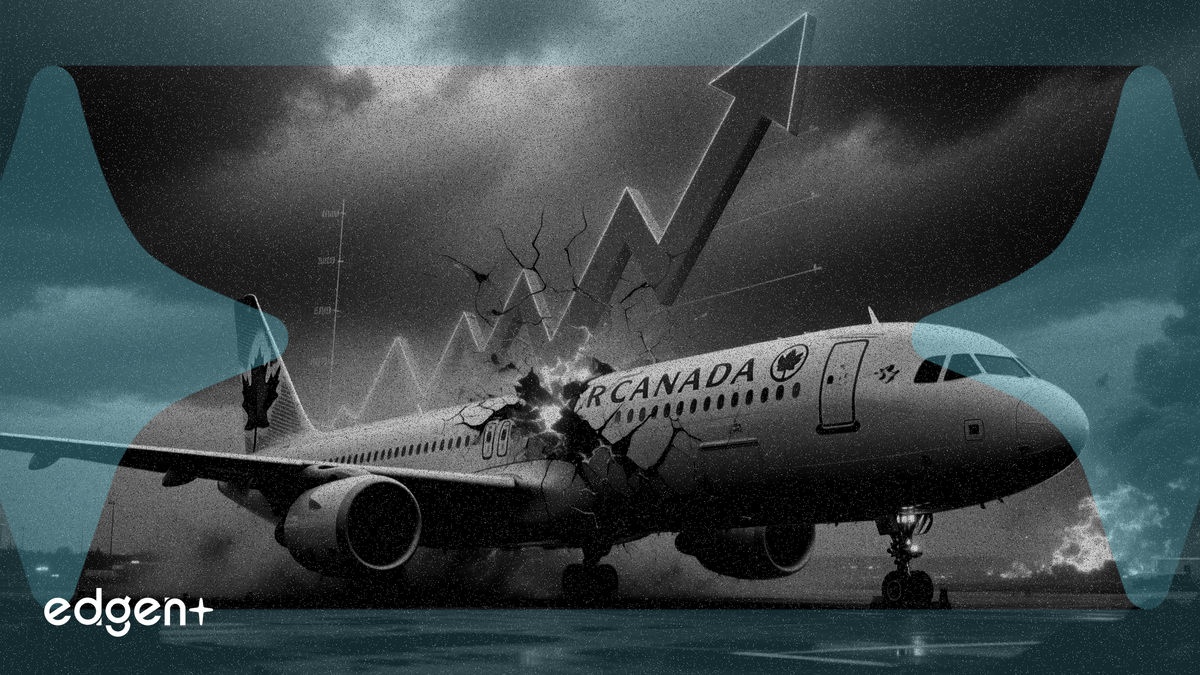
(P1) Air Canada is suspending two key U.S. routes for nearly five months, a direct consequence of jet fuel costs that have doubled since the war between the U.S., Israel, and Iran began, choking off global oil supplies.
(P2) "Jet fuel prices have doubled since the start of the Iran conflict, affecting some lower profitability routes and flights which now are no longer economically feasible," Air Canada said in a statement on Friday.
(P3) The airline will pause one flight from Montreal and three from Toronto to New York's John F. Kennedy International Airport starting June 1, with service expected to resume on Oct. 25. The cuts follow similar moves by European carriers Lufthansa and KLM, which have retired aircraft and canceled hundreds of flights. In the U.S., carriers including JetBlue and United Airlines have raised baggage fees by as much as $10 to offset the price surge.
(P4) The suspensions highlight the intense pressure on the global aviation industry, which faces a potential jet fuel shortage in Europe within weeks, according to the International Energy Agency. With the Strait of Hormuz, a critical artery for 20% of the world's oil, remaining a flashpoint, travelers can expect higher fares and fewer flight options to persist until a lasting peace agreement allows production and delivery to normalize.
The decision by Canada's largest airline affects its service from Toronto and Montreal to New York's JFK airport and underscores the widening economic fallout from the conflict, now entering its eighth week. While the airline will continue to serve the New York area via LaGuardia and Newark airports, the suspension of the JFK routes will reduce its overall capacity by 1%.
The war has sent shockwaves through the energy markets. Jet fuel prices, which were around $99 per barrel in late February, surged to as high as $209 a barrel in early April. This has added hundreds of millions of dollars in unexpected costs for airlines, with Delta Air Lines CEO Ed Bastian stating the spike has already cost his airline roughly $400 million.
The strain is being felt across the industry. Germany's Lufthansa is retiring a 27-plane fleet, and Dutch carrier KLM has canceled 160 flights for the coming month. In the U.S., budget carrier Spirit Airlines is reportedly seeking emergency federal funding to stave off a potential collapse as it buckles under the weight of fuel costs.
Consumers are also feeling the pinch at the pump, with nationwide average gas prices peaking at $4.17 per gallon. The rising costs are a direct result of Iran's closure of the Strait of Hormuz, a key shipping lane for a fifth of the world's oil.
Despite the market turmoil, President Donald Trump has projected confidence in a swift resolution, stating Friday that Iran has "agreed to everything" in ongoing negotiations. However, he also maintained that the U.S. blockade of Iranian ports would remain until a "100% COMPLETE" agreement is reached, leaving the timeline for a return to normal energy prices uncertain. The last time a geopolitical crisis in the Persian Gulf led to a comparable spike in oil prices was during the 1990 Gulf War, which saw crude prices double in two months and triggered a global recession.
This article is for informational purposes only and does not constitute investment advice.