


AI data centers are breaking their own power equipment as GPU clusters surge and collapse in milliseconds, threatening the economics of hundreds of billions in infrastructure spending.
AI data centers are breaking their own power equipment as GPU clusters surge and collapse in milliseconds, threatening the economics of hundreds of billions in infrastructure spending.
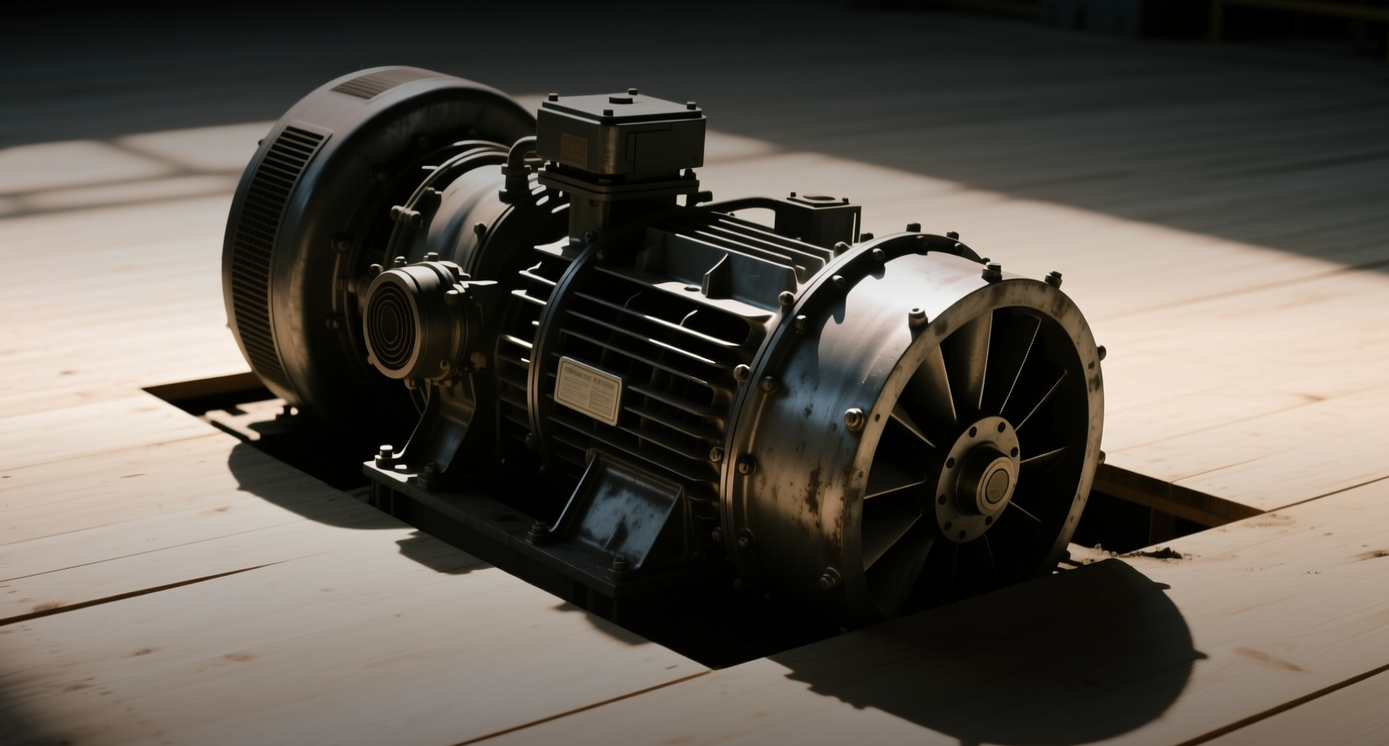
AI data centers are breaking their own power equipment as GPU clusters surge and collapse in milliseconds, threatening the economics of hundreds of billions in infrastructure spending.
AI data centers are damaging their own critical equipment — gas turbines, batteries, and cooling systems — as GPU-driven power demand swings of up to 50 percent above design capacity cut some facilities' uptime to 80 percent, threatening returns on hundreds of billions in infrastructure spending.
"It's like over-revving your car wears out the engine faster than keeping a constant speed," Amber Villegas-Williamson, principal consultant at the Uptime Institute in the UK, said.
At xAI's Colossus facility in Memphis, Tennessee, gas-fired turbines developed cracks, one person familiar with the site said. Cranks on small natural gas combustion engines used to generate power at data centers have broken off at multiple locations, several people said. Batteries installed to smooth power swings have needed replacement within weeks or months at sites from the Middle East to Europe and the US, according to the Uptime Institute and operators.
The failures come as investors and lenders scrutinize hyperscalers' hundreds of billions in capital spending, with growing concern that data center equipment — including GPU racks — may depreciate faster than estimated. Downtime costs range from thousands to hundreds of thousands of dollars per minute, and some facilities are running at 80 percent uptime versus the 365-day design assumption, a person involved in financing said.
A gigawatt data center is equivalent to a city the size of Boston, half of which can flicker on and off every few seconds, said Shannon Miller, founder and president of Mainspring Energy Inc. Some AI campuses planned in Texas and the US Midwest are more than five times bigger, consuming nearly as much power on average as New York City.
AI data centers put particular strain on their power supply when training new models — a process that mobilizes all graphics processing units in unison. Hundreds of thousands of GPUs can power up and down on a millisecond basis, like the digital equivalent of bees swarming or a school of fish changing direction.
"AI at times sees power usage spike as much as 50 percent above its design capacity, so a 1 gigawatt facility may use 1.5 gigawatts for a split second," said Drew Baglino, a former Tesla Inc. executive who started Heron Power Electronics Co., which is developing equipment to manage power fluctuations for Nvidia Corp.'s servers due in 2027.
Most equipment isn't designed for such swings. Jon Parrella, chief executive officer of energy-storage developer Terraflow Energy, likens it to driving a Ferrari and shifting straight from sixth gear to first. "You can't swing that fast," he said.
The financial consequences extend beyond replacing broken parts. "The financial consequence is not primarily replacing a pump or a breaker or some power component — it's the value of that expensive compute capacity not generating revenue because it's offline," said Jason Hoffman, chief strategy officer at data-center builder and operator Switch.
To ensure a planned 2.67-gigawatt AI campus in West Texas can achieve the 99.999 percent reliability required by Microsoft Corp., extra time was baked into the schedule for engineering, said Chris James, CEO of Joulent Inc., which is developing the facility with Chevron Corp. Power delivery will begin in 2028 instead of 2027.
Data centers are built on the assumption that, once online, they will operate around the clock 365 days a year, said a person involved in the financing of such facilities. In reality, some are seeing uptime closer to 80 percent, and unless resolved this could hit investors in certain projects within the next 12 to 24 months.
The volatility also threatens the wider power grid. "These loads are extremely dynamic or fluctuating, which causes grid instability and can lead to, if not corrected, potential blackouts or power outages," said Sreemant Roy, a power-quality expert at Schneider Electric in Nashville. Of particular concern is a data center's ability to cause sub-synchronous oscillations in the power flow, which can damage equipment connected to other parts of the network, he said.
The North American Electric Reliability Corp. has repeatedly warned that data centers are one of the greatest risks to grid stability. NERC evaluated more than 33 gigawatts of operational data centers in the US and found about three quarters of their load models "are insufficient to represent data-center dynamic behavior," according to a September report. Earlier this year, the agency issued a rare level-three alert requiring large data centers to address these risks and submit responses by Aug. 3.
Nvidia started working more closely with power experts when it developed Blackwell GPUs, first released in 2024, said Dion Harris, senior director of hyperscale infrastructure solutions at the chipmaker. The company is working to make its deployments smoother "both on the data-center build out, design and engineering phase, as well as on the power delivery."
The National Laboratory of the Rockies near Denver set up a test-bed on behalf of the US Department of Energy to figure out how to integrate AI safely onto the grid, said Martha Symko-Davies, the lab's program manager for the DOE's office of electricity. The site has GPUs and power generation on site that developers can use to test whether their setups can handle AI's variability.
For investors, the reliability question compounds existing concerns about AI infrastructure returns. Hyperscalers including Microsoft, Amazon, and Alphabet have committed hundreds of billions to data center buildouts, and any shortfall in uptime directly erodes the revenue those assets generate. With NERC's regulatory scrutiny tightening and equipment failures documented across the industry, the assumption that these facilities will run at 99.999 percent reliability is increasingly in question.
This article is for informational purposes only and does not constitute investment advice.
