
The Trump administration has intervened in the West’s escalating water war, proposing drastic cuts that could idle farms and darken cities across seven states.
The Trump administration has intervened in the West’s escalating water war, proposing drastic cuts that could idle farms and darken cities across seven states.
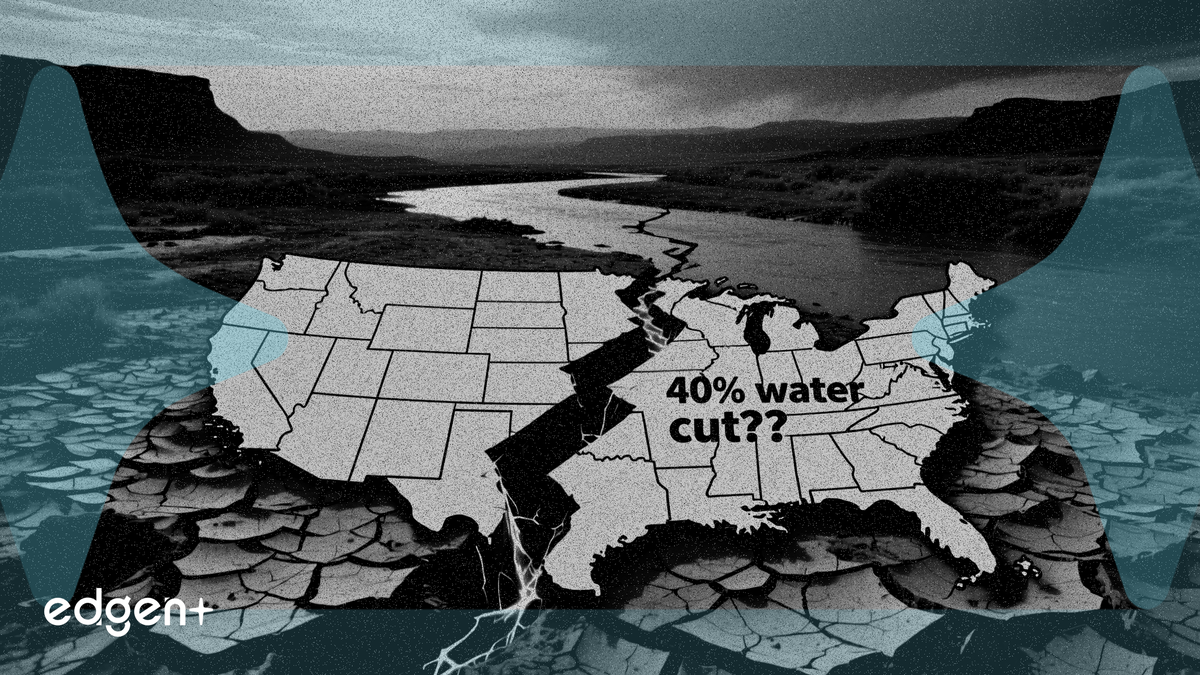
The Trump administration is preparing to impose a 10-year plan with water cuts of up to 40% for Arizona, California, and Nevada, as the Colorado River system faces imminent collapse after years of failed interstate negotiations and record-low snowpack.
"That's us, that's Arizona, and potentially CAP going to zero," Tom Buschatzke, director of the Arizona Department of Water Resources, said Wednesday regarding the proposed cuts, highlighting the potential for the Central Arizona Project canal to run dry.
The federal proposal allows for mandatory cuts of up to 3 million acre-feet per year, nearly double the 1.6 million acre-feet offered by the three lower-basin states. The move comes as the river’s largest reservoirs, Lake Mead and Lake Powell, have fallen to just 31% and 24% of capacity, respectively, and snowpack in the upper watershed measured a record-low 22% of average this year.
With a 20-year-old water-sharing agreement expiring, the federal intervention aims to prevent a catastrophic failure of a system that supplies water to 40 million people and power to millions more. The move risks upending a century of water law and triggering a severe economic shock to the region's $1.4 trillion economy, with a final decision from the Bureau of Reclamation expected this summer.
The crisis is rooted in the 1922 Colorado River Compact, which allocated water rights to seven states but was based on flawed estimates of the river's flow. A historic 20-year drought, intensified by climate change, has exposed the pact's over-allocation. Since 2000, the river's flow has shrunk dramatically, yet consumption has consistently outstripped the available supply, forcing states to draw heavily from the dwindling reserves in Lake Mead and Lake Powell.
The federal government's proposed cuts, which would be reassessed every two years, are a direct response to the impasse in negotiations between the upper-basin states (Colorado, Utah, Wyoming, New Mexico) and the lower-basin states (Arizona, California, Nevada). The lower-basin states, which use more water, have been unable to agree on a voluntary plan that satisfies federal requirements for stabilizing the reservoirs.
In a seemingly contradictory move, the Trump administration also announced the release of $47 million in federal funds for four water projects in Colorado. The grants, aimed at ecosystem restoration and improving infrastructure, were originally promised by the Biden administration in January 2025 but were immediately frozen for review when Trump took office.
The release of the funds suggests a multi-pronged federal approach, combining the threat of severe cuts with targeted investments to improve water efficiency. However, the amount is a small fraction of what is needed to address the basin-wide deficit. The Southwestern Water Conservation District in Colorado is set to receive $25.6 million of the total for 17 different projects.
The future of the American West is now tied to the federal government's final decision. The proposed cuts, while painful, may be the only way to salvage the Colorado River and force a sustainable balance between human demand and what the river can provide.
This article is for informational purposes only and does not constitute investment advice.
