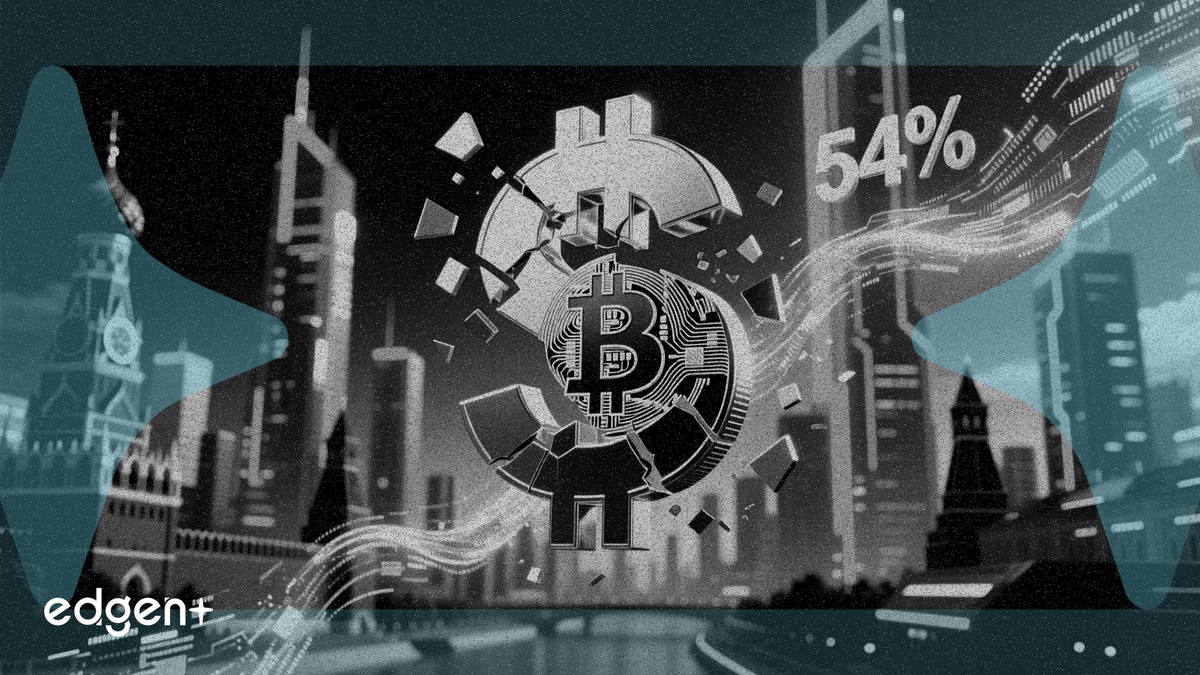
Près de 54 % des utilisateurs de cryptomonnaies russophones considèrent désormais l'A7A5 indexé sur le rouble comme la principale alternative aux stablecoins adossés au dollar tels que l'USDT, selon une nouvelle étude, signalant un changement de préférences pour les actifs numériques dans un contexte de sanctions persistantes. Un stablecoin est un type de cryptomonnaie dont la valeur est indexée sur un autre actif, généralement une monnaie fiduciaire comme le dollar américain.
La recherche, détaillée dans un rapport intitulé « Le marché des cryptomonnaies en Russie », souligne une tendance croissante vers les stablecoins non indexés sur le dollar pour les paiements transfrontaliers et le stockage de valeur. L'enquête a interrogé 1 000 participants actifs de Russie et d'autres régions russophones.
Selon le rapport, la part de l'A7A5 sur le marché des stablecoins non indexés sur le dollar devrait atteindre 41 % en 2026, représentant une valeur marchande d'environ 550 millions de dollars. Son concurrent le plus proche est l'EURC, un stablecoin indexé sur l'euro de la société mondiale de technologie financière Circle, qui émet également l'USDC. L'EURC représente environ 32 % de la part de marché hors dollar, selon l'étude.
Ce pivot vers les stablecoins non indexés sur le dollar et liés au rouble souligne un effort plus large au sein de la Russie pour construire une infrastructure financière hors de portée des sanctions occidentales. La croissance d'actifs comme l'A7A5, qui aurait traité plus de 100 milliards de dollars de transactions depuis début 2025, démontre un système parallèle résilient, bien qu'étroitement surveillé, pour les paiements internationaux.
L'A7A5 lié à la Russie est émis par une plateforme enregistrée au Kirghizistan appelée Old Vector et est adossé à des dépôts en roubles à la banque russe PSB. L'infrastructure est soutenue par A7, une société de paiements russe détenue majoritairement par Ilan Shor, un oligarque moldave possédant un passeport russe. Les entités associées au stablecoin, y compris la plateforme d'échange crypto Grinex, ont été ciblées par les sanctions occidentales pour avoir facilité le contournement des restrictions financières.
L'étude met également en lumière le comportement des utilisateurs, 57,4 % des répondants indiquant qu'ils utilisent des actifs numériques pour des activités commerciales et 96,3 % les utilisant pour stocker de la valeur. L'investissement reste le cas d'utilisation le plus populaire à 25,5 %, suivi du trading à 26,5 %. Le Bitcoin a été considéré comme la crypto la plus rentable par 25,6 % des participants, l'USDT de Tether restant apprécié par 16,4 % des utilisateurs malgré le pivot vers des alternatives.
Cet article est uniquement à titre informatif et ne constitue pas un conseil en investissement.