
Three legacy automakers are fitting bigger electric vehicles with gas generators that recharge the battery on the move, a hedge against range anxiety that marks a retreat from pure battery-electric design.
Three legacy automakers are fitting bigger electric vehicles with gas generators that recharge the battery on the move, a hedge against range anxiety that marks a retreat from pure battery-electric design.
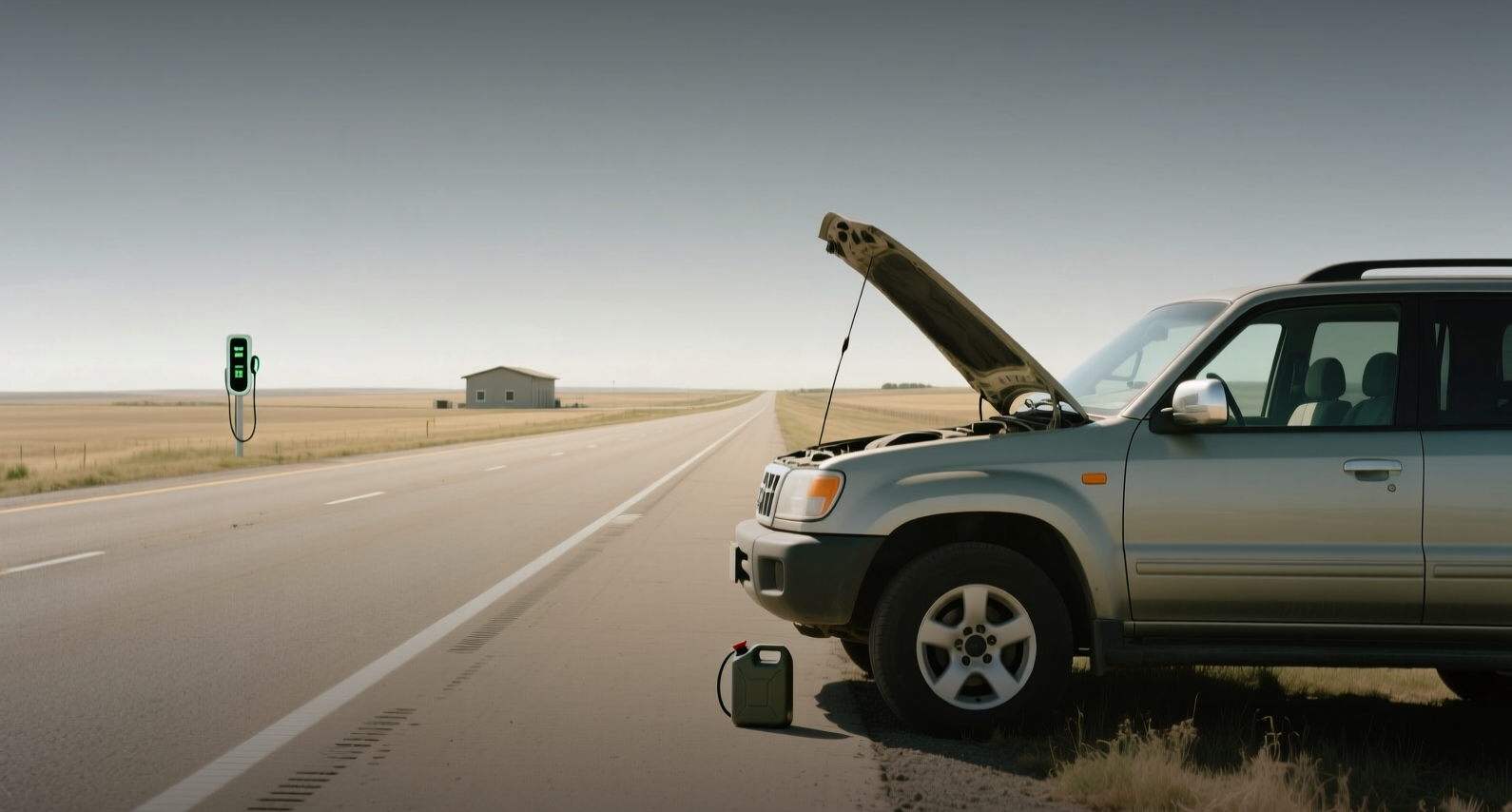
Hyundai, Ford and Stellantis will add small gas generators to their largest electric vehicles to ease range anxiety, a hedge that pulls the industry's biggest sellers away from pure battery-electric architecture.
The three automakers are preparing range-extender units for utility and sport-utility models, according to a Wall Street Journal report published Sept. 6. The systems pair a modest battery with a compact combustion engine that runs as a generator to top up charge on long trips rather than drive the wheels directly.
The architecture is not new. BMW offered a range extender on its i3 hatchback, and China's Li Auto has built its lineup around the concept. What has changed is scale: three of the world's largest legacy automakers are applying it to their biggest, most profitable vehicle segments, where large battery packs weigh most and cost the most.
The shift carries consequences for the battery supply chain and for pure-play rivals such as Tesla. If range-extender models win buyers who balk at sparse charging networks, they could slow demand for the largest battery packs and force automakers to rebalance capital between battery plants and internal-combustion programs.
Why Range Extenders Are Back
Range anxiety has long ranked among the top reasons shoppers reject battery-electric vehicles, and it is most acute in the utility and SUV segments these three automakers target. A gas generator lets a vehicle carry a smaller, cheaper battery while still offering the refueling flexibility of a combustion car on long trips. For automakers, the trade-off is a partial return to the internal-combustion supply chains they have been winding down.
The competitive stakes are clearest against Tesla, whose lineup depends on large battery packs and a proprietary charging network. Range-extender rivals undercut that advantage by removing the need for fast charging on road trips. In China, Li Auto has shown the model can sell, with its extended-range sport-utility vehicles ranking among the country's top-selling electric models in recent quarters, a result legacy automakers are watching closely.
For investors, the question is which companies win as the architecture spreads. Hyundai, Ford and Stellantis gain a lower-cost path into the utility segments where margins are highest, but they also acknowledge that the transition to full electrification will take longer than the most bullish forecasts assumed. Battery makers that bet on ever-larger packs face slower growth in that slice of demand, while suppliers of small combustion generators gain a new market.
The three automakers have not disclosed which models will carry the generators or when they will reach showrooms, and the Wall Street Journal report did not specify production timelines or the range the systems would add. What is clear is that the industry's biggest sellers no longer treat the pure battery-electric vehicle as the only route to an electric future.
This article is for informational purposes only and does not constitute investment advice.
