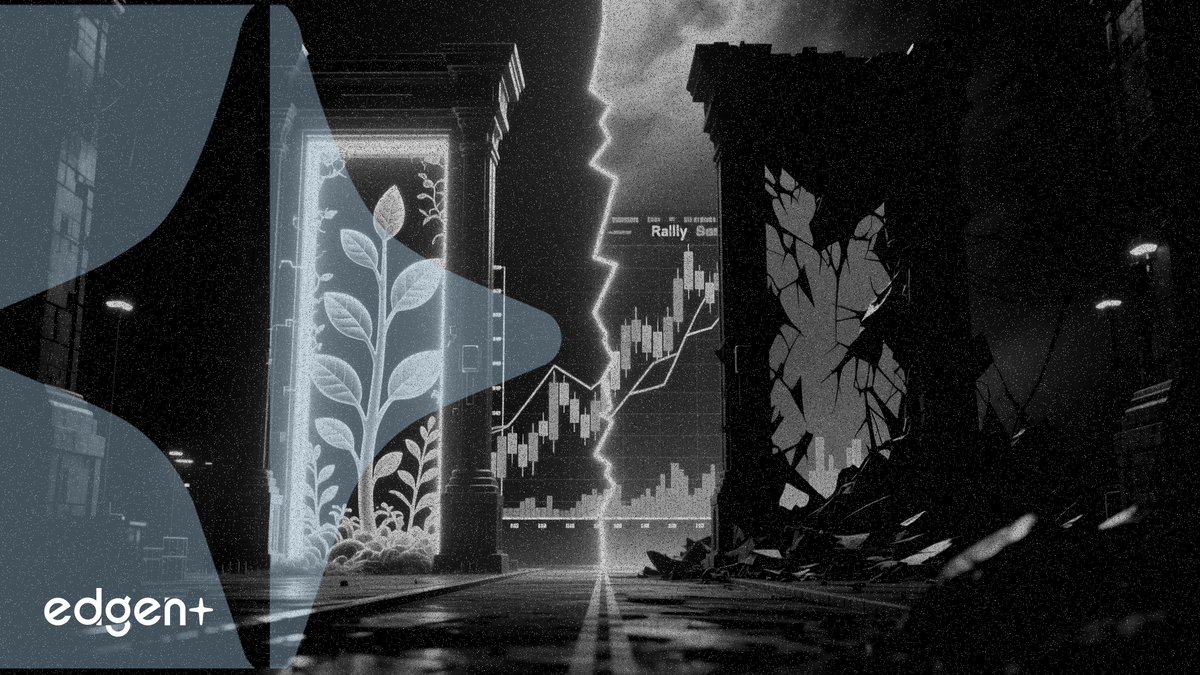
Global markets are facing a binary choice in June, where the reopening of a single waterway could either unleash a cyclical boom or trigger the end of the current risk-asset rally.

An analysis from Guojin Securities lays out two potential paths for the global economy hinging on events in June, with the reopening of the Strait of Hormuz and the US Federal Reserve’s response acting as critical gates. The resolution of US-Iran tensions could unlock a rally in cyclical assets, while a continued blockade threatens to force a hawkish Fed pivot that could upend the market’s fragile recovery.
"The ongoing conflict in the Middle East is putting AI infrastructure on the literal front lines in ways that even a year ago would have seemed out of the realm of possibility," Trisha Ray, associate director at the Atlantic Council's Geotech Center, told CNBC on May 15, highlighting the broad economic impact of the regional instability.
The market has been whipsawed by headlines from the Pakistan-mediated talks, with Bitcoin swinging between $68,000 and $77,000 on news of a potential deal. Brent crude remains elevated near $100 a barrel after surging from around $72 before the conflict, reflecting the risk premium associated with the closure of a strait that handles over 20 percent of global oil supply.
The stakes are well-defined: a successful deal that reopens the strait could ease global supply chain pressures and cool inflation, allowing the Fed to maintain its current stance. However, if talks falter and the blockade persists, analysts at Guojin Securities warn it could force the Fed’s hand, turning a potential rate cut into a hike and ending the rally in growth and tech stocks.
According to the Guojin analysis, the optimistic scenario involves a successful US-Iran negotiation, leading to the reopening of the waterway and the unfreezing of up to $20 billion in Iranian assets. This would alleviate the worst supply shock in recent history, cool energy prices, and likely trigger a "HALO trade" — a rotation into High-beta, Asset-heavy, Low-multiple, Old-economy stocks like industrial metals, energy, and shipping that have been suppressed by logistics bottlenecks.
Conversely, the pessimistic scenario sees the talks collapse. The continued closure of the strait would not only keep energy prices high but also prolong supply chain disruptions that are already extending delivery times and raising input costs in the US and Europe, as seen in May's PMI data. This persistent inflation could force the Federal Reserve, which has already adopted a more hawkish tone in its April minutes, to consider a rate hike in 2026 as a primary policy option to control inflation, effectively closing the gate on the risk-asset rally.
The precarious situation is magnified by the state of global oil markets. Years of underinvestment have left global oil and gas exploration spending at just 42 percent of its 2013 peak, according to Guojin Securities. With OPEC's spare capacity near zero due to the conflict, there is little room to absorb further shocks.
Commercial petroleum inventories in OECD countries are already approaching their March 2022 lows. Projections from the EIA suggest that even if the strait reopens, a slow supply ramp-up means inventories would continue to fall, potentially hitting their lowest levels since 2003 before a restocking cycle could even begin. This vulnerability makes the market exceptionally sensitive to the outcome of the June negotiations.
Amid the global disruption, China's relative stability has stood out. The country's diversified energy import sources and significant refining capacity have provided a buffer, allowing its exports of goods like new-energy equipment to remain resilient. This highlights the growing importance of China's role as a key node in the global energy supply chain, a position that could be further solidified if a global restocking cycle begins.
This article is for informational purposes only and does not constitute investment advice.