Zenith Links Ethereum to Canton as Network’s Token Gains 30%
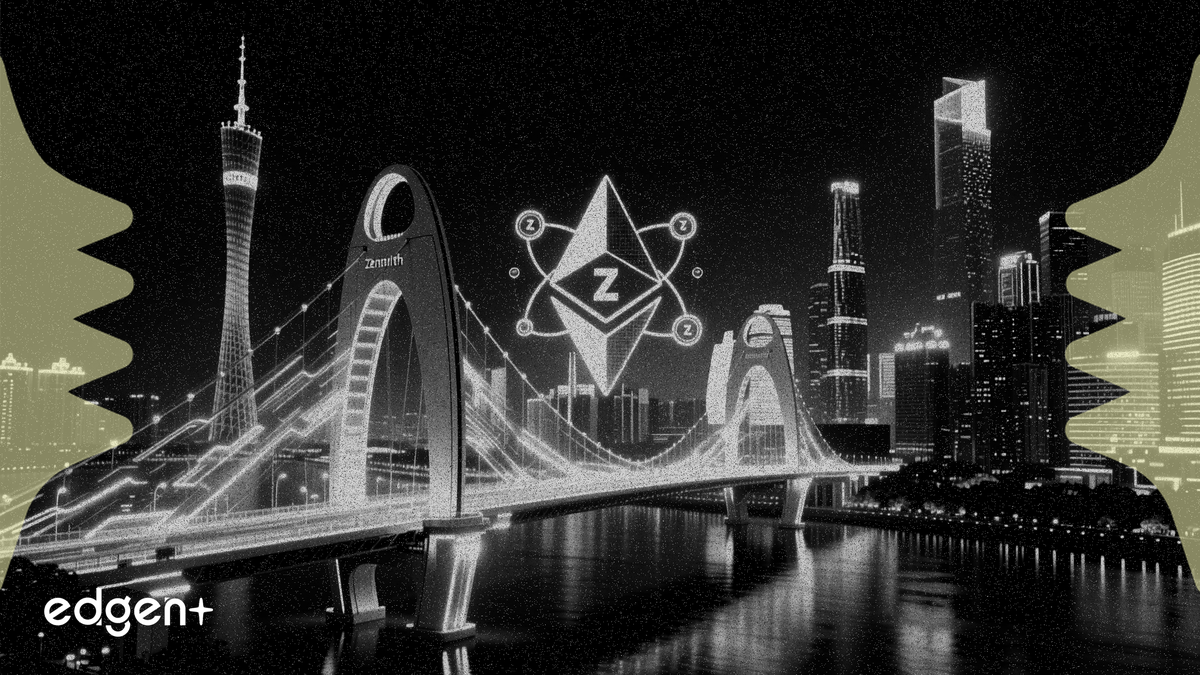
Zenith has successfully connected the institutional-focused Canton Network to the Ethereum blockchain, establishing a critical piece of infrastructure for cross-chain financial activity. The integration uses atomic swaps to allow for the trustless transfer of assets, bridging the gap between Canton's permissioned environment and Ethereum's open, decentralized finance (DeFi) ecosystem.
The move comes as the Canton Network gains significant traction with major financial institutions. Since its launch in November 2025, the network’s native Canton Coin has appreciated approximately 30%, reflecting growing confidence in its role as a hub for regulated digital assets. Key players like Moody's, Franklin Templeton, the Depository Trust and Clearing Corporation (DTCC), and JPMorgan have all announced plans or active integrations on the network, signaling a clear trend of traditional finance moving on-chain.
Atomic Swaps Eliminate Counterparty Risk in Cross-Chain Trades
The technological foundation for this bridge is the atomic swap. Unlike traditional cross-chain swaps that rely on trusted intermediaries and carry timing risks, atomic swaps use cryptographic commitments to ensure that a trade between two different blockchains completes simultaneously for both parties. If one side of the transaction fails for any reason, the entire trade is voided and the assets are automatically returned to their original owners.
This non-custodial mechanism eliminates counterparty risk, a critical requirement for institutional participants. By enabling assets to move between Canton and Ethereum without passing through a centralized exchange or custodian, Zenith provides a secure pathway that meets stringent compliance and risk management standards. This model ensures that firms retain control of their funds throughout the transaction lifecycle.
New Bridge Aims to Merge DeFi Liquidity with Regulated Assets
The primary impact of this integration is the potential to merge two powerful but separate pools of capital. It opens the door for Canton's institutional participants to access the deep liquidity and vast asset base of the Ethereum ecosystem. Simultaneously, it provides the Ethereum developer community with a compliant bridge to institutional finance, which could drive significant new transaction volume and total value locked (TVL).
As major financial firms continue to tokenize real-world assets like government funds and securities on Canton, the ability to interact with Ethereum's DeFi protocols could create novel financial products and investment strategies. Yuval Rooz, co-founder of the Canton Network, highlighted the value of bringing trusted data into these digital workflows.
On-chain independent risk analysis streamlines distribution to permissioned parties, reduces friction, and improves transparency across the transaction lifecycle, which strengthens market efficiency while preserving privacy, control, and compliance.
— Yuval Rooz, Co-founder of the Canton Network.
 Edgen Crypto·Mar 19 2026, 19:51