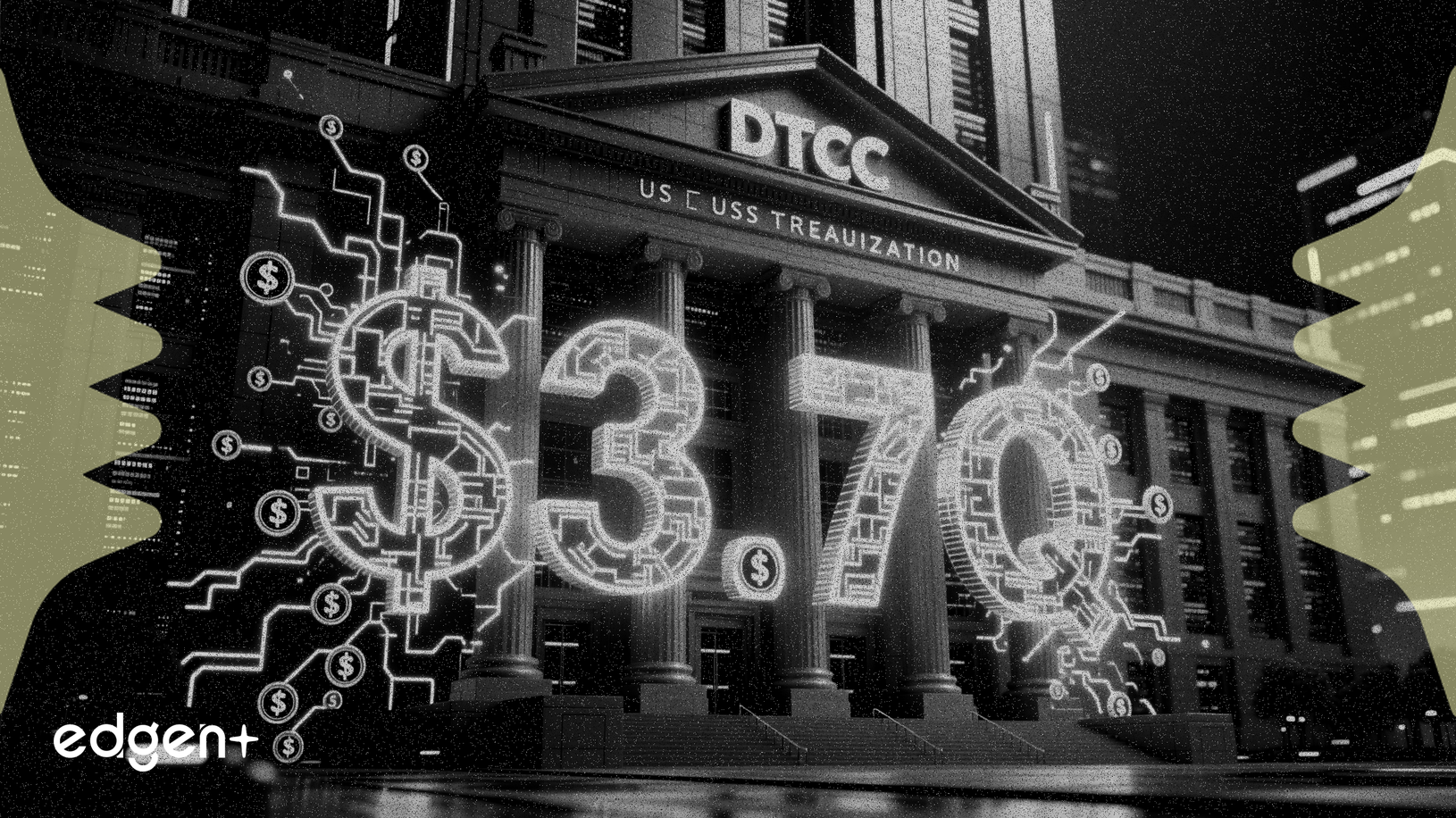
DTCC to Tokenize Treasurys After Processing $3.7 Quadrillion in 2023
The Depository Trust and Clearing Corporation (DTCC), the foundational infrastructure for U.S. capital markets, announced it will begin tokenizing United States Treasury securities. The firm, which processed a staggering $3.7 quadrillion in securities transactions last year, will use the Canton Network, a permissioned blockchain developed by fintech company Digital Asset, to mint the digital versions of these assets. This initiative marks one of the most significant moves by a legacy financial institution to adopt blockchain technology for core asset settlement.
"This collaboration creates a roadmap to bring real-world, high-value tokenization use cases to market, starting with US Treasury securities and eventually expanding to a broad spectrum of DTC-eligible assets," stated DTCC CEO Frank LaSalla. The partnership aims to provide regulated, onchain access to high-value financial instruments, merging the security of traditional finance with the efficiency of blockchain.
SEC Grants Three-Year Approval for MVP Launch by 2026
The project moves forward with significant regulatory clarity after the Securities and Exchange Commission (SEC) issued a "no-action" letter, confirming it will not take enforcement action for three years. This approval applies to a specific set of highly liquid assets, including U.S. Treasury bills, bonds, and notes, as well as certain exchange-traded funds (ETFs) that track major indexes like the Russell 1000.
The partners are targeting the first half of 2026 to launch a minimum viable product in a controlled environment. Following the initial launch, the DTCC plans to expand the project's scope based on client demand over a multi-year timeline. As part of its commitment, the DTCC will also join the Canton Foundation, the blockchain's governing body, as a co-chair alongside Euroclear.
Analysts See Slow Burn Until Onchain Composability is Achieved
While SEC figures like Paul Atkins hailed the move as an "important step towards onchain capital markets," market analysts project a gradual impact. Greg Cipolaro, global head of research at NYDIG, noted that because the assets will exist on a private, permissioned blockchain, they will not immediately integrate with the broader decentralized finance (DeFi) ecosystem. The full potential, he argued, will be unlocked when regulations and technology allow these tokenized real-world assets (RWAs) to be used as collateral for borrowing or for trading across DeFi protocols.
"In the future, one could see these RWAs being part of DeFi (composability), either as collateral for borrowing, an asset to be lent out, or for trading," Cipolaro explained. "This will take time as technology develops, infrastructure is built out, and rules and regulations evolve."