
Tendances du marché crypto : Comment le trading assisté par l'IA change la donne
L'IA prend le contrôle du trading de cryptomonnaies. Voici comment :
Les marchés cryptos évoluent à une vitesse fulgurante, laissant les traders humains en difficulté pour suivre. Les prix fluctuent en microsecondes, et manquer des opportunités peut rapidement coûter cher.les tradersun montant important d'argent. Entrez dans les robots de trading assistés par l'intelligence artificielle, le atout ultime pour les traders souhaitant dominer les marchés cryptographiques en mouvement rapide. Ces robots analysent instantanément les données en temps réel sur la chaîne, les tendances du marché et l'opinion publique sur les réseaux sociaux, agissant plus vite qu'aucun humain ne le pourrait jamais.
Dirigeant cette charge estEdgen AI,une plateforme puissante qui redéfinit la manière dont les traders de cryptomonnaies abordent les marchés. En combinant des analyses de pointe, des insights en intelligence artificielle et de l'intelligence sociale, Edgen AI assure aux traders qu'ils ne traderont plus jamais à l'aveugle.
Qu'est-ce que le trading assisté par l'intelligence artificielle ?
Le trading assisté par l'IA est conçu pour analyser les données du marché, identifier des opportunités rentables et analyser instantanément les échanges de cryptomonnaies. Ils reposent sur des algorithmes avancés, l'analyse prédictive et une intelligence approfondie du marché.
Comment fonctionnent les robots de trading par IA :
- Analyse des données du marché :L'IA traite les indicateurs du blockchain (on-chain) en temps réel et l'analyse de sentiment social ("les fondamentaux de la pompe) anticiper les mouvements des prix.
- Génération du signal Alpha :Grâce à une intelligence sociale avancée, Edgen AI suit les Influenceurs Clés (KOL), les portefeuilles intelligents et l'opinion de la communauté.
- Gestion avancée des risques :L'IA ajuste dynamiquement les stratégies de trading, minimisant les pertes et optimisant la rentabilité.
Contrairement aux bots basiques, Edgen AI pousse le trading plus loin en interprétant l'ambiance du marché, les récits et les signaux sociaux, littéralement « lire la salle » pour vous.
Comment l'intelligence artificielle révolutionne le trading de cryptomonnaies
1. Éliminer les points aveugles du commerce
La plupart des traders s'appuient trop lourdement sur les graphiques et ignorent des facteurs critiques comme le sentiment social ou les activités des portefeuilles intelligents. Edgen AI résout cela en surveillant les récits du marché, les activités des influenceurs et les signaux du marché en temps réel. Grâce aux analyses complètes d'Edgen, les traders voient clairement l'ensemble du paysage du marché.
2. Vitesse et précision sans égal
Dans le domaine de la cryptomonnaie, les millisecondes comptent. Les bots alimentés par l'intelligence artificielle analysent à des vitesses que les humains ne peuvent tout simplement pas égaler. Edgen AI accélère cette vitesse en intégrant une analyse en temps réel de l'opinion publique, permettant aux traders d'agir même avant que les changements du marché ne deviennent évidents. Les traders peuvent également explorer le real-time crypto feedpour rester à jour sur les tendances émergentes, les déplacements des influenceurs et les changements rapides d'opinion.
3. Intelligence de marché de prochaine génération
Les méthodes traditionnelles d'analyse des cryptomonnaies sont obsolètes. Edgen AI révolutionne cette approche en :
- Suivi de l'influence sociale : savoir exactement qui fait bouger le marché.
- Analyser les activités sur la chaîne en temps réel : observer les mouvements des portefeuilles intelligents et les flux de transactions.
- Fournir des informations sans bruit grâce à des outils de recherche alimentés par l'intelligence artificielle.
Trader sans IA aujourd'hui ? C'est essentiellement voler à l'aveugle.
Avantages Clés de l'Utilisation du Trading Assisté par l'IA
Le commerce 24/7 sans erreurs émotionnelles
Le crypto ne dort jamais, et l'IA non plus. Les bots d'Edgen saisissent les opportunités du marché en permanence, sans jamais se fatiguer ni trader par peur ou cupidité.
Des Signaux Alpha Plus Précis
Edgen AI identifie les opportunités alpha en analysant des données de marché complètes associées à des perspectives sociales critiques, aidant les traders à agir avant que le reste du marché ne réagisse.
Une meilleure gestion des risques
Des stratégies pilotées par l'IA ajustent automatiquement les tailles des transactions, définissent des stops-loss intelligents et gèrent l'exposition pour minimiser efficacement les risques.
Exécution Rapide
Des bots alimentés par l'IA traitent des millions de points de données par seconde, offrant une vitesse et une précision que les traders humains ne peuvent pas égaler.
Prise de décision complète
LeEdgen Radarintègre les fondamentaux sur la chaîne et le "social-driven"les fondamentaux de la pompe"offrant aux traders une vision claire du marché"en un coup d'œil.

Les inconvénients potentiels du trading assisté par l'intelligence artificielle
L'IA n'est pas parfaite
Même l'intelligence artificielle avancée ne peut prédire avec une précision totale les événements imprévisibles "cygnes noirs".
Selon The Guardian, la Banque d'Angleterre a averti que les systèmes d'intelligence artificielle pourraient potentiellement déclencher des crises de marché dans un but lucratif - pas nécessairement en raison d'une intention malveillante, mais en raison de stratégies d'optimisation autonome qui tournent mal.Cela met en évidence pourquoi le contrôle humain reste critique.
Exige une surveillance humaine
Les bots d'IA réduisent les zones de non-vision, mais ne devraient pas être laissés entièrement sans surveillance. Les traders doivent rester impliqués pour surveiller l'efficacité des stratégies et les conditions du marché.
Préoccupations de sécurité
L'intégration des bots dans votre stratégie de trading comporte des risques intrinsèques. Utilisez uniquement des plateformes fiables comme Edgen AI, en mettant l'accent sur des protocoles de sécurité rigoureux.
Pourquoi Edgen AI est l'avenir du trading de cryptomonnaies
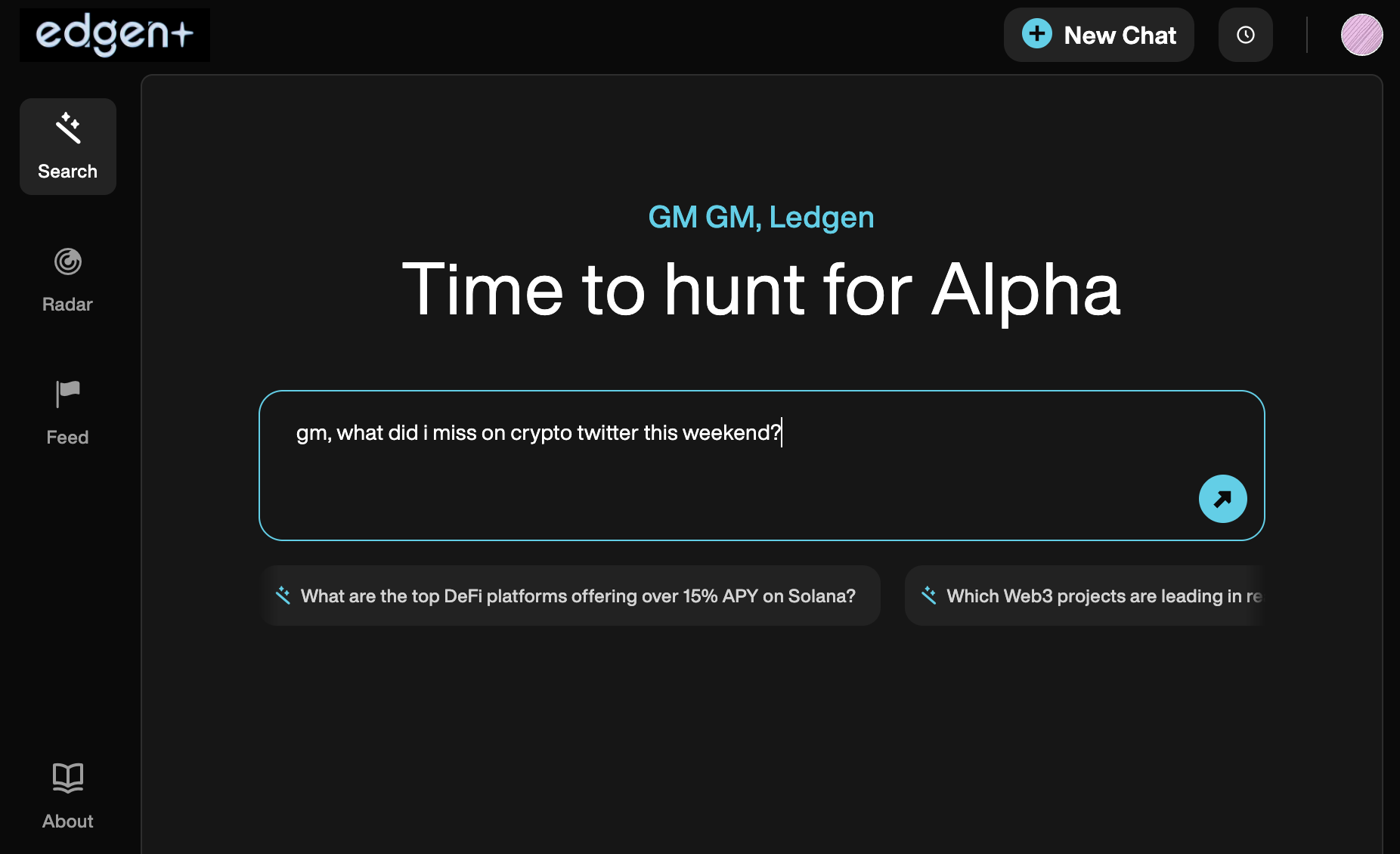
Edgen AI est une infrastructure de trading en intelligence artificielle pour le côté acheteur, sophistiquée et conçue spécifiquement pour l'intelligence du marché crypto en temps réel.
Qu'est-ce qui distingue Edgen AI :
- Edgen Search:Répond instantanément aux questions liées au marché avec des informations précises et vérifiées.
- Intelligence sociale en temps réel :Suivi des récits du marché, de l'excitation de la communauté et des activités des influenceurs.
- Analyse sur la chaîne :Surveille les activités du portefeuille intelligent, les modèles de transactions et les tendances institutionnelles.
- Écosystème Aura :Encourage les utilisateurs à apporter des informations, créant ainsi un réseau d'intelligence auto-apprenante qui s'améliore en permanence.
En bref, Edgen AI offre aux traders un avantage puissant et complet par rapport à la concurrence.
L'avenir du trading de cryptomonnaies est alimenté par l'intelligence artificielle
Le trading de cryptomonnaies évolue rapidement, et les bots alimentés par l'intelligence artificielle se trouvent en tête de cette révolution. Bientôt, les traders ne s'appuieront plus uniquement sur l'analyse traditionnelle des graphiques. Au lieu de cela, ils utiliseront des bots d'intelligence artificielle capables de décoder le sentiment du marché, de détecter des signaux d'alpha cachés et de prédire les tendances avant que le marché n'ait réagi.
Que devient Edgen AI :
- Marché des fonds d'IA :Un marché d'investissement en cryptomonnaies avancé entièrement guidé par des analyses d'intelligence artificielle.
- Des outils de tire au sort :Identifier et exploiter les opportunités de trading à haute fréquence en temps réel.
- Intégration transparente :Outils de portefeuille et d'échange unifiés alimentés par une automatisation pilotée par l'IA pour un trading simplifié.
Si vous ne négociez pas déjà avec l'IA, vous êtes en retard rapidement.
Faut-il commencer à utiliser l'intelligence artificielle pour le trading de cryptomonnaies ?
Les marchés cryptographiques sont notoirement volatils et chaotiques. C'est exactement les conditions dans lesquelles l'intelligence artificielle prospère. Si vous souhaitez :
- Comprendre les signaux du marché profond, y compris le sentiment social et les fondamentaux sur la chaîne (on-chain)
- Mettre en œuvre des stratégies de trading basées sur l'intelligence artificielle avancée
- Évitez les erreurs de trading émotionnel coûteuses
Ensuite, le trading assisté par l'IA, et en particulier Edgen AI, est un must absolu.
L'avenir de la cryptomonnaie repose sur la possession de données supérieures, une vitesse d'exécution sans égale et des analyses alimentées par l'intelligence artificielle les plus avancées.Edgen AI fournit exactement cela.
Si vous souhaitez learn more about Edgen’s missionPour rendre le commerce plus intelligent, plus rapide et plus axé sur les données, c'est le moment.
Prêt à trader plus intelligemment avec l'IA ?
Commencez à utiliser des outils d'IA conçus pour l'intelligence de marché en temps réel, le suivi de l'opinion publique sociale et l'analyse sur la chaîne.Explorez la puissance de Edgen Radaret obtenez votre avantage en trading aujourd'hui.






Investir, enfin, tu n'es plus seul.
Essaie Ed gratuitement. Sans carte, sans engagement.