

Chinese EV maker XPeng is charting a course beyond battery-powered cars, aiming to integrate vehicles with robotics as its next growth frontier.
Chinese EV maker XPeng is charting a course beyond battery-powered cars, aiming to integrate vehicles with robotics as its next growth frontier.
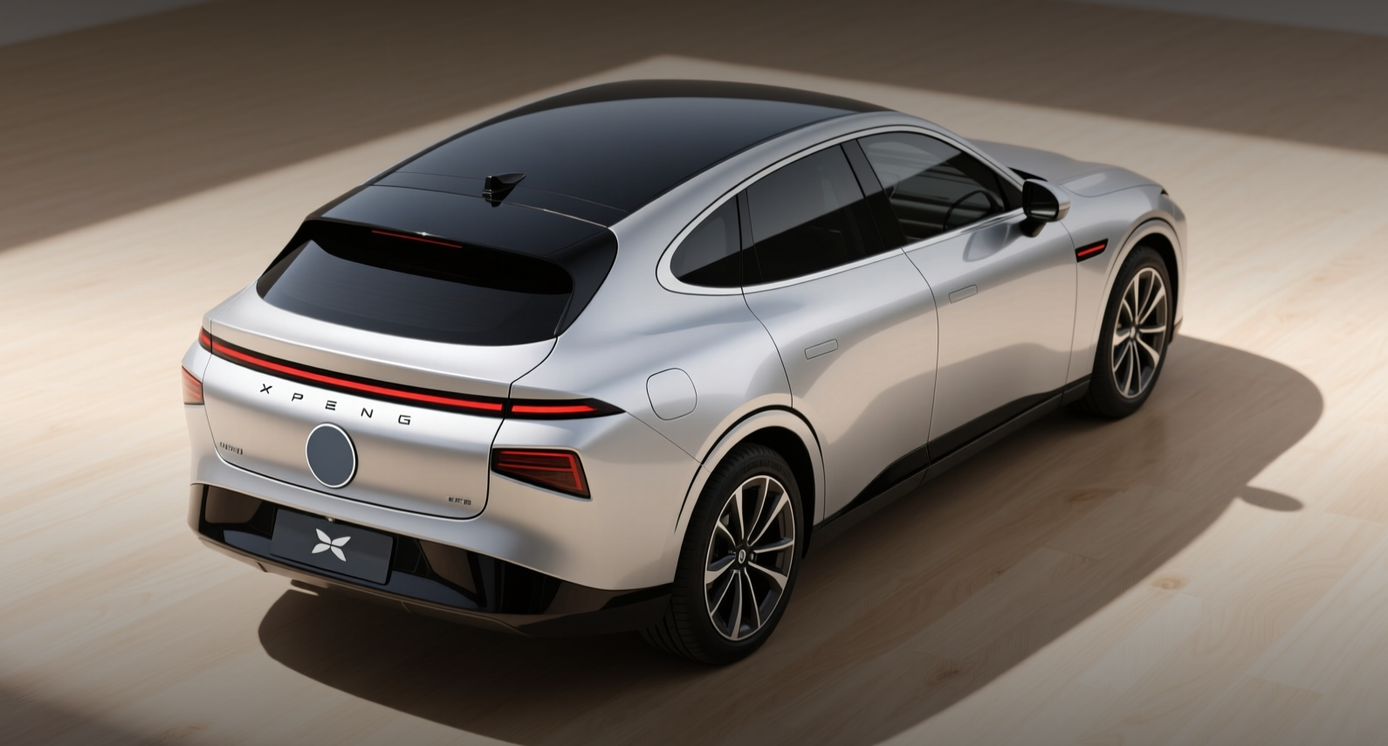
Chinese electric-vehicle maker XPeng is pivoting from pure battery-powered cars to vehicles integrated with robotics, Chief Executive He Xiaopeng said, positioning the company at the intersection of two high-growth sectors.
"America will be one of the most important markets that we have to enter because it will help us to grow better," Xiaopeng told WardsAuto, outlining ambitions that extend beyond China and Europe.
XPeng delivered 103,295 vehicles in the first six months of the year, nearly double the 52,200 delivered in the same period a year earlier. The company is expanding across Europe and plans to enter Canada as a precursor to a potential US launch, though significant political barriers remain.
The strategic shift could boost XPeng's valuation by placing it at the center of two expanding markets — the global EV industry, valued at more than $1 trillion, and the robotics sector, where Chinese companies are investing heavily. If successful, the move would differentiate XPeng from domestic rivals such as BYD and Nio, which have focused primarily on battery technology and autonomous driving features.
Robotics as the Next Chapter
Chinese carmakers spent the past decade replacing gasoline engines with batteries. The next decade will be about integrating cars with robotics, Xiaopeng said, framing the shift as a natural evolution of the industry rather than a departure from its core business. XPeng has already invested in robotics research, including humanoid robots and autonomous driving systems that share underlying technology with its vehicles.
The robotics push comes as Chinese automakers face increasing trade barriers in Western markets. The US has effectively blocked Chinese EV imports through a combination of tariffs and regulatory hurdles, a stance that enjoys bipartisan support in Washington. Polestar, the Swedish-Chinese brand backed by Geely, built a factory in South Carolina and still faced import restrictions, highlighting the political sensitivity around Chinese-connected vehicles.
Xiaopeng said XPeng would consider building factories in the US if policy allowed. "If the US policy allows for companies like us to stay or enter the market and build factories there, definitely we'll embrace that decision," he said. President Donald Trump has sent mixed signals on Chinese auto investment, at times welcoming factory construction while maintaining tariff barriers.
Canada as a Gateway
Canada will serve as a test market for North American expansion. Alex Tang, XPeng's head of international development and service, said the company needs to "evaluate and plan" to enter Canada with a "long-term strategy to be there as a long-term brand." A successful Canadian launch could provide a template for a future US entry, though no timeline has been set.
The robotics pivot also reflects a broader trend among Chinese EV makers seeking new revenue streams as the domestic market matures and price competition intensifies. BYD has slashed prices repeatedly over the past year, compressing margins across the industry. XPeng's move into robotics mirrors similar efforts by Tesla, which has positioned its Optimus humanoid robot as a potential long-term business beyond its automotive core.
Investor Implications
For investors, the question is whether XPeng can execute on two capital-intensive fronts simultaneously. The company's H1 delivery figure of 103,295 vehicles represents strong year-over-year growth but remains well behind BYD's 1.6 million units and Nio's 87,426. XPeng trades at a discount to some peers as it navigates the transition from pure EV maker to a broader technology company. The robotics strategy, if realized, could open a new valuation pathway — but it also carries execution risk and requires sustained investment in research and development.
This article is for informational purposes only and does not constitute investment advice.
