
Zhipu AI's annualized revenue has grown 15x this year to roughly $2 billion, the clearest sign yet that China's large-model industry is leaving its price-war phase behind.
Zhipu AI's annualized revenue has grown 15x this year to roughly $2 billion, the clearest sign yet that China's large-model industry is leaving its price-war phase behind.
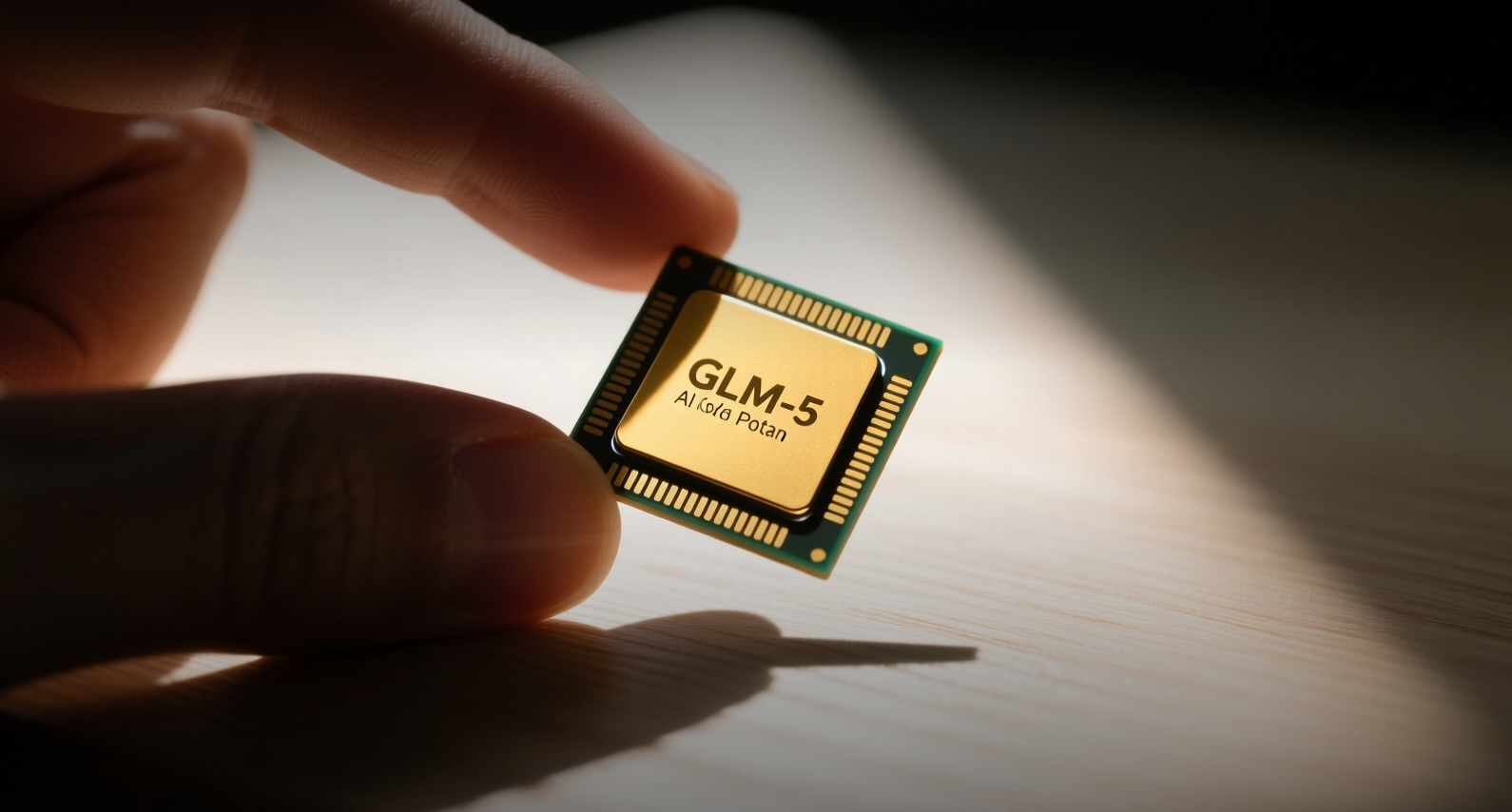
Zhipu AI's annualized revenue has grown 15x this year to roughly $2 billion, as its MaaS platform draws nearly 7 million API users and the GLM-5 model family ranks fourth globally at launch. Hong Kong-listed shares have climbed more than 37 percent in five sessions after Morgan Stanley raised its price target from HK$990 to HK$1,700.
"China's large-model industry is establishing a healthier commercialization environment," Gary Yu, an analyst at Morgan Stanley, said. The sector is shifting "from price competition to monetization driven by model intelligence," he wrote.
The growth is anchored in coding demand. Zhipu's MaaS platform added about 2 million API users since early July, reaching nearly 7 million total, including 23,000 enterprise customers. Its developer product ZCode surpassed 1 million users within a month of launch. The company raised more than HK$30 billion in a July placement, with 55 percent earmarked for research and computing power.
The shift matters beyond Zhipu. If China's AI sector has moved from price competition to intelligence-driven monetization, companies that convert model capability into recurring revenue will reprice sharply. Zhipu's five-day rally suggests the market is already betting on that outcome — but the window for independent model companies remains narrow as Alibaba, ByteDance, and Tencent pour billions into computing infrastructure.
GLM-5.2's Inference Gains Close the Infrastructure Gap
Zhipu's ARR acceleration tracks the GLM-5 release in early February, which ranked fourth globally at launch behind two Claude models and OpenAI's GPT-5.2, according to Artificial Analysis. GLM-5.2, released in July, delivers 4.7x throughput at 200,000-token context versus GLM-5.1's 2.77x at the same length, per the model's technical report. Architectural changes include IndexShare, which cuts per-token compute 2.9x at million-token context, and a refined MTP draft layer that boosts generation speed about 20 percent.
The efficiency gains matter because Zhipu operates under tighter compute constraints than US rivals. The company has activated more than 50,000 domestically produced AI chips in a 1-gigawatt infrastructure buildout and completed its acquisition of Zhongke Jiahe in July to strengthen inference optimization. A high-speed API launched in May generates 400 tokens per second, roughly 8x faster than standard service, developed with the TileRT team behind the TileLang programming language.
Pricing Power and the Independent Model Window
Zhipu's API gross margin reaches 50 to 60 percent on its own infrastructure under ideal conditions, according to LatePost. That compares with estimates of more than 80 percent for Anthropic and 70 to 80 percent for DeepSeek. The blended price for GLM-5.2 is about 8.8 yuan per million tokens, significantly below US models of comparable capability.
The company raised its Coding Plan price from 20 yuan to 118 yuan per month for the Lite tier in late July, a nearly sixfold increase, as demand outpaced supply. Zhipu's ARR growth has not slowed even after Kimi released K3 on July 16 — which overloaded its API for six hours — or Alibaba's Qwen3.8-Max launch on August 3, which pushed its Hong Kong shares up 7 percent.
The competitive window for independent Chinese model companies is real but finite. Zhipu and DeepSeek both plan August model releases, and big tech's compute advantage is widening. Alibaba's Wu Yongming said capital spending on computing centers will far exceed the previously promised 380 billion yuan over three years, while Tencent's first-quarter operating capex rose 18 percent year over year. If Zhipu maintains its lead in coding-focused models, the Morgan Stanley target implies substantial upside from current levels. But the same dynamics that created this window — rapid model commoditization and the rise of internal routing systems that mix models by task complexity — could close it just as quickly.
This article is for informational purposes only and does not constitute investment advice.
