
Key Takeaways: A 25-year U.S.-Venezuela oil pact targeting 1.5 million barrels per day could reshape Western Hemisphere crude flows and deliver $209 billion to Caracas.
Key Takeaways: A 25-year U.S.-Venezuela oil pact targeting 1.5 million barrels per day could reshape Western Hemisphere crude flows and deliver $209 billion to Caracas.
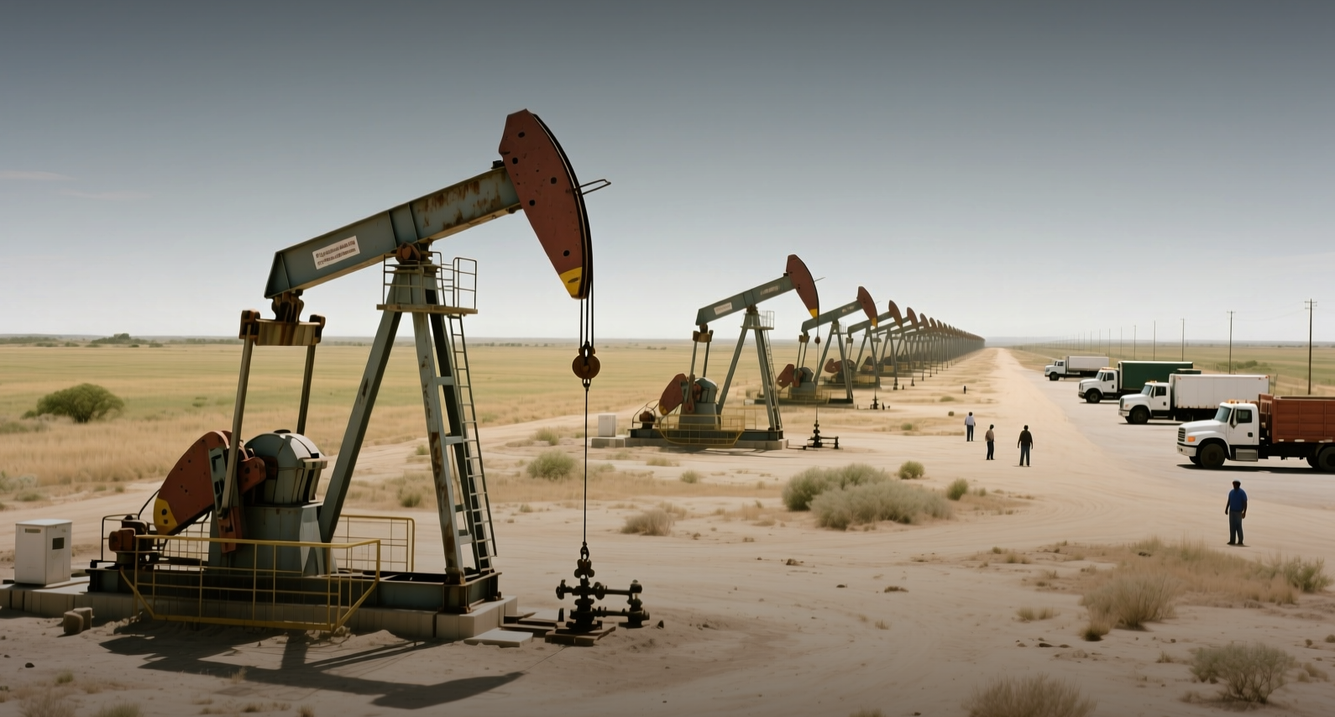
The U.S.-Venezuela oil agreement announced Friday targets crude output above 1.5 million barrels per day across 17 oilfields, a 25-year pact that could generate $209 billion in revenue for the South American nation.
Venezuelan interim President Delcy Rodriguez called the agreement "historic" in a televised address Saturday, saying it would help revive the country's economy while preserving sovereignty over its natural resources.
Rodriguez said the initial target of 1.5 million barrels per day applies only to the bilateral agreement, with broader plans to develop eight additional greenfield oil blocks. She estimated roughly $19 from each barrel sold under the arrangement would flow directly to Venezuela, based on a benchmark oil price of $65 per barrel.
The deal gives the U.S. 55 percent effective output of a new private company holding rights to untapped Venezuelan fields for 100 years, according to the Associated Press. Secretary of State Marco Rubio said the agreement could bring nearly $100 billion in private investment, though analysts caution that Venezuela's dilapidated infrastructure will take years and billions of dollars to repair before production can meaningfully rise.
President Donald Trump announced the agreement on Truth Social on Friday, saying the U.S. had secured majority control of more than 65 billion barrels of Venezuela's proven reserves — the world's largest — through a partnership with private business at no cost to American taxpayers. The deal was negotiated by Rubio, Secretary of War Pete Hegseth, Rodriguez and private companies.
Venezuela currently produces about 1.25 million barrels per day, far below its historical peak of more than 2.5 million barrels per day, after years of underinvestment, mismanagement and sanctions. The country's oil infrastructure has deteriorated significantly, and restoring production to the deal's target will require substantial capital deployment over many years.
"It's going to take time — many years — to deploy that much capital and produce the kind of incremental results that history suggests possible," said Kevin Book, managing director at ClearView Energy Partners.
Amy Myers Jaffe, director of the Energy, Climate Justice and Sustainability Lab at New York University, said the deal would not change retail gasoline prices in the near term. The average U.S. gasoline price stood at about $4.08 a gallon on Saturday, compared with $3.20 a year earlier, according to AAA.
The agreement drew praise from parts of the oil industry. Phil Flynn, an oil trader, said on "Fox & Friends Weekend" that the deal could lead to "a generation of low prices" for Americans and that U.S. technology could transform Venezuela's oil industry.
But the deal also faced criticism. Ricardo Hausmann, a Harvard University professor and former Venezuelan planning minister, called it a "shameful deal" on social media, saying Rodriguez had "no legitimacy or constitutional power to commit Venezuela to any such deal." Dozens of pro-government groups gathered in downtown Caracas on Saturday to protest the U.S. presence in Venezuela.
Chevron, the only U.S. oil company actively producing in Venezuela, is among companies expected to finalize talks to transition its Venezuelan joint ventures into the country's new energy framework, according to two sources close to the negotiations. Exxon Mobil declined to comment. The company created under the deal would become the second-largest corporate holder of proven reserves after Saudi Aramco, according to a U.S. official who spoke to the Associated Press on condition of anonymity.
Venezuelan officials are preparing to sign agreements next week granting new oil exploration and production rights to several companies, including U.S. firms. The deal's long-term impact on global crude supply will depend on whether American companies commit the billions needed to rehabilitate Venezuela's oil fields — and whether the political arrangement holds.
The agreement marks a dramatic reversal from the U.S. policy of sanctions and regime pressure that culminated in the capture of former Venezuelan President Nicolas Maduro in January, who now faces federal drug trafficking charges in New York. Rodriguez, Maduro's former vice president, was named interim leader after his capture.
For the U.S., the deal could reduce dependence on crude from Canada and Mexico, according to David Oxley, chief climate and commodities economist at Capital Economics. But he cautioned that logistical hurdles remain and that the value of Venezuela's reserves may have been exaggerated under former President Hugo Chavez.
This article is for informational purposes only and does not constitute investment advice.
