
A wave of financial distress is sweeping through US higher education, with one report projecting over 400 private colleges are at risk of closure in the next decade.
A wave of financial distress is sweeping through US higher education, with one report projecting over 400 private colleges are at risk of closure in the next decade.
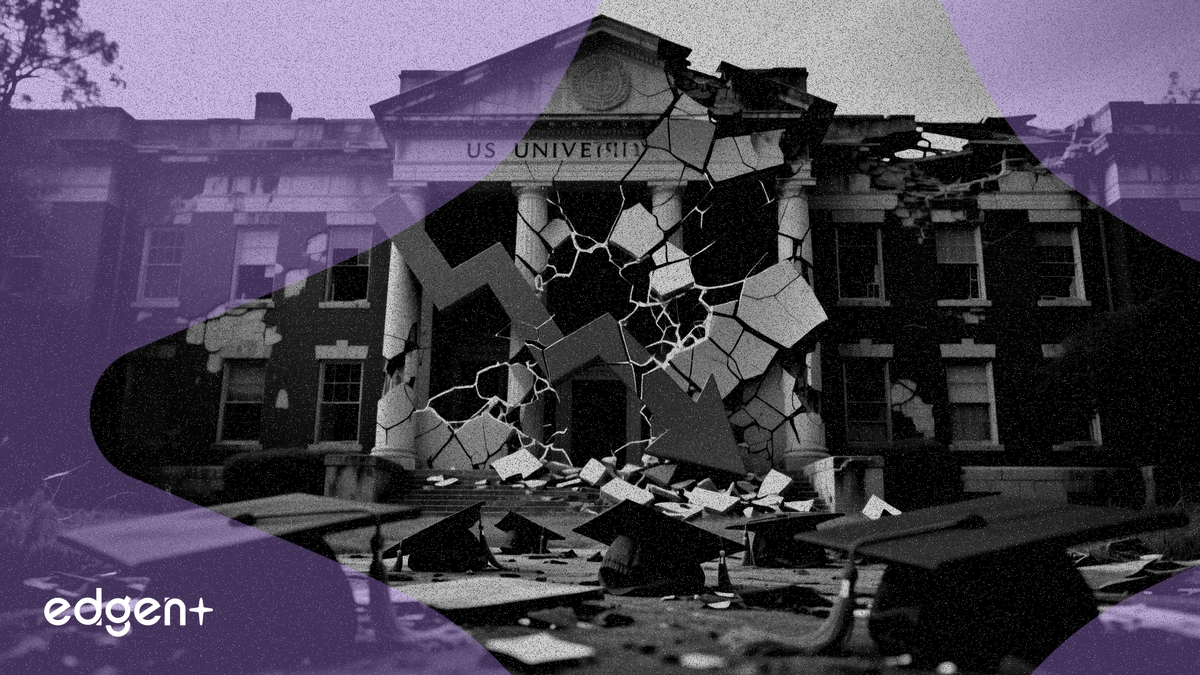
A market correction is accelerating across the US private college sector, as years of declining enrollment and rising costs have pushed nearly one-third of private nonprofit institutions into financial losses, according to a 2024 analysis. The trend, highlighted by recent closure announcements from colleges in Vermont and Massachusetts, signals a painful but rational pruning of institutions with high tuition and low value-add for students.
"Closing these institutions means students are slowly ceasing to overpay for scant added value," Roland Fryer, a Harvard economics professor and contributor to The Wall Street Journal, wrote in a May 7 op-ed. "The question isn’t how to save these institutions. It is how to accelerate market forces."
The financial strain is widespread. An analysis of fiscal 2024 college finance data by University of Tennessee professor Robert Kelchen found that 31 percent of private nonprofit colleges posted losses. Separately, a study by Daniel Greenstein for Ellucian identified 37 state university systems at a "critical mass threshold," suffering from simultaneous declines in enrollment and operating margins. Moody's underscored the risk by downgrading St. Michael’s College in Vermont to junk status in 2022.
The stakes are high for both students and local economies, with a Huron Consulting Group report projecting that 442 private nonprofit colleges enrolling 670,000 students are at risk of closing or merging within a decade. While some argue this is a necessary market correction, displaced students are 50 percent less likely to complete a credential than their peers, posing a significant risk to future earnings and workforce participation.
Proponents of the market-correction view argue that the closures are concentrated among institutions that fail to provide a return on investment. The data shows that the schools providing the most upward mobility, such as California State University, Los Angeles and Stony Brook University, are large public institutions with relatively low costs. These schools boast mobility rates—the percentage of students from the bottom income quintile who reach the top quintile—of 9.9 percent and 8.4 percent, respectively, at a fraction of the cost of their private peers.
However, critics of the "closure epidemic" narrative argue the threat is overstated. Since 2020, only 49 nonprofit colleges have closed, representing an annual mortality rate of just 0.2 percent. These institutions are typically very small, and zero public universities have closed in the past decade, where 76 percent of American undergraduates are enrolled. The vast majority of recent closures have been in the for-profit sector, with over 300 such institutions shutting down in the last eight years on record.
The ability of a university system to weather financial storms appears to have little to do with the level of state funding. According to Greenstein's research, the correlation between state appropriations per student and system-level resilience was "approximately zero." Instead, the most resilient systems were those with strong centralized governing bodies capable of evaluating state needs and executing comprehensive action plans. The study found only 14 state systems demonstrated such structural resilience, while 23 were deemed high-risk.
The institutions facing the most "acute compound exposure," Greenstein found, tended to be small historically Black colleges and universities (HBCUs) and regional public institutions. These schools, often serving a high proportion of students needing financial aid, are particularly vulnerable to shocks like enrollment declines or changes in federal loan programs.
This article is for informational purposes only and does not constitute investment advice.
