
The House's 370-48 vote funds the government to December 11, but sets up a $40 trillion debt showdown after the midterms.
The House's 370-48 vote funds the government to December 11, but sets up a $40 trillion debt showdown after the midterms.
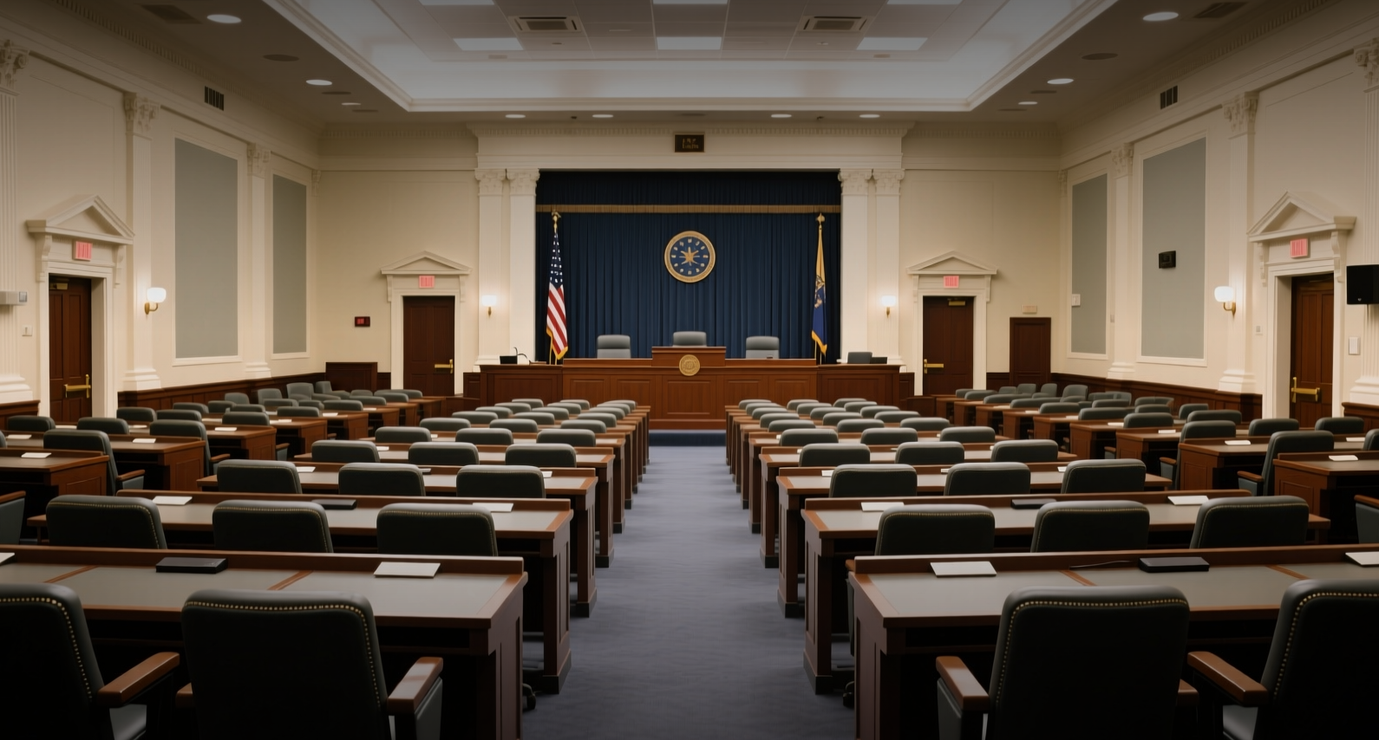
The House passed a continuing resolution 370-48 Tuesday, funding the government through December 11 and averting an October shutdown, but the stopgap only postpones a budget fight against a $40 trillion debt.
"This will give Congress time to get through the November election," Tom Cole, the Oklahoma Republican who chairs the House Appropriations Committee, said during floor debate.
The Senate approved the measure 90-6 on August 8, and it now heads to President Donald Trump's desk. Nineteen Republicans and 29 Democrats voted against it in the House. The CR keeps federal spending at current levels and temporarily blocks an Office of Management and Budget rule that would give political appointees broader authority to cancel discretionary grants. None of the 12 annual appropriations bills covering homeland security, defense, energy, housing, and law enforcement have been completed.
The real test arrives in December, when Congress must complete all 12 appropriations bills in roughly two weeks. The outcome will hinge on the November 3 midterms — forecasters give Democrats an edge in retaking the House, and the party could also flip the Senate by winning seats in at least three states that backed Trump in 2024. Meanwhile, the national debt crossed $40 trillion last month, and annual budget deficits are projected to exceed $2 trillion.
The bipartisan vote reflects shared political calculus rather than fiscal consensus. Trump's approval ratings have been dragged down by persistent food and housing inflation and the war with Iran, and neither party wanted a fourth shutdown — the three prior partial closures during Trump's second term totaled 161 days, including the longest funding lapse in US history at 43 days, which ended in November 2025.
Democrats framed the vote as a reassertion of congressional authority over spending. "The power of the purse belongs to Congress, it's our exclusive responsibility," Rosa DeLauro, the Connecticut Democrat who leads the party on the Appropriations Committee, said. Her remarks pointed to a series of unilateral actions by the Trump administration since early 2025, including deep cuts to federal agencies and the dismantling of the US Agency for International Development.
December Showdown Looms as Debt Crosses $40 Trillion
The CR contains no fiscal consolidation measures. Annual deficits exceeding $2 trillion, combined with the $40 trillion debt milestone reached last month, mean the December negotiations will unfold against structural fiscal pressure that neither party has proposed addressing in the stopgap. Bond markets have shown increasing sensitivity to the trajectory — the last time the debt crossed a $1 trillion threshold in a single year, 10-year Treasury yields moved higher within weeks as investors demanded a larger term premium.
The December outcome will depend heavily on which party controls the House and Senate after November 3. If Democrats retake either chamber, they would gain leverage to block spending cuts and push for expanded programs. If Republicans hold both, the administration could pursue deeper reductions across discretionary accounts.
Education Funding Hangs in the Balance
The CR maintains level funding for federal education programs, including a maximum Pell Grant of $7,395. But the House Appropriations Committee's FY27 Labor-HHS-Education bill, approved in June, would raise the Pell maximum to $7,445 while addressing a projected $15 billion shortfall by eliminating subsidized student loans. The bill also cuts Federal Work Study by 26 percent and Federal Supplemental Educational Opportunity Grants by 40 percent. The Senate has not yet released its version of the education spending bill, leaving the two chambers to reconcile sharply different approaches after the election.
The CR also delays implementation of the OMB grant rule until December 11, giving opponents — including scientific research organizations and higher-education groups — additional time to lobby against it. Supporters of the rule argue it would align federal grantmaking with presidential priorities.
This article is for informational purposes only and does not constitute investment advice.
