
The U.S. Strategic Petroleum Reserve has fallen below 300 million barrels for the first time in four decades, threatening the salt caverns that store it.
The U.S. Strategic Petroleum Reserve has fallen below 300 million barrels for the first time in four decades, threatening the salt caverns that store it.
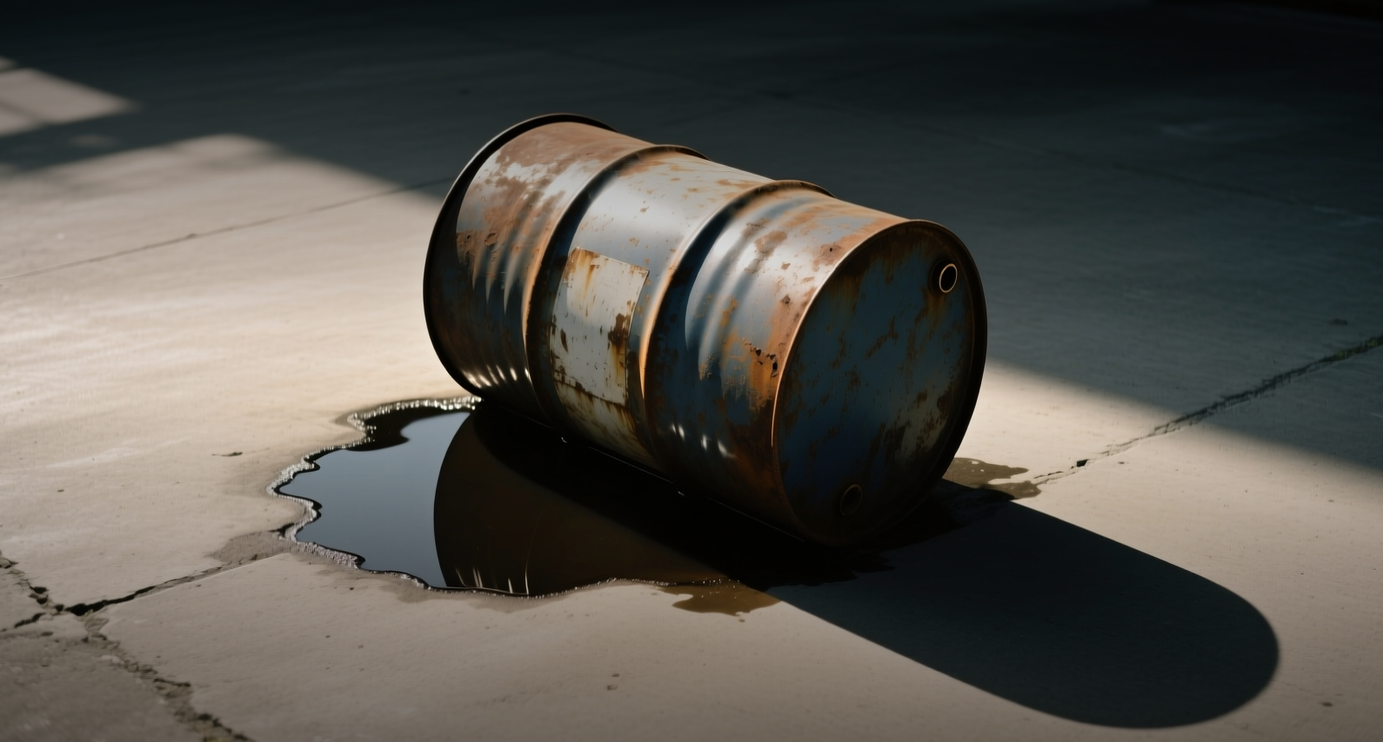
The SPR fell to 298.7 million barrels in early August, the lowest since the early 1980s, as 172 million barrels of Iran war releases push the salt cavern system toward a structural breaking point.
"Cavern integrity and overall operational capability are at an elevated risk," said Siddharth Misra, a petroleum engineering professor at Texas A&M University, who puts the practical operational floor between 250 million and 300 million barrels.
The 60 salt caverns across four Gulf Coast sites in Louisiana and Texas were designed for five full drawdowns over their operational life. Instead, the system has executed dozens of releases over 40 years. The Government Accountability Office warned in May that "every drawdown cycle expands cavern volume and reduces the spacing between caverns within the salt dome, which ultimately reduces their long-term viability."
The reserve will sit at roughly 243 million barrels once the current drawdown completes, below the operational floor identified by Misra and approaching the 170 million barrel "soft-ish floor" estimated by Rapidan Energy. Energy Secretary Chris Wright told Congress in June 2025 that more than $100 million in repairs are needed to restore full capacity after rapid drawdowns under the prior administration.
The depletion has direct market consequences. WTI crude has climbed as the SPR drawdown tightens perceived supply, and the national average gasoline price hit a mid-August record of $4.07 per gallon, according to AAA data. Energy ETFs have rallied on the supply squeeze, with the broader energy complex benefiting from the geopolitical risk premium attached to the Iran conflict and Strait of Hormuz shipping disruptions.
When the SPR inventory drops below 300 million barrels, the system loses its ability to pump oil at rapid speeds during emergencies, Misra said. The pipes and pumps face damage as the oil layer thins at the top and sludge rises toward the extraction intake. Fresh water pumped into the caverns during rapid drawdowns dissolves the salt walls, creating flatter, less stable roofs and severely thinning the critical salt pillars that separate adjacent caverns, greatly increasing the geological risk of a structural cave-in.
The Energy Department disputes these concerns. Spokesman Ben Dietderich said "the caverns are always full. All that changes is the ratio of oil and water that is filling them." But Energy Department officials told the GAO they are "holding the SPR infrastructure together with 'Band-Aids,' and that it is uncertain how long they will hold." More than a quarter of the SPR inventory was "not available for drawdown due to a combination of construction outages and cavern outages" as of December 2025.
Amos Hochstein, a senior energy advisor, warned that depleting the reserve below 300 million barrels risks damage that would make it more difficult to respond to future energy emergencies. "I don't know anyone who believes we can go below 300," Hochstein told CNBC in June, adding that the reserve would reach "the point of never resurrecting it" if depleted to 70 million barrels, the Energy Department's stated physical minimum.
The last time the SPR faced comparable strain was the 2022 drawdown of 180 million barrels following Russia's invasion of Ukraine, which pushed inventories below 350 million barrels. The reserve was refilled to roughly 415 million barrels before the Iran war, but the current release is cutting deeper than any prior episode. Both Republican and Democratic lawmakers have raised concerns about cavern integrity, and the GAO found the majority of caverns in "very good condition" after the 2022 drawdown while warning that repeated cycles reduce long-term viability.
With the SPR projected to reach 243 million barrels after the current release, the question is whether the system can sustain further draws without permanent damage. Misra said the reserve "physically loses its ability to pump oil at the rapid emergency speeds it was built to achieve without risking severe structural damage" below 300 million barrels. A hurricane in Florida or Louisiana could put the U.S. in a tough position at current levels, Hochstein said, noting that "below 300 million, which is where we are now, it is not that we can't do it, but it slows the flow and puts us in danger."
This article is for informational purposes only and does not constitute investment advice.
