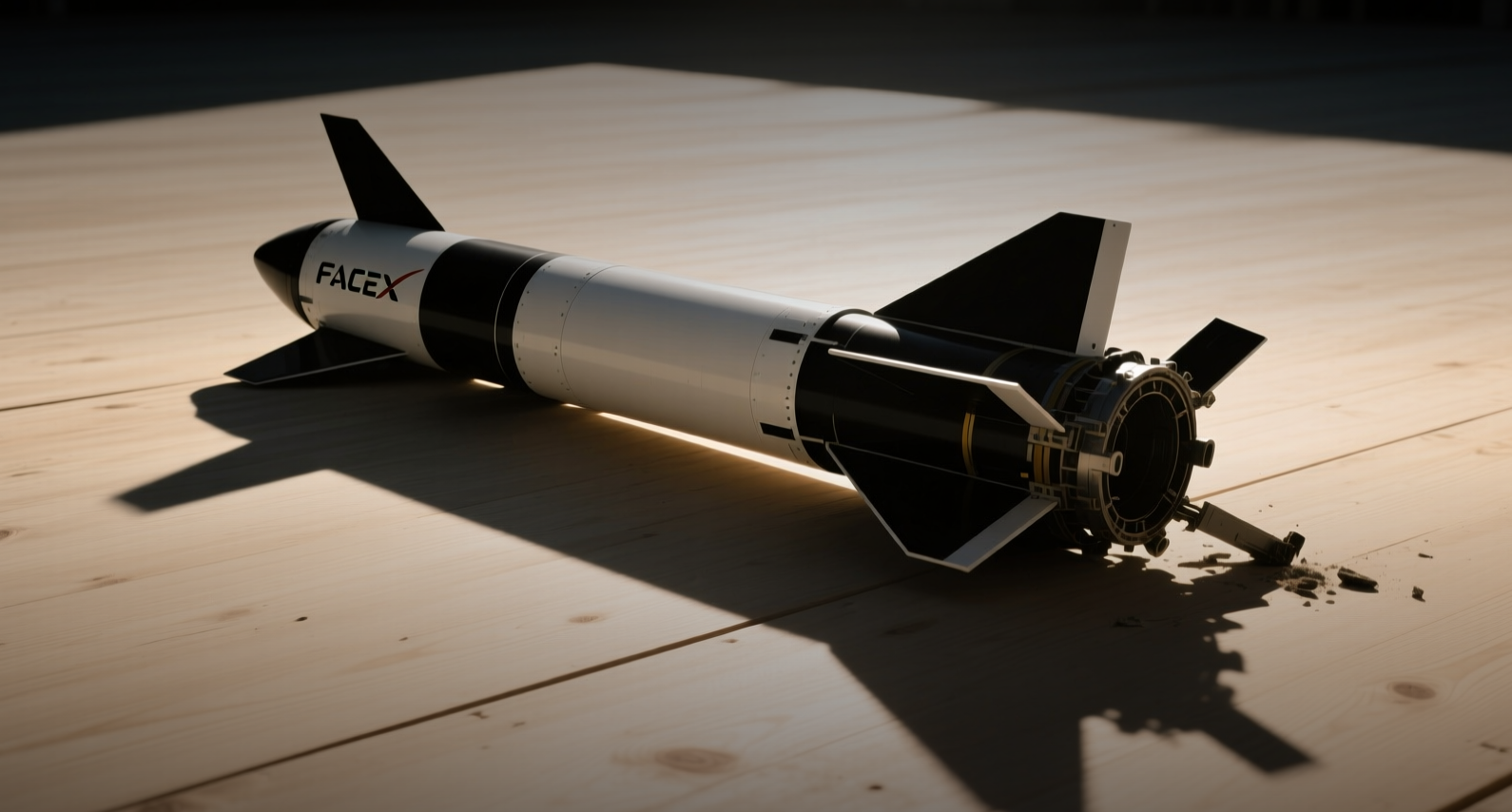
SpaceX shares plunged nearly 13% at Tuesday's open, erasing $210 billion in market value after the company's first post-IPO earnings report.
"Many investors are unwilling to buy SpaceX shares in the interim, given the lockup overhang that will exist at least into December," analysts at Bernstein wrote in a note Monday.
The slide extends a selloff that began after SpaceX reported Q2 revenue of $7.8 billion, beating the $6.81 billion consensus, but revealed AI-related capital expenditures of $15.8 billion versus Wall Street's $13.09 billion estimate. The company posted a net loss of $541 million. Shares closed up nearly 10% during regular trading Tuesday before dropping 7% after hours following the report.
The decline comes two days before the first tranche of SpaceX's lockup expiration, when roughly 912 million shares worth about $106.4 billion become eligible for sale. Short interest has climbed to about 35% of the float, with short sellers booking more than $8 billion in paper profits since the June IPO, according to S3 Partners data.
The stock has fallen 15% from its $135 IPO price and 47% from its intraday high of $225.64 on June 16. SpaceX's market capitalization has collapsed by more than $1 trillion since its June peak.
The selloff is company-specific rather than market-wide. The Dow Jones Industrial Average rose 1.71% to 54,085.88 and the S&P 500 gained 1.79% to 7,736.52 on Tuesday, both setting record closing highs. The Nasdaq Composite climbed 2.59% to 26,584.99. Brent crude fell 5.3% to $79.36 a barrel as investors weighed diplomatic progress on the Strait of Hormuz.
SpaceX's earnings revealed strong growth in its Starlink satellite-internet business, which added 1.7 million subscribers during the quarter to reach 12 million, though that fell short of the 12.19 million analysts expected. Connectivity segment revenue rose to $4.29 billion, beating the $3.88 billion estimate. Enterprise and government revenue jumped 108% year over year. Morningstar equity analyst Nicholas Owens said Starlink is "the earnings engine for the company" and can partially fund the AI expansion plans.
The AI segment generated $2.561 billion in revenue, beating the $2.08 billion estimate, and turned adjusted EBITDA positive at $1.1 billion. CEO Elon Musk said on the earnings call that SpaceX expects to reach a $100 billion annualized revenue run rate by year-end and moved up its internal projection for $1 trillion in total revenue from 2031 to 2030. He also said SpaceX has "decided to build exclusively on Nvidia" for its AI compute infrastructure and expects to receive "a very significant percentage" of Nvidia's GPUs next year.
Morgan Stanley analysts led by Adam Jonas compared the stock's pressure to Max Q, the point of maximum dynamic pressure during a rocket launch. "We believe Max Q is analogous to what SpaceX shares are experiencing heading into its first reported quarter as a company," they wrote.
The lockup expiration on Thursday is the first of nine scheduled unlock events, with the largest occurring a year after the IPO when all of Musk's 6.4 billion shares become available to sell. Deutsche Bank's Edison Yu maintains a Buy rating and $255 price target on SpaceX, saying he's "optimistic, following the lock-ups coming off, that the stock can stabilize at some level."
This article is for informational purposes only and does not constitute investment advice.